What to eat on Foundayo
At Second Nature, we recommend our members follow our balanced plate model of half vegetables, a quarter protein, a quarter complex carbohydrates, and a serving of fat from whole foods.
We also recommend eating three balanced meals a day (even if you’re not hungry), including protein-rich snacks between meals if needed, and eating your meals slowly.
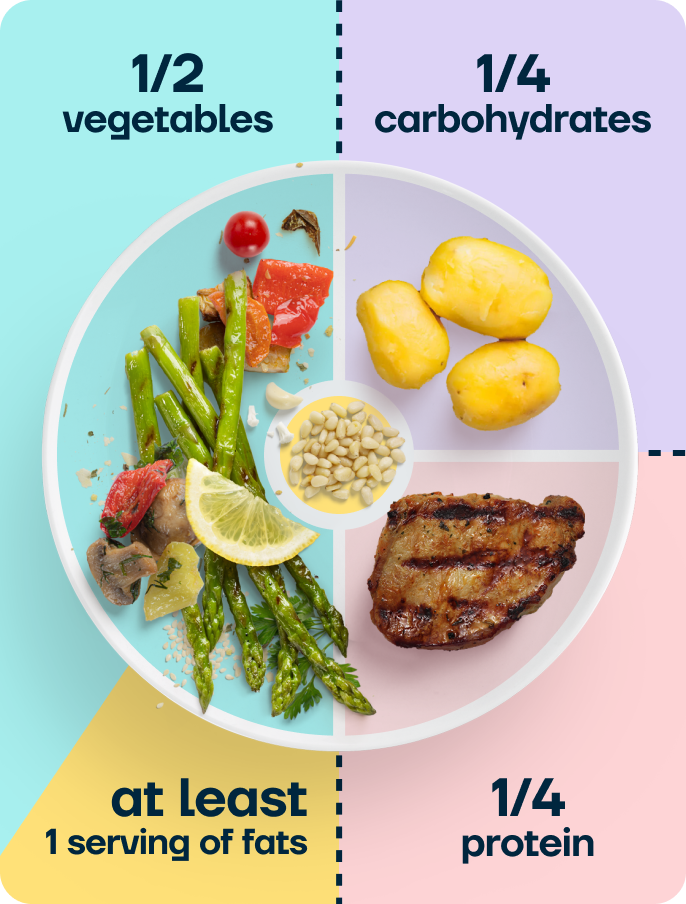
Protein: a quarter of the plate
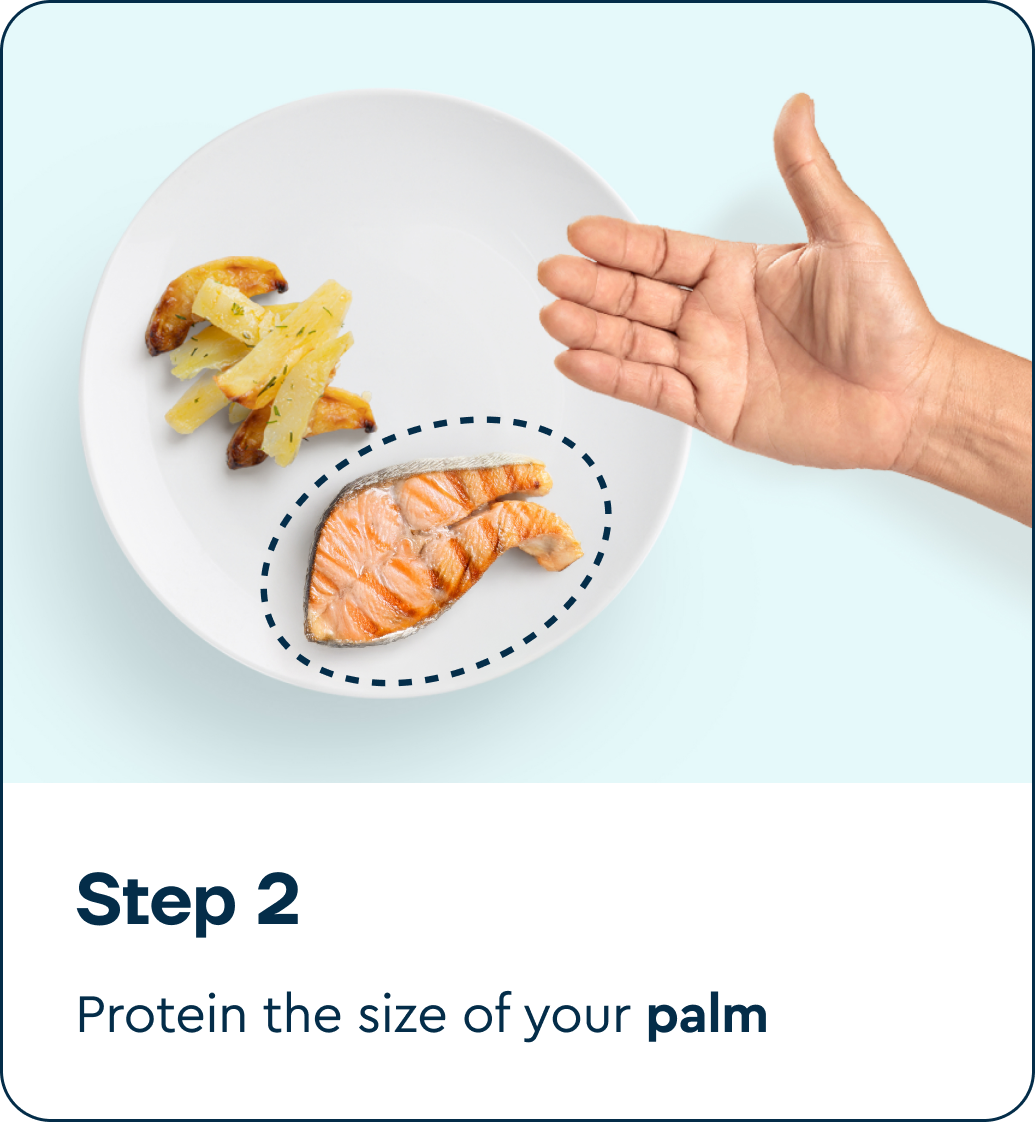
Aim for a portion of protein about the size of the palm of your hand at each meal. Second Nature recommends around 1.2 to 1.6 g per kg of body weight a day, and some people will need an extra protein-rich snack to reach this level.2
Protein is the most filling macronutrient, and some protein sources can be challenging to eat enough of (such as chicken breast, steak, or other cooked meats).
If you’re finding it challenging to eat enough protein in your meals because of lower hunger levels, we recommend easier-to-digest protein sources like minced meat, yoghurt, scrambled eggs, white fish, and tofu.
Good protein sources include:
- Chicken, turkey, and lean red meat
- Fish and seafood, including salmon, mackerel, and sardines
- Eggs
- Greek yoghurt and cottage cheese
- Tofu, tempeh, beans, and lentils
Vegetables: half the plate
Vegetables supply fibre alongside vitamins, minerals, and beneficial plant compounds. In the bowel, fibre holds water and adds bulk to stools, which helps manage the constipation reported with Foundayo.1
Enjoy a wide variety of fibre sources across the week, such as leafy greens, broccoli, cauliflower, peppers, courgettes, aubergines, tomatoes, carrots, and mushrooms.
Complex carbohydrates: a quarter of the plate
Complex carbohydrates provide fibre and a key energy source. Options include rolled oats, brown rice, quinoa, wholemeal pasta, potatoes with the skin on, sweet potatoes, beans, lentils, and wholegrain or sourdough bread.
Refined carbohydrates, such as white bread, pastries, sweets, and many packaged snack foods, provide less fibre. So, we recommend eating fibre-rich complex carbohydrates most of the time.
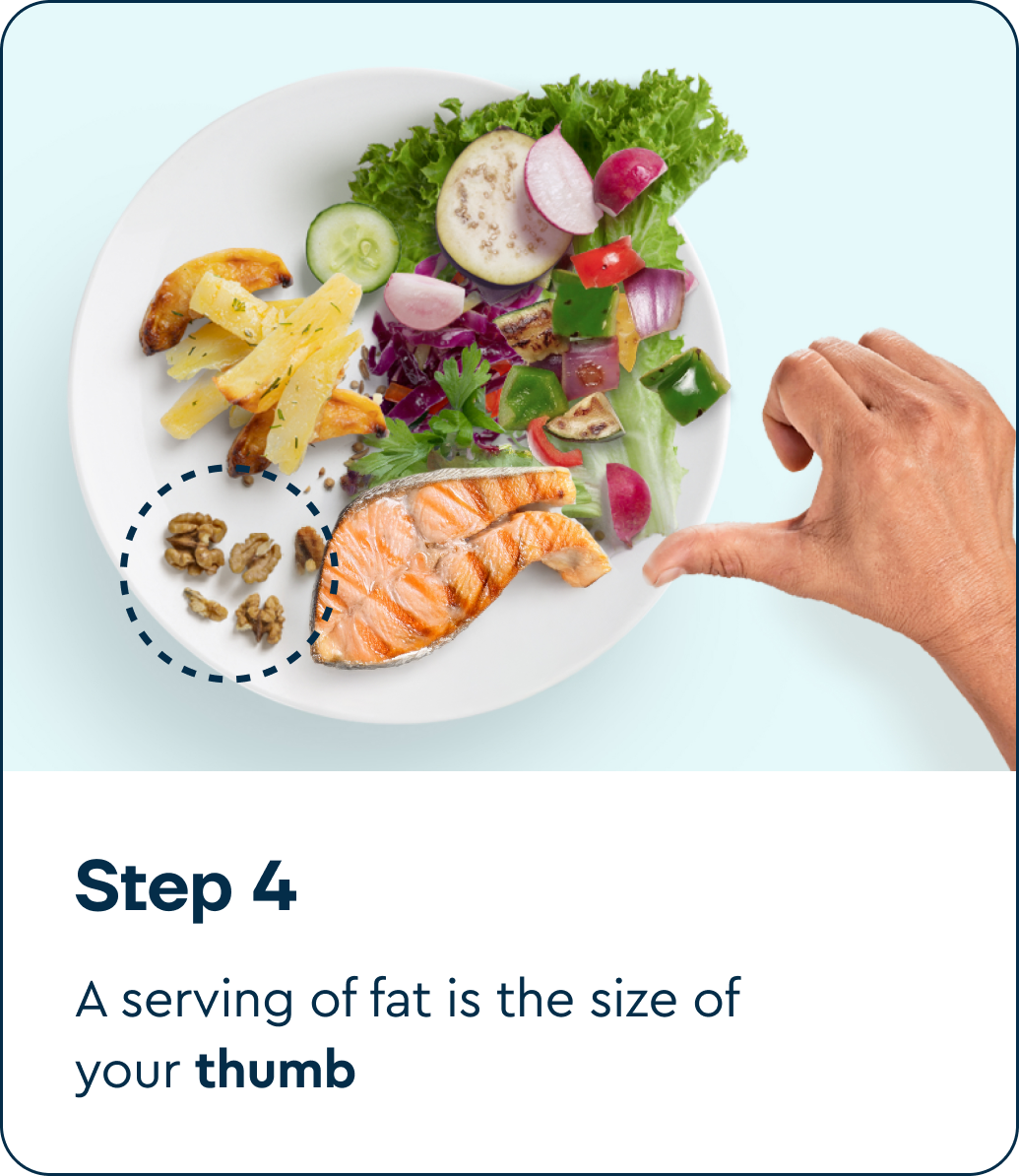
Fat: a thumb-sized serving
Include a serving of fat from whole foods, about the size of your thumb. Extra virgin olive oil, avocado, nuts, seeds, and oily fish provide fats that help us absorb vitamins A, D, E, and K.
Fat can also help us feel fuller for longer by increasing our natural GLP-1 levels.
Use your hands instead of weighing food
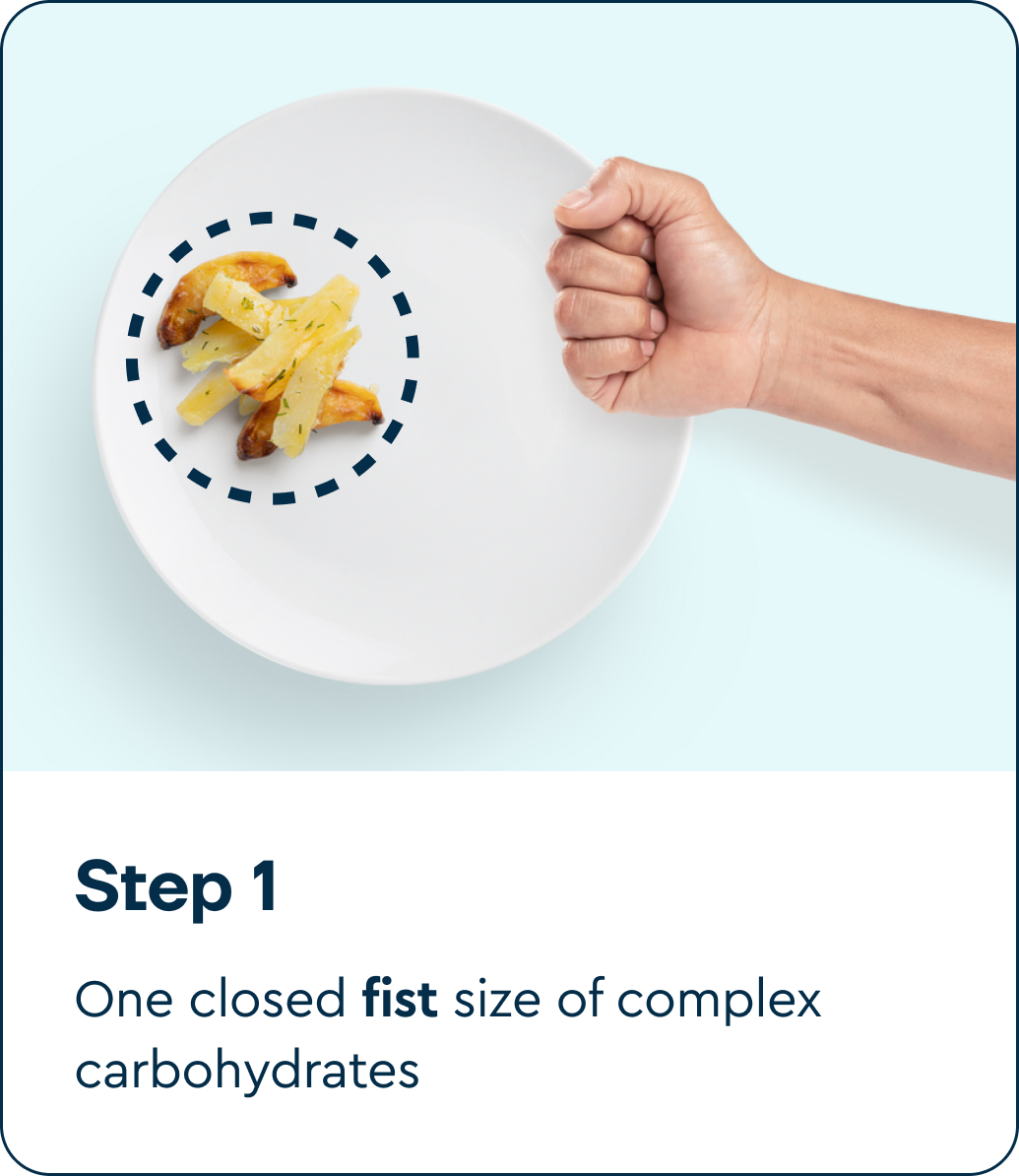
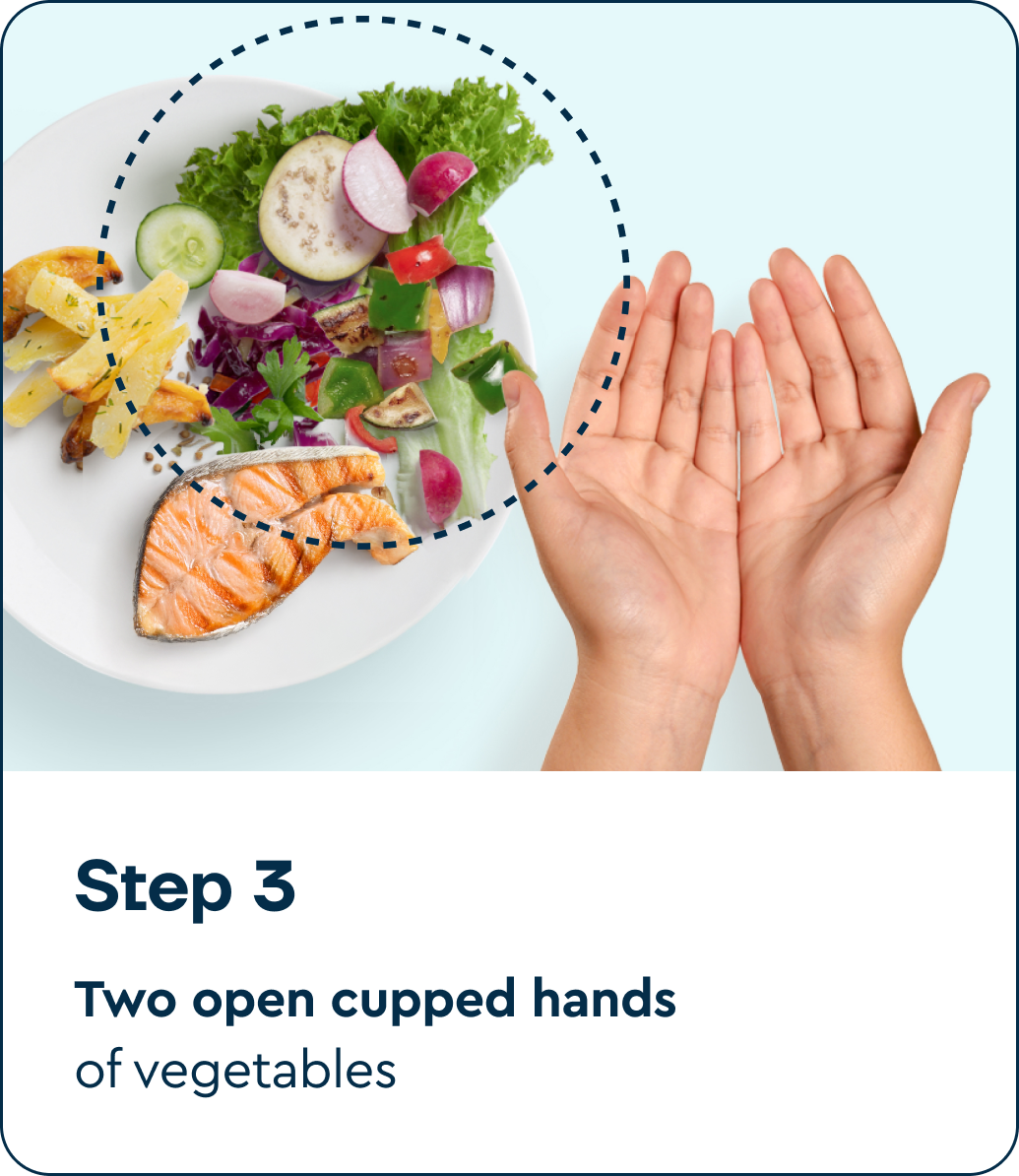
Your hands provide a practical portion guide when you don’t want to weigh food. Use a closed fist for complex carbohydrates, your palm for protein, two cupped hands for vegetables, and your thumb for fat.
7-day Foundayo meal plan
This plan provides three meals a day, with snacks only when you’re genuinely hungry or need help reaching your protein target.
Several evening meals make enough for lunch the next day, which reduces the amount of cooking needed across the week.
The recipes haven’t been totalled into one fixed protein or fibre figure because the amount depends on the portion you serve. Use the palm-sized protein portion and balanced plate alongside the table.
Printable weekly meal plan for Foundayo
|
BREAKFAST |
LUNCH |
DINNER |
| MONDAY |
Overnight oats made with 200 g Greek yoghurt and berries |
Tomato soup with beans, wholegrain toast, and 30 g cheese |
One-pot Hainanese chicken and rice with steamed greens
Prepare: keep a portion of chicken for Tuesday’s lunch |
| TUESDAY |
Three or four scrambled eggs, grilled tomatoes, wholegrain toast, and cottage cheese |
Greek chicken salad pittas using Monday’s chicken |
Lentil bolognese with wholemeal pasta and a side salad
Prepare: keep a portion for Thursday’s lunch and freeze the rest |
| WEDNESDAY |
Shakshuka with three or four eggs |
Herby feta quinoa bowl with two boiled eggs
Prepare: cook extra quinoa for Friday’s lunch |
Cajun salmon and salsa with sweet potato wedges and green beans |
| THURSDAY |
Berry cheesecake overnight oats |
Lentil bolognese left over from Tuesday, with a side salad |
Chicken fajitas bake with avocado and a green salad
Prepare: keep a portion for Friday’s dinner |
| FRIDAY |
Mini omelettes with Greek yoghurt and fruit |
Wednesday’s quinoa with 100 g tinned tuna or two boiled eggs, rocket, and cherry tomatoes |
Chicken fajitas bake left over from Thursday |
| SATURDAY |
Blueberry oatmeal pancakes with 200 g Greek yoghurt |
When eating out, choose a palm-sized serving of protein, vegetables, and a complex carbohydrate
OR
Tomato soup with beans from the freezer, with 30 g cheese |
Lamb meatball, lentil and kale stew
Prepare: freeze two portions |
| SUNDAY |
Breakfast egg wraps with avocado |
Smoked haddock fish cakes with peas and a green salad |
Moroccan pumpkin stew with Greek yoghurt
Prepare: keep a portion for Monday’s lunch |
PROTEIN-RICH SNACKS
- Greek yoghurt with berries
- One or two mini omelettes
- Cottage cheese with seed crackers
- One or two hard-boiled eggs
- Apple slices with nut butter
- A small handful of nuts
Choose a snack if you’re hungry between meals or the meals you’ve managed haven’t provided enough protein. |
How to manage a low appetite
Foundayo reduces hunger and slows how quickly your stomach empties after eating. This can make usual portions feel too large, particularly when you first start treatment or increase the dose.1
However, if we don’t eat enough, we’re at risk of losing weight too quickly, as reduced appetite can make it harder to get enough energy, protein, fibre, vitamins, and minerals.
If you’re losing weight too quickly (more than 1 lb per week) and are struggling to eat enough in your meals, here are our main tips to help with this:
- Eat 3 main meals a day
- Build these meals around the balanced plate model described above
- Add protein-rich snacks between meals if needed, like cottage cheese on rye crackers with a drizzle of extra virgin olive oil
- Opt for easier-to-digest foods like scrambled eggs, yoghurt, cottage cheese, minced meat, and tinned lentils and beans
- Eat easier-to-digest recipes, like soups, smoothies, and dishes like bolognese, curry, or casseroles where the ingredients are cooked for a long time and become very soft. These types of dishes will make it easier to eat more energy, protein, and fibre before we feel full.
Maintaining muscle mass while losing weight
ATTAIN-1 followed 3,127 adults taking Foundayo or a placebo for 72 weeks. Within that group, 171 participants had body-composition scans.4
The scans found that 73.1% of the weight lost was fat mass and 26.9% was lean mass (water, organs, bone, and other non-fat tissue). The amount of muscle lost was therefore smaller than the 26.9% figure.4
Maintaining muscle mass during weight loss depends on the pace of weight loss, protein intake, and resistance training.
Losing weight at a steady pace
Second Nature recommends aiming for an average loss of around 1 lb per week. Weight won’t fall by the same amount every week, so use the average over several weeks rather than judging your progress based on individual weigh-ins.
Stay on the lowest effective dose for as long as it’s effective. If you’re losing weight sustainably and managing side effects, there’s no clinical reason to increase your dose.
Many Second Nature members using Wegovy or Mounjaro stay on lower doses and lose weight without automatically moving to the highest dose. Approach Foundayo the same way, with every increase agreed with your prescriber.
Eating enough protein
Across 47 randomised trials with 3,218 adults losing weight, people who ate more protein maintained more muscle mass. The most favourable results were seen above 1.3 g per kg per day.2
The trials weren’t conducted specifically in people taking Foundayo or another GLP-1 medication. We base our recommendations on the wider weight-loss evidence because no trial has yet tested different protein targets during Foundayo treatment.
Second Nature recommends 1.2 to 1.6 g of protein per kg of body weight a day. For someone weighing 80 kg, this is around 95 to 130 g, which usually means a portion about the size of your palm at each meal and, where needed, protein-rich snacks between meals.
Resistance training
Resistance training works the muscles against weight or resistance. It includes squats, lunges, press-ups against a wall or floor, resistance bands, dumbbells, and weight machines.
We recommend starting small and gradually adding more as your strength improves. For example, you might start with calf raises when the kettle’s boiling, then do another set when you feel more confident. The next week, you might add some squats each time a TV break starts, and so on.
Over time, you can add more structured strength training when you’re ready, and ask a physiotherapist or healthcare professional for advice if pain, reduced mobility, or another health condition affects what you can do.
Managing digestive side effects through food
For nausea
- Eat smaller portions in your 3 main meals, and add protein-rich snacks in between
- Choose cold or room-temperature food if cooking smells make the nausea worse
- Eat slowly and stop when you’re comfortably full
- Avoid fried, greasy, or strongly spiced food if it makes symptoms worse
- Take regular sips of fluid and avoid a large drink with meals
- Stay upright after eating rather than lying down straight away
Ginger tea helps some people, but it isn’t necessary and shouldn’t replace prescribed anti-sickness treatment.
For constipation
Constipation affected 20.1% to 27.2% of people taking Foundayo in the weight-management trials, compared with 9.2% of people taking a placebo.1
UK adults aged 19 to 64 eat an average of 16.4 g of fibre a day, and only 4% reach the recommended 30 g.5 Smaller portions can reduce fibre further unless vegetables, fruit, beans, lentils, oats, and other wholegrains are still included in the meals.
- Increase fibre gradually rather than changing from a low-fibre diet to 30 g in one day
- Add berries, oats, beans, lentils, vegetables, or ground flaxseed to meals you already eat
- Drink regularly through the day, unless a healthcare professional has told you to restrict fluid
- Include regular movement, such as a short walk, if you’re able to
- Ask a pharmacist or prescriber about a laxative if food, fluid, and movement aren’t enough
Fibre can make bloating or early fullness worse for some people when digestive symptoms are active. Increase the amount in steps and use softer options, such as oats, cooked vegetables, soup, or stewed fruit, if large salads and dense bean dishes are difficult to manage.
For vomiting or diarrhoea
Vomiting and diarrhoea can cause dehydration, and the Foundayo prescribing information warns that severe dehydration can affect kidney function.1
Take small, regular sips rather than drinking a large amount at once. Oral rehydration solution from a pharmacy may help replace fluid and salts after repeated vomiting or diarrhoea.
Contact your prescriber or NHS 111 if you keep vomiting, can’t keep fluids down, pass much less urine than usual, or feel dizzy when you stand.
Seek urgent medical help for severe or persistent abdominal pain, particularly if it spreads to your back, because this can be a sign of pancreatitis, which means inflammation of the pancreas.1
If you take Foundayo for type 2 diabetes, insulin and sulfonylureas, a group of tablets that increase insulin release, can cause low blood sugar when food intake falls. Your prescriber may need to adjust these medicines, so don’t change the dose yourself, and seek advice if you’re skipping meals or have symptoms of low blood sugar.
Frequently asked questions
Do I need to follow a reduced-calorie diet on Foundayo?
Foundayo is licensed for use alongside healthy lifestyle changes, as shown in clinical trials.1
But yes, to lose weight, we need to eat in a calorie deficit. However, we don’t recommend eating a very low-calorie diet, as this can lead to adverse health effects related to rapid weight loss, such as bone loss, hair loss, and nutrient deficiencies.
Still, you don’t need to count calories. Foundayo reduces hunger and may reduce food noise, while the balanced plate we recommend at Second Nature helps our members maintain a healthy intake of protein, fat, carbohydrates, and fibre while losing weight.
What foods should I avoid on Foundayo?
Foundayo doesn’t require you to avoid any specific food. However, we recommend eating a diet based on whole foods and minimising ultra-processed foods to support healthy weight loss.
St John’s wort is a herbal supplement, not a food, and it can reduce the amount of Foundayo in the body. Don’t take it while using Foundayo.1
Can I take Foundayo with food?
Yes. You can take Foundayo at any time of day, with or without food, and there are no restrictions on how much water you drink with it.1
This differs from the Wegovy pill, which has to be taken on an empty stomach with a small amount of water, followed by a 30-minute wait before eating or drinking. Our guide to the Wegovy pill and Foundayo explains the other differences.
How much protein do I need on Foundayo?
Second Nature recommends 1.2 to 1.6 g of protein per kg of body weight a day, alongside resistance training (where possible).
For someone weighing 75 kg, this is about 90 to 120 g a day, or a palm-sized portion at each meal plus a protein-rich snack where needed.2
This range comes from independent research on adults losing weight. Direct studies haven’t yet compared protein targets in people taking Foundayo.
Will eating more protein stop Foundayo working?
Protein isn’t known to interfere with how Foundayo works. Independent weight-loss research found that higher protein intake helped the body maintain more muscle mass during weight loss.2
The aim is to lose fat while maintaining as much muscle and strength as possible, rather than to make body weight fall as quickly as possible.
Should I follow a low-carbohydrate diet on Foundayo?
No. There’s no perfect diet for weight loss, or for weight loss on GLP-1 medications. The aim is to follow a dietary pattern based on whole foods, then personalise the macronutrient balance to suit your needs.
If you prefer to eat fewer carbohydrates, we still recommend eating a wide variety of plant foods to ensure healthy fibre intake.
What should I eat if I have no appetite?
Aim to eat foods that are easier to digest. For example, soups, smoothies, and meals cooked for a long time so the foods become softer, like stews, casseroles, bolognese, and other one-pot dishes.
Tell your prescriber if you’re regularly unable to eat, because the dose doesn’t have to increase after 30 days and may need reviewing.1
Can I print this Foundayo meal plan?
Yes. You can use your browser’s print option to print the table, although the number of pages will depend on your browser and page settings.
The Second Nature meal plan generator can create a different version based on your food preferences.
How much weight will I lose on Foundayo?
In ATTAIN-1, people assigned to the highest Foundayo dose lost an average of 11.2% of their body weight over 72 weeks, compared with 2.1% with a placebo. This figure includes everyone who was assigned to treatment, whether or not they stopped taking it.4
The same paper reported 12.4%, an estimate of what would happen if people remained on treatment. The 11.2% figure includes the full trial group and is therefore the better guide to the average result across everyone who starts.
The trial tested a 36 mg capsule, which provides the same exposure as the 17.2 mg tablet licensed in the UK.1 Our guide to weight loss in the first month on Foundayo explains why early results vary.
Take home message
The best Foundayo meal plan is based on whole foods and provides enough protein, fibre, complex carbohydrates, and fat to support sustainable weight loss.
Using a meal plan can be a great way to learn how to eat more sustainably. Still, we recommend you don’t rely too heavily on meal plans to support weight loss and health long term.
The long-term goal should be to develop the knowledge and tools needed to be able to build your own meal plans in the future based on your own recipes you’ve enjoyed over the years.
Second Nature combines GLP-1 medication with structured support from registered dietitians and nutritionists. A peer-reviewed service evaluation found that active subscribers lost an average of 19.1% of their body weight at 12 months, with 77.7% losing at least 10%.6
Second Nature's Mounjaro and Wegovy programmes
Second Nature provides Mounjaro or Wegovy as part of our Mounjaro and Wegovy weight-loss programmes.
Why choose Second Nature over other medication providers, assuming you're eligible?
Because peace of mind matters.
We've had the privilege of working with the NHS for over eight years, helping people across the UK take meaningful steps toward a healthier, happier life.
Our programmes are designed to meet people where they are, whether that means support with weight loss through compassionate one-to-one health coaching, or access to the latest weight-loss medications (like Mounjaro and Wegovy) delivered alongside expert care from a multidisciplinary team of doctors, psychologists, dietitians, and personal trainers.
At the heart of everything we do is a simple belief: real, lasting change comes from building better habits, not relying on quick fixes. We're here to support that change every step of the way.
With over a decade of experience, thousands of lives changed, and a long-standing record of delivering programmes used by the NHS, we believe we're the UK's most trusted weight-loss programme.
We hope to offer you something invaluable: peace of mind, and the support you need to take that first step.