What the first month on Foundayo looks like
Foundayo is a once-a-day tablet you can take at any time of day, with or without food.2
Unlike the Wegovy pill, there are no restrictions around when you can take it, because orforglipron is a small molecule that’s absorbed like an ordinary tablet.
The most significant early change is in our hunger levels. The medication will begin to lower hunger, cravings, and food noise (the persistent, intrusive thoughts about food), which will help us eat less in our meals and lose weight over time.
If you take the contraceptive pill, speak to your prescriber about contraception before starting Foundayo.
Foundayo may affect how well the pill is absorbed, so you’ll need to use condoms or switch to a non-oral method for 30 days after starting Foundayo and for 30 days after each dose increase.2
| Week |
Dose |
What many people notice |
| Weeks 1 to 2 |
0.8 mg once a day |
Foundayo often starts to reduce appetite and food noise during the first month. Mild nausea or an unsettled stomach are common while the body adjusts. Weight loss may be faster at first, although this is mainly stored carbohydrate (glycogen) and water. For every gram of glycogen the body stores, it retains roughly 3 grams of water. |
| Weeks 3 to 4 |
0.8 mg once a day |
Hunger levels continue to reduce, but weight loss is likely to slow to a more sustainable level of around 1-2 lbs per week from this point as the body starts to burn through its fat stores. Weight loss is rarely a straight line to the bottom, so after 4 weeks, expect weeks where your weight loss stalls or goes up slightly. These weight-loss fluctuations are normal and necessary and aren’t a sign the medication has stopped working. |
Our free GLP-1 weight-loss progress checker shows how your early weight loss compares with the range seen in the trials.
Why your first month is on the 0.8 mg starting dose
Foundayo is available in 6 doses: 0.8 mg, then 2.5 mg, 5.5 mg, 9 mg, 14.5 mg, and 17.2 mg, with at least a month at each one.2
The 0.8 mg starting dose isn’t there to produce weight loss. It gives our body time to adapt to orforglipron, which reduces the risk of nausea and other digestive side effects.2
You also don’t have to move up to the highest dose, and we actively recommend staying on the lowest effective dose for as long as it’s effective.
If you’re losing weight at a sustainable rate, introducing healthy lifestyle changes, and managing side effects, there’s no clinical reason to increase your dose.
For example, after 3 months you might have increased your dose up to 5.5 mg and find that you’re very happy with the results and the impact on your hunger. In this scenario, you can speak to your prescriber about staying on that dose for as long as you want to.
Where early weight loss comes from
Foundayo reduces appetite and food noise, which helps us eat less and lose weight over time. Weight loss is typically faster during the first few weeks, but it isn’t all body fat.
When carbohydrate intake falls, the body replaces less of the glycogen (stored carbohydrate) it uses, so glycogen stores in the liver and muscles decrease.
For every gram of glycogen the body stores, it retains around 3 grams of water. As glycogen stores fall, some of this water is released, which can make weight fall more quickly during the first few weeks.4
Body fat starts to fall alongside this. However, glycogen and water can account for a larger share of the initial weight loss, with body fat making a smaller contribution.
Both visceral (the fat in and around our internal organs) and subcutaneous fat (the fat beneath the skin) will reduce during this time.
During modest weight loss, visceral fat tends to fall by a greater percentage than subcutaneous fat, according to a systematic review of 61 studies.5
As visceral fat is essentially our ‘internal fat’, when this reduces, we may not see the obvious physical changes, such as our clothes fitting differently or our body shape.
As more weight is lost, the difference between the percentage of visceral and subcutaneous fat lost becomes smaller.
As our visceral fat stores reduce further, our body will start to burn through more of our subcutaneous fat stores, and it’s at this stage that our weight loss will become more visible.
How much weight loss to expect after the first month
In the ATTAIN-1 trial, a Phase 3 study (a large, late-stage human trial of the kind that decides whether a medication is approved), 3,127 adults took orforglipron or a placebo for 72 weeks.1
Those on the highest dose lost an average of 11.2% of their body weight, compared with 2.1% on the placebo.1
That 11.2% includes everyone who took part, including people who stopped early, so it reflects a realistic average across a real-world group where adherence to weight-loss treatment is rarely close to 100%.1
Lilly’s press releases quote a higher figure of 12.4%, which is the average among people who stayed on the medication. We use 11.2% across our guides because it better reflects what tends to happen in the real world.
The trial tested orforglipron in capsules of up to 36 mg, while the approved tablets go up to 17.2 mg.
The two aren’t stated as equivalent anywhere on the label, so the more useful figure is the one the label reports for the tablet itself: an average weight loss of 11.1% on the 17.2 mg dose at 72 weeks, among adults without diabetes.2
Still, average outcomes don’t demonstrate the potential of this medication for the individual. Just over half of the people on the highest dose (54.6%) lost at least 10% of their body weight, and around one in five (18.4%) lost 20% or more, suggesting that Foundayo can support weight-loss outcomes similar to the Wegovy and Mounjaro injections in around 1 in 5 people.1
| Time on Foundayo |
Dose |
What tends to happen |
| Month 1 |
0.8 mg |
The body adjusts to the meidcation and hunger levels decrease. Weight loss is modest, often around 1 to 2%, and much of it is glycogen and water. |
| Months 2 to 5 |
2.5 mg up to 14.5 mg |
The dose increases each month if you’re tolerating it well and want to increase. Weight-loss rate should settle at around 1-2lbs per week. |
| Month 6 onwards |
17.2 mg, or a maintenance dose from 5.5 mg |
The trial average reached 11.2% by 72 weeks on the highest dose. Still, not everyone needs to use the highest dose. |
Our GLP-1 weight loss calculator estimates how your own weight could change over time, based on your starting weight.
Why we recommend losing weight slowly on Foundayo
Most people starting a weight-loss medication want the scale to fall as quickly as possible, but we’d encourage you to lose weight as slowly and sustainably as possible.
Any weight loss includes some lean tissue, such as muscle and bone, as well as water and organ tissue. In ATTAIN-1’s body-scan subgroup, 73.1% of the weight lost was fat, and 26.9% was lean tissue.1
How fast we lose weight influences how much of our weight loss comes from fat or lean tissues.
In the TEMPO trial, 101 postmenopausal women were randomly assigned to lose weight either quickly, on a strict meal-replacement diet for four months, or slowly, through moderate changes to their meals over a year.8
After 12 months, the faster group had lost about twice as much weight, but they’d also lost around 1.5 times as much lean mass and 2.5 times as much bone density at the hip.8
The bone loss is a concern, because it was out of proportion to the extra weight lost. The researchers advised caution with rapid weight loss in postmenopausal women, particularly for anyone living with osteopenia (lower-than-normal bone density).8
When we lose weight too quickly due to not eating enough, we also limit our protein intake, which inhibits our body’s ability to maintain lean tissues.
Alongside eating enough calories and protein to support sustainable weight loss, resistance exercise has also been shown to protect lean mass and muscle function during weight loss.
In a randomised trial, adults who took a GLP-1 medication (liraglutide) for a year after losing weight lost more bone density at the hip and spine than those who exercised instead, despite losing a similar amount of weight.6
The group who did both, medication and exercise, maintained their bone density and lost the most weight of anyone in the trial.6
Very fast weight loss also increases the risk of hair loss and nutrient deficiencies. All of these risks of losing weight too fast are why we often recommend members stay on a lower dose for as long as it’s effective.
If we’re able to lose weight slowly and sustainably, we’re more likely to maintain our all-around health while losing weight.
The risks of weight cycling and yo-yo dieting
Many people trying GLP-1 medications for the first time have had many failed attempts at losing weight in the past, typically by cycling through various forms of restrictive diets, where they lose weight quickly and maybe maintain it for a while, before regaining it.
One issue with this type of weight cycling is that the weight we regain may contain a different balance of fat and lean tissue from the weight we lost.
One study followed postmenopausal women for a year after a five-month weight-loss programme. Among the women who regained at least 2 kg, every kilogram of fat lost was accompanied by around 0.26 kg of lost lean tissue.7
For every kilogram of fat they regained, only around 0.12 kg of lean tissue was regained.7 This meant the regained weight contained proportionally more fat and less lean tissue than the weight they had lost.
These results suggest that we could therefore return to the same number on the scale with a higher proportion of body fat than before. And if we repeat this cycle several times, each time we regain weight, we might risk regaining more fat as a proportion of that regain.
The study only followed one period of weight loss and regain, and it didn’t involve people taking GLP-1 medications. It can’t tell us that body composition worsens with every cycle or that Foundayo causes this pattern.
However, it shows the importance of losing weight slowly and taking a sustainable approach to weight loss that isn’t obsessed with losing weight as quickly as possible, but losing weight for good.
It’s not just about mass, but also function. Our muscles help us stay strong and take up glucose (sugar) from the blood after meals, which supports blood sugar control.
If we reduce our muscle mass over time through repeated weight-loss attempts without adding more movement to our routine, we’re likely to see a reduction in muscle function and, therefore, a reduction in our overall health.
While taking Foundayo, losing weight at a slower rate can make it easier to eat a diet based on whole foods rich in protein, fibre, fat, and complex carbohydrates, while also introducing other healthy habits, like exercise, better sleep, and a healthier relationship with food.
Side effects in the first month
The most common side effects are digestive, and the label lists nausea, constipation, vomiting, and indigestion among them.2
In ATTAIN-1, these were mostly mild to moderate.1 They’re most likely during dose increases.2
Between 5.3% and 10.3% of people taking orforglipron stopped treatment because of side effects, compared with 2.7% on the placebo.1
By starting on the 0.8 mg dose and only increasing our dose when we’re ready, we’re less likely to experience side effects.2
Plus, if we eat a diet based on whole foods, we’re also less likely to experience side effects. Some research suggests that ultra-processed foods can adversely impact our gut function, which may worsen side effects of GLP-1 medications.
Foundayo also interacts with some common medications, including simvastatin (a cholesterol medication), some epilepsy treatments, and St John’s wort, so tell your prescriber about everything you take.2
Speak to your prescriber if side effects are severe, don’t improve, or stop you from keeping food and fluids down.
Severe stomach pain that spreads to your back can be a sign of pancreatitis (inflammation of the pancreas), which is rare but needs urgent medical attention.2
How to get the most from your first month
Foundayo will lower hunger and help us eat less, but it’s essential to maintain a healthy dietary pattern to support overall health and essential body functions during weight loss.
We recommend eating a diet based on whole foods that contains enough protein, fibre, fat, and complex carbohydrates, and limits ultra-processed foods.
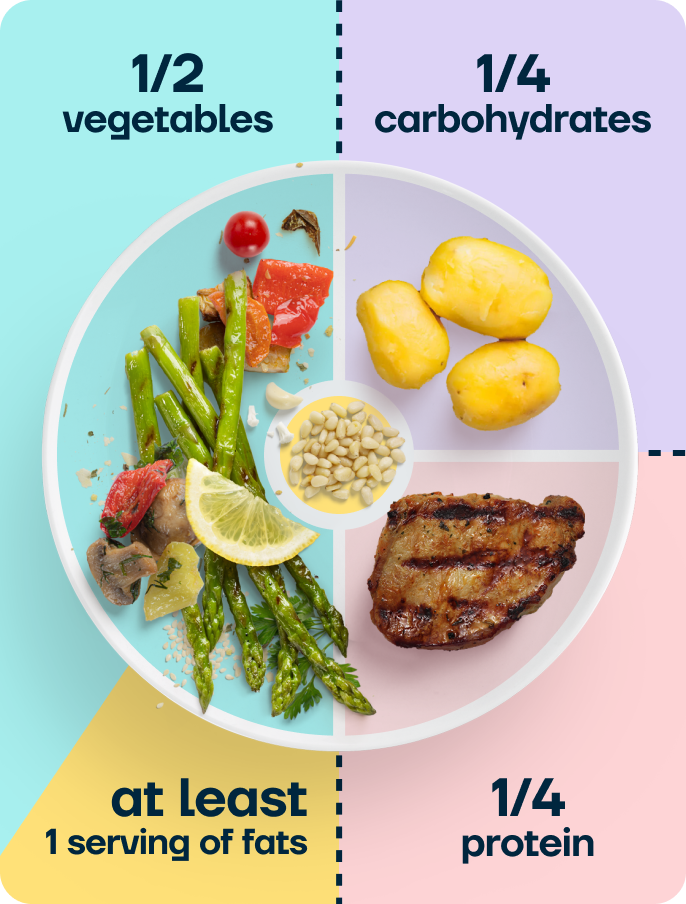
A simple guide is the Second Nature balanced plate of half vegetables, a quarter protein, and a quarter complex carbohydrates such as wholegrain bread, brown rice, or potatoes, plus a serving of fat.
Aim for a portion of protein roughly the size of your palm at each meal, from foods like eggs, fish, chicken, beans, lentils, or Greek yoghurt.
As a daily guide, that’s around 1.2-1.6 g of protein per kg of body weight.
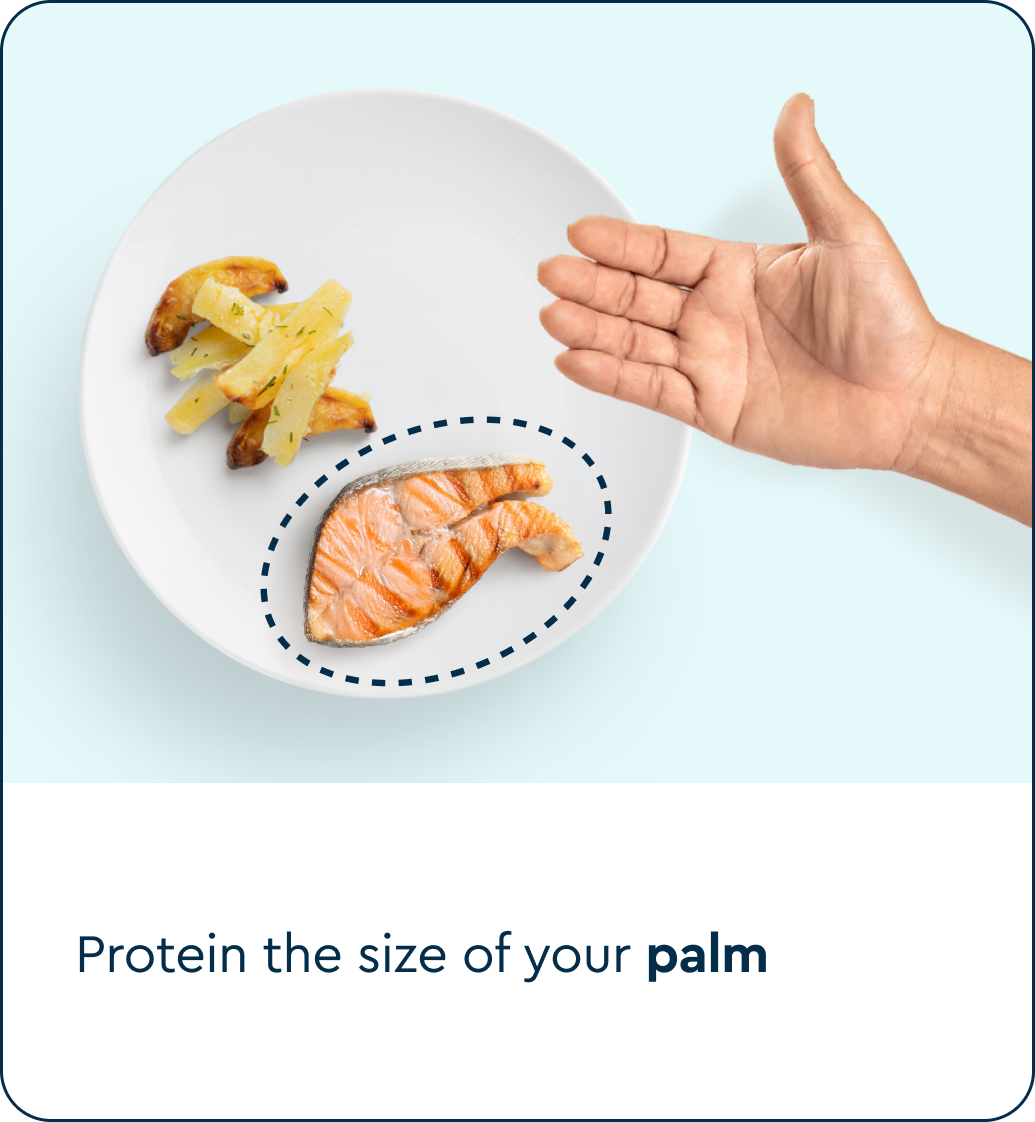
Protein helps preserve muscle while you lose weight, and it keeps you fuller for longer between meals.
Movement protects muscle and bone in the same way, and we’d recommend focusing on developing it as a habit rather than trying to achieve unrealistic targets.
A 10-minute walk after a meal is an easy place to start, and you can gradually do a little more as it feels manageable. Adding some form of resistance training, even bodyweight exercises at home, can further protect muscle and bone.
Second Nature has worked with the NHS since 2017, pairing medication with structured habit support to achieve lasting weight loss and prevent regain. Take our 3-minute eligibility quiz, and a clinician will review your answers.
Frequently asked questions
How long does Foundayo take to start working?
Many people notice their appetite and food noise reduce within the first week or two.
More noticeable weight loss usually comes from the second month onwards, as the dose increases.
Do I need to take Foundayo on an empty stomach?
No. Foundayo can be taken at any time of day, with or without food.2
Orforglipron is a small molecule rather than a peptide, so it isn’t broken down by digestive enzymes and doesn’t need to be taken on an empty stomach as the Wegovy pill does.
Our guide to the Wegovy pill versus Foundayo compares the two in full.
Is losing only 1 kg in my first month normal?
Yes. The first month is on the lowest 0.8 mg dose, which will help your body adapt to the medication so you can increase to the higher doses. Slow weight loss in the first month isn’t a sign the medication isn’t working.
Why has my weight loss stalled after a quick start?
Fast initial weight loss is mainly down to a reduction in glycogen and water.4
So, it’s normal for weight loss to slow down to a more sustainable rate after 2-4 weeks. Plus, everyone will experience weight-loss plateaus during weight loss, it’s rarely a straight line to the bottom.
Is Foundayo as effective as the Wegovy pill?
In their trials, Foundayo produced an average weight loss of 11.2% over 72 weeks, while the Wegovy pill produced 13.6% over 64 weeks.1,9
Both figures include everyone who took part, though the two medications haven’t been compared against each other in the same trial.
The bigger practical difference is the routine, as the Wegovy pill needs to be taken on an empty stomach, followed by a 30-minute wait before any food or drinks, while Foundayo can be taken at any time.
Do I need to change my contraception when starting Foundayo?
If you take an oral contraceptive, yes. Foundayo can reduce how much of the pill your body absorbs.2
The guidance is to switch to a non-oral method, or add a barrier method such as condoms, for 30 days after starting and for 30 days after each dose increase.2
Should I move up to the next dose as soon as I can?
Not necessarily. Each dose needs a minimum of a month, but there’s no maximum time limit on each dose, and the label says the dose should go up based on how you’re responding and tolerating it rather than automatically.2
If you’re losing weight at a sustainable rate and you’re managing your side effects, there’s no clinical reason to increase the dose you’re on.
If you’re unsure whether you should increase your dose or not, speak with your prescriber.
Will I regain the weight if I stop Foundayo?
If you stop Foundayo suddenly without having built the habits needed to maintain your new weight, some weight regain is likely.
Foundayo is new, and we don’t have any trials on what happens when the drug is stopped. However, we can infer what will happen based on trials on semaglutide.
In a trial of semaglutide (Wegovy), participants who stopped suddenly regained around 7% of their body weight over the following year, while those who kept taking the medication lost a further 8%.10
This pattern of regain is consistent across the trials investigating what happens when people stop taking the medication suddenly.
However, there’s no clinical basis for stopping medications suddenly, and it simply wouldn’t happen in most circumstances.
For example, no one would stop their insulin, warfarin, or statin suddenly. Their dose would always be gradually reduced until they’re ready to come off it completely. This approach can be applied to GLP-1 medications, too.
We recommend coming off slowly, by gradually reducing the dose, and making sure you have habits in place to manage hunger naturally. Our free weight regain prevention planner can help you build a personalised plan on how to do this.
How much does Foundayo cost in the UK?
At Second Nature, Foundayo costs as little as £54 with our first month’s discount, and up to £179 at its highest doses.
Other providers will determine their own prices, but broadly, we can expect Foundayo to cost between £129 and £200 per month depending on the doses and the provider.
Our guide to buying Foundayo online in the UK explains our pricing in more detail.
Take home message
Most people lose around 1 to 2% of their body weight in their first month on Foundayo, while taking the 0.8 mg starting dose.
Much of that early weight loss is glycogen and water rather than fat. Additionally, much of our early fat loss will come from our visceral fat (around our internal organs), so weight loss may not be very visible in the first few weeks.
In the ATTAIN-1 trial, adults on the highest dose lost an average of 11.2% of their body weight over 72 weeks.
We’d encourage you to lose weight slowly and sustainably, so you have the time you need to develop a healthy lifestyle that will help maintain a healthier weight in the long term.
Second Nature pairs medication with support from registered dietitians and a structured programme built around the balanced plate and lasting habit change.
In a study of the programme published in JMIR, members lost an average of 19.1% of their body weight at 12 months, and 77.7% lost at least 10%.11
Second Nature's Mounjaro and Wegovy programmes
Second Nature provides Mounjaro or Wegovy as part of our Mounjaro and Wegovy weight-loss programmes.
Why choose Second Nature over other medication providers, assuming you're eligible?
Because peace of mind matters.
We've had the privilege of working with the NHS for over eight years, helping people across the UK take meaningful steps toward a healthier, happier life.
Our programmes are designed to meet people where they are, whether that means support with weight loss through compassionate one-to-one health coaching, or access to the latest weight-loss medications (like Mounjaro and Wegovy) delivered alongside expert care from a multidisciplinary team of doctors, psychologists, dietitians, and personal trainers.
At the heart of everything we do is a simple belief: real, lasting change comes from building better habits, not relying on quick fixes. We're here to support that change every step of the way.
With over a decade of experience, thousands of lives changed, and a long-standing record of delivering programmes used by the NHS, we believe we're the UK's most trusted weight-loss programme.
We hope to offer you something invaluable: peace of mind, and the support you need to take that first step.