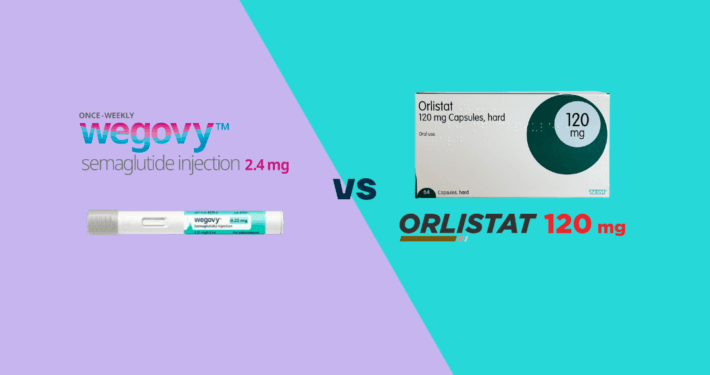
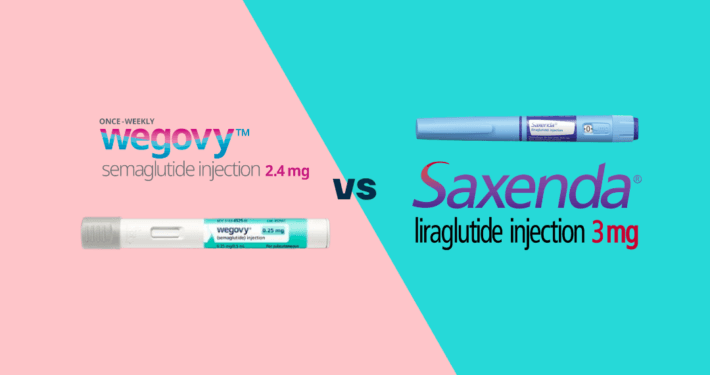
Mounjaro alternatives at a glance
| Alternative |
Type |
Average weight loss |
How it’s taken |
UK availability |
| Wegovy 2.4 mg |
GLP-1 receptor agonist |
13.7% in trials; 19.1% with Second Nature support1,3 |
Weekly injection |
Private and limited NHS |
| Wegovy 7.2 mg |
GLP-1 receptor agonist (higher dose) |
20.7% in the STEP UP trial2 |
Weekly injection (3 × 2.4mg pens) |
Private (MHRA approved January 2026) |
| Saxenda |
GLP-1 receptor agonist |
5-10%4 |
Daily injection |
Private and limited NHS |
| Orlistat |
Lipase inhibitor |
2-3% beyond diet alone5 |
Oral tablet (up to 3 times daily) |
GP prescription or OTC (Alli) |
| Behavioural programme |
Non-medication |
5-7% |
N/A |
NHS referral or private |
For comparison, Mounjaro (tirzepatide) produces an average weight loss of around 20.2% in head-to-head trials against Wegovy 2.4mg.1
Wegovy (semaglutide 2.4 mg)
Wegovy contains semaglutide, a GLP-1 receptor agonist that mimics a hormone your gut produces after eating. It reduces appetite and slows digestion, helping you eat less without constant hunger.
It’s the most widely prescribed alternative to Mounjaro in the UK, with a longer track record and more extensive safety data.
How it compares to Mounjaro
The SURMOUNT-5 trial directly compared these two medications head-to-head1:
- Mounjaro produced 20.2% average weight loss
- Wegovy 2.4 mg produced 13.7% average weight loss
- The 6.5 percentage point difference was statistically significant
Those are clinical trial results in which participants receive medication without comprehensive behavioural support. In practice, the weight-loss you can achieve on either medication can be similar.
Second Nature’s published research in JMIR Formative Research found that people using Wegovy 2.4 mg with dietitian-led coaching and a structured behaviour change programme achieved an average weight loss of 19.1% at 12 months.3 That’s within one percentage point of Mounjaro’s trial results.
These results suggest that when Wegovy is combined with dietitian-led coaching and structured habit change, the real-world gap between Wegovy and Mounjaro is much smaller than clinical trials suggest.
Side effects
Wegovy has a slightly lower discontinuation rate due to side effects than Mounjaro (roughly 4% vs 6-8.5%), meaning fewer people stop treatment because of tolerability issues.1
The most common side effects include:
- Nausea (40-45%)
- Diarrhoea (25-30%)
- Constipation (20-25%)
- Vomiting (20-25%)
These typically occur during dose escalation and improve over time. Second Nature’s research found that 69% of participants reported no side effects by month 12.3
Wegovy 7.2 mg
In January 2026, the MHRA approved a higher dose of 7.2mg of Wegovy for adults with obesity (BMI 30 or above).6
The Phase 3b STEP UP trial tested the 7.2mg dose in 1,407 adults with obesity and found2:
- 20.7% average weight loss at 72 weeks (compared to 17.5% with the 2.4mg dose)
- 33.2% of participants lost 25% or more of their body weight
- 90.7% achieved at least 5% weight loss
This puts Wegovy 7.2 mg roughly on par with Mounjaro’s clinical trial results.
Who’s it for?
The 7.2 mg dose isn’t a starting dose. It’s intended for people who have already been taking Wegovy 2.4 mg for at least four weeks, and either haven’t reached their weight loss goals or have hit a plateau.
It’s currently administered as three separate 2.4 mg injections taken one after another on the same day (a single-dose 7.2 mg pen is expected later in 2026).6
The 7.2 mg dose is now available through private providers. NHS availability will depend on a NICE health technology assessment, which typically takes 6-9 months after regulatory approval.
Side effects at the higher dose
The safety profile at 7.2 mg was consistent with that at 2.4 mg. Gastrointestinal side effects were slightly more common (71% vs 61%) and mostly mild to moderate during dose escalation. Only 3.3% discontinued due to gastrointestinal side effects.2
One notable difference: dysaesthesia (unusual skin sensations such as tingling or numbness) was reported in 22.9% of participants on 7.2 mg, compared to 6% on 2.4 mg.2
Saxenda (liraglutide): the daily GLP-1 option
Saxenda contains liraglutide, an earlier-generation GLP-1 receptor agonist. It works through a similar mechanism to Wegovy but requires daily injections rather than weekly.
Effectiveness
The SCALE Obesity and Prediabetes trial found4:
- 8.0% average weight loss with Saxenda vs 2.6% with placebo
- 63.2% of participants lost at least 5% of their body weight
- 33.1% lost at least 10%
These results are meaningful but significantly lower than both Mounjaro and Wegovy. Saxenda may still be appropriate if you’ve tried newer GLP-1 medications and experienced side effects, or if your prescriber recommends it based on your medical history.
Side effects
Saxenda’s side effect profile is similar to other GLP-1 medications:
- Nausea (40-50%)
- Constipation (20-25%)
- Diarrhoea (15-20%)
- Vomiting (15-20%)
The daily injection schedule means more consistent hormone levels, but some people find the daily routine less convenient than weekly alternatives.
Orlistat
Orlistat works through a completely different mechanism than Mounjaro, Wegovy, and Saxenda. Rather than mimicking hormones that help us feel fuller for longer, it blocks roughly one-third of the fat you eat from being absorbed.5
Effectiveness
Orlistat typically produces modest weight loss of 2-3% beyond that achieved with diet and exercise alone.5 Results are significantly lower than those of GLP-1 medications, but it has the longest safety record of any prescription weight-loss medication currently available in the UK.
It works best when combined with a lower-fat diet. Higher-fat meals will noticeably increase side effects.
Side effects
Orlistat’s side effects are directly related to its fat-blocking mechanism and quite different from GLP-1 medications:
- Oily spotting or discharge
- Urgent bowel movements
- Fatty or oily stools
- Increased bowel movements
These effects decrease as you adapt your diet to include less fat, but they can be socially inconvenient in the early stages.
Availability
Orlistat is the most accessible weight-loss medication in the UK. You can get the full 120 mg dose on prescription from your GP, or buy the lower-dose 60 mg version (sold as Alli) over the counter at pharmacies.
Non-medication approaches
Medications aren’t the only option for weight loss, and they’re not always necessary. Structured behavioural programmes can produce meaningful results, and the habits you build through them are essential for maintaining weight loss long-term, whether you’re taking medication or not.
Evidence-based behavioural programmes
NHS-commissioned research shows that structured digital behavioural programmes produce an average weight loss of 5-7% at 12 months.7 That’s enough to produce clinically meaningful improvements in blood pressure and blood sugar.
These programmes work by helping you change the eating habits and behaviours that led to weight gain in the first place. This matters because research shows that around two-thirds of people regain weight within a year of stopping GLP-1 medication without behaviour change support.8
Combining medication with behavioural support
Second Nature’s research shows that combining semaglutide with dietitian-led coaching produces better results than medication alone3:
- 19.1% average weight loss at 12 months (compared to 13.7% with medication alone in clinical trials)
- 77.7% of participants achieved at least 10% weight loss
- 69% reported no side effects by month 12
These results suggest that behavioural support helps in two ways: it improves weight-loss outcomes and helps people manage side effects more effectively, enabling them to stay on treatment for longer.
Choosing a provider for Mounjaro alternatives
If you’re considering switching from Mounjaro or starting on an alternative, the provider you choose matters as much as the medication.
UK providers broadly fall into two categories: prescription-only services (pharmacies and online prescribers that supply medication without ongoing support) and programme-based providers (services that combine medication with coaching, dietary guidance, and behaviour-change support).
Second Nature’s published research shows 19.1% weight loss with Wegovy plus structured support, compared to 13.7% with medication alone in clinical trials.3 If you’re comparing options, these are the key things to consider:
- Clinical credentials — who is prescribing and monitoring your medication? Are the support staff registered healthcare professionals?
- Published evidence — has the provider published their outcomes in a peer-reviewed journal, or are they citing internal data?
- Ongoing support — do they offer dietitian or nutritionist support, or just a prescription?
- Long-term plan — what happens when you want to come off medication? Do they have a plan for maintenance?
Second Nature provides registered dietitians and nutritionists alongside medication, a structured four-phase behaviour change programme, and peer-reviewed published outcomes in JMIR Formative Research.3
We’ve put together detailed comparisons of how we differ from other UK providers:
What’s on the horizon
The weight-loss medication landscape is changing quickly. Several new treatments are in development that may become available in the UK within the next one to two years.
Retatrutide (triple-agonist)
Retatrutide is a next-generation injection from Eli Lilly that targets three hormone receptors (GLP-1, GIP, and glucagon) rather than the two that Mounjaro targets.
The first Phase 3 trial (TRIUMPH-4) was completed in December 2025 and showed an average weight loss of 28.7% at 68 weeks, the highest reported for any obesity medication to date.
Seven more Phase 3 trials are expected to be completed in 2026, and UK approval could come in late 2026 or 2027.
You can read more in our guide to retatrutide.
Oral GLP-1 medications
The FDA approved an oral version of Wegovy (semaglutide 25mg daily tablet) in December 2025. In clinical trials, the pill produced an average of 16.6% weight loss. It’s not yet available in the UK as the MHRA is still reviewing it, with approval expected towards late 2026.
Separately, Eli Lilly is developing orforglipron, a daily oral GLP-1 pill. Early data published in The Lancet in February 2026 showed 6-8% weight loss, less than injectable options, but a step towards making GLP-1 treatment available without injections.
Neither of these oral treatments is currently available in the UK.
Frequently asked questions
What is the best alternative to Mounjaro?
Wegovy (semaglutide) is currently the most effective alternative. At the standard 2.4 mg dose, clinical trials show 13.7% average weight loss.
The newer 7.2mg dose (approved in the UK in January 2026) achieves 20.7%, roughly matching Mounjaro’s clinical trial results.1,2
Second Nature’s research shows Wegovy 2.4 mg with dietitian-led coaching achieves 19.1% weight loss at 12 months.3
Can I switch from Mounjaro to Wegovy?
Yes. You’ll need to wait at least 7 days between your last Mounjaro dose and your first Wegovy dose, and a prescriber should assess whether the switch is appropriate for you.
Is Wegovy 7.2mg as effective as Mounjaro?
The data suggest they’re comparable. Wegovy 7.2 mg achieved an average weight loss of 20.7% in the STEP UP trial, while Mounjaro achieved 20.2% in the SURMOUNT-5 trial, compared with Wegovy 2.4 mg.1,2 These were different trials with different populations, so direct comparison has limitations, but the results are in the same range.
How much does Wegovy cost compared to Mounjaro?
Prices vary by provider and dose. Since Mounjaro’s September 2025 price increase, Wegovy is generally cheaper at the standard 2.4 mg dose.
Wegovy 7.2 mg costs more than the 2.4mg dose (around £279 per month through some providers), which is closer to Mounjaro’s pricing. Check with your chosen provider for their current prices, as these change regularly.
Which weight-loss injection has the fewest side effects?
Among the major options, Wegovy 2.4 mg has a slightly lower discontinuation rate due to side effects compared to Mounjaro (roughly 4% vs 6-8.5%).1
Wegovy 7.2 mg has a discontinuation rate of about 3.3%, similar to the lower dose.2 Individual responses vary, and proper support can help manage side effects with any medication.
Can I get Mounjaro alternatives on the NHS?
Wegovy is available through some NHS specialist weight management services, but access is limited and varies by region. Orlistat is available on GP prescription.
Saxenda is available through specialist services in some areas. For most people, private providers offer faster access.
Is there a tablet version of Mounjaro?
There is no tablet version of tirzepatide (Mounjaro’s active ingredient) available anywhere in the world. An oral form of Wegovy (semaglutide 25mg daily tablet) was approved by the FDA in December 2025 but is not yet available in the UK. The MHRA is expected to review it during 2026.
Is there a natural version of Mounjaro?
No supplement or natural product replicates Mounjaro’s dual GLP-1/GIP action or produces comparable weight loss. Some dietary approaches may modestly increase natural GLP-1 production, but these effects are minimal compared to medication.
What is the cheapest weight-loss injection in the UK?
Wegovy 2.4 mg is generally the cheapest weekly GLP-1 injection for weight loss in the UK since Mounjaro’s price increase. Saxenda requires daily injections, and the monthly cost varies by provider.
Orlistat (a tablet, not an injection) is the cheapest overall prescription weight-loss medication and is available over the counter at a lower dose.
What happens when I stop taking weight-loss medication?
Research shows that around two-thirds of people regain weight within a year of stopping GLP-1 medication if they haven’t made lasting lifestyle changes.8 This is why combining medication with a structured behavioural programme matters.
The habits you develop while taking medication can help you maintain your results after you stop.
Take home message
Mounjaro produces the highest average weight loss in clinical trials, but effective alternatives exist, particularly since the approval of Wegovy 7.2 mg in January 2026.
Wegovy 7.2 mg now achieves results comparable to Mounjaro, with an average weight loss of around 20.7%. Even at the standard 2.4mg dose, Second Nature’s published research shows that dietitian-led coaching and structured habit change can close the gap, with participants averaging 19.1% weight loss at 12 months.
Research shows that around two-thirds of people regain weight within a year of stopping GLP-1 medication without lasting habit changes.8
Whichever alternative you choose, look for a provider that offers structured support from qualified professionals, not just a prescription.
Second Nature's Mounjaro and Wegovy programmes
Second Nature provides Mounjaro or Wegovy as part of our Mounjaro and Wegovy weight-loss programmes.
Why choose Second Nature over other medication providers, assuming you're eligible?
Because peace of mind matters.
We've had the privilege of working with the NHS for over eight years, helping people across the UK take meaningful steps toward a healthier, happier life.
Our programmes are designed to meet people where they are, whether that means support with weight loss through compassionate one-to-one health coaching, or access to the latest weight-loss medications (like Mounjaro and Wegovy) delivered alongside expert care from a multidisciplinary team of doctors, psychologists, dietitians, and personal trainers.
At the heart of everything we do is a simple belief: real, lasting change comes from building better habits, not relying on quick fixes. We're here to support that change every step of the way.
With over a decade of experience, thousands of lives changed, and a long-standing record of delivering programmes used by the NHS, we believe we're the UK's most trusted weight-loss programme.
We hope to offer you something invaluable: peace of mind, and the support you need to take that first step.
References
- Aronne, L.J., et al. (2024). Tirzepatide versus semaglutide for the treatment of obesity (SURMOUNT-5). New England Journal of Medicine.
- Wharton, S., et al. (2025). Once-weekly semaglutide 7.2mg in adults with obesity (STEP UP): a randomised, controlled, phase 3b trial. The Lancet Diabetes & Endocrinology, 13(11), 949-963.
- Richards, R., et al. (2025). A Remotely Delivered, Semaglutide-Supported Weight Management Program: 12-Month Outcomes. JMIR Formative Research, 9(1), e72577.
- Pi-Sunyer, X., et al. (2015). A Randomized, Controlled Trial of 3.0 mg of Liraglutide in Weight Management (SCALE). The Lancet.
- National Institute for Health and Care Excellence. Obesity: identification, assessment and management (CG189).
- Medicines and Healthcare products Regulatory Agency. (2026). Medicines regulator approves up to 7.2mg dose of semaglutide (Wegovy) for patients with obesity only.
- Ross, J.A.D., et al. (2022). Uptake and impact of the English National Health Service digital diabetes prevention programme. BMJ Open Diabetes Research & Care, 10(3), e002736.
- Wilding, J.P.H., et al. (2022). Weight regain and cardiometabolic effects after withdrawal of semaglutide. Diabetes, Obesity and Metabolism, 24(8), 1553-1564.