What is high blood pressure?
High blood pressure, or hypertension, means the force of blood pushing against your artery walls is consistently too high.
It’s defined as a reading of 140/90 mmHg or above when measured in a clinical setting. mmHg (millimetres of mercury) is the standard unit used to measure blood pressure.
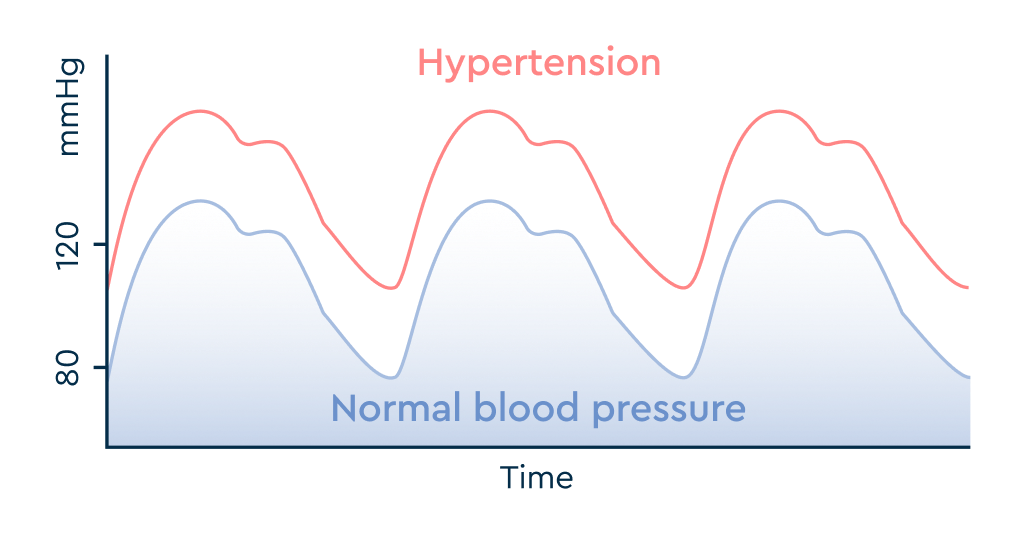
It’s one of the most common health conditions in the UK. According to the Health Survey for England, around 30% of adults have hypertension, and about half of those are untreated.3
Hypertension rarely causes noticeable symptoms, which is why it’s often called the ‘silent killer’. Left unmanaged, it increases the risk of heart attack, stroke, kidney disease, and vascular dementia.
Still, blood pressure responds well to lifestyle changes and, where needed, medication. Weight loss is one of the most effective ways of lowering blood pressure without medication.
Our guide to lowering blood pressure explains the food and activity changes with the strongest evidence.
How Wegovy helps lower blood pressure
Blood pressure reduction in STEP trials
Across the STEP clinical trials, semaglutide 2.4 mg reduced systolic blood pressure (the top number in a blood pressure reading) by approximately 3.5-5 mmHg compared to placebo.2
This reduction might sound modest, but a reduction of just 2 mmHg in systolic blood pressure is associated with a 7% reduction in vascular mortality at a population level.
The STEP trials also showed reductions in antihypertensive medication use among participants taking semaglutide, suggesting that blood pressure improvements were clinically meaningful enough for some people to reduce their medication use.2
SELECT trial: cardiovascular outcomes
The SELECT trial was a landmark study involving over 17,600 people with overweight or obesity and established cardiovascular disease, but without diabetes.1
Participants taking semaglutide 2.4 mg had a 20% reduction in major adverse cardiovascular events (MACE), including cardiovascular death, non-fatal heart attack, and non-fatal stroke, compared to placebo.1 This was the first time any weight-loss medication had demonstrated a reduction in cardiovascular risk in a large-scale trial.
MHRA approval for cardiovascular risk reduction
Based on the SELECT trial results, the MHRA approved Wegovy for cardiovascular risk reduction in July 2024. This makes Wegovy the first weight-loss medication licensed in the UK to reduce the risk of serious cardiovascular events.
The licence applies to adults with a BMI of 27 or above who have established cardiovascular disease. This is a separate indication from Wegovy’s existing obesity management licence.
Our guide to Wegovy with cardiovascular disease explains the evidence on heart health and the monitoring you may need.
Medication interactions
Semaglutide has no known clinically significant interactions with common blood pressure medications.4
A dedicated interaction study showed that semaglutide didn’t affect the absorption or blood levels of lisinopril, a widely prescribed ACE inhibitor.4
Here’s what to know about the main classes of antihypertensive medication:
- ACE inhibitors (ramipril, lisinopril): no known interaction with semaglutide. These can be taken together safely.
- ARBs (losartan, candesartan): no reported interactions. These work similarly to ACE inhibitors and are commonly co-prescribed.
- Calcium channel blockers (amlodipine): no known interaction. These are often used as first-line treatment for hypertension.
- Thiazide diuretics (indapamide, bendroflumethiazide): no reported interactions with semaglutide
- Beta-blockers (bisoprolol, atenolol): no known interaction, though both semaglutide and beta-blockers can affect heart rate, so monitoring is sensible
The main practical consideration isn’t an interaction between the drugs themselves. It’s that as you lose weight on Wegovy, your blood pressure may fall.
If you’re already taking antihypertensives, your dose may need to be reduced to avoid blood pressure dropping too low.
Your GP or prescriber should monitor your blood pressure regularly and adjust medication accordingly.
Wegovy cardiovascular data vs standard treatment
| Outcome |
Wegovy (semaglutide 2.4 mg) |
Placebo (standard care) |
| MACE reduction1 |
20% lower risk (HR 0.80) |
Reference group |
| Systolic BP change2 |
~3.5-5 mmHg reduction vs placebo |
Minimal change |
| Weight loss at 68 weeks2 |
~15% body weight |
~2.4% body weight |
| Antihypertensive dose reduction2 |
More participants reduced doses |
Fewer dose reductions |
| Mean heart rate change4 |
+3 bpm increase from baseline |
No significant change |
| UK licence for CV risk reduction |
Yes (MHRA, July 2024) |
N/A |
The GLP-1 medication compatibility checker gives a personalised list of points to discuss with your prescriber.
Safety considerations
Heart rate increase
Semaglutide causes a small increase in resting heart rate. In the STEP trials, the mean increase was around 3 beats per minute from a baseline of 72 bpm.4
For most people, this is clinically insignificant. However, if you have an existing heart rhythm condition or take beta-blockers, it’s worth discussing with your prescriber.
Blood pressure monitoring during weight loss
As weight decreases on Wegovy, blood pressure often falls too. If you’re taking antihypertensive medication, this combined effect could push your blood pressure too low (hypotension), causing dizziness, lightheadedness, or fainting.
Regular blood pressure checks are important, particularly during the dose escalation phase of Wegovy (the first 16-20 weeks). Your prescriber may need to reduce your antihypertensive dose as you lose weight.
Gastrointestinal side effects and hydration
Nausea, vomiting, and diarrhoea are common side effects of semaglutide, especially during dose escalation. These can lead to dehydration, which may affect blood pressure readings and kidney function.
Staying well hydrated is particularly important if you’re also taking diuretics for blood pressure management.
Foods to focus on
The DASH diet (Dietary Approaches to Stop Hypertension) is often recommended for blood pressure. Research shows it can reduce systolic blood pressure by around 5-7 mmHg.5
But DASH isn’t the only dietary approach that works. The evidence consistently shows that any diet based on whole foods, rich in vegetables, lean protein, and fibre, and low in ultra-processed foods, supports lower blood pressure.
There’s nothing unique about DASH in this regard; the benefit comes from the quality of the food, not the name of the diet.
Potassium-rich foods
Potassium helps your kidneys excrete sodium, which lowers blood pressure. Good sources include beetroot, sweet potatoes, spinach, avocados, bananas, and white beans.
Aim to include at least one potassium-rich food at each meal. If you’re on ACE inhibitors or ARBs, check with your GP before dramatically increasing potassium intake, as these medications can raise potassium levels.
Protein at every meal
Protein helps maintain muscle mass during weight loss and keeps you fuller for longer. When your appetite is reduced on Wegovy, getting enough protein becomes especially important.
Good sources include chicken, turkey, fish, eggs, Greek yoghurt, tofu, lentils, and beans.
Vegetables and complex carbohydrates
Leafy greens like spinach, kale, and Swiss chard are rich in both potassium and magnesium, both of which support healthy blood pressure.
Beetroot is also well-studied for its nitrate content, which helps relax blood vessels.
Complex carbohydrates like rolled oats, brown rice, and wholegrain or sourdough bread provide fibre that supports healthy gut function.
Oily fish and omega-3
Omega-3 fatty acids from oily fish like salmon, mackerel, sardines, and herring have modest blood-pressure-lowering effects. Aim for two portions of fish per week, at least one of which should be oily.
Foods to limit
- Ultra-processed foods: these are rich in sodium and low in potassium. They’re also rich in refined carbohydrates, refined oils, and sugar, all of which may worsen insulin resistance if consumed in excess. Insulin resistance can worsen blood pressure by encouraging the kidneys to retain more sodium.
- Alcohol: more than 14 units per week is associated with increased blood pressure. Even a moderate reduction can help.
Managing reduced appetite on Wegovy
Wegovy significantly reduces appetite, making it harder to eat enough nutrient-dense food. When your appetite is lower, prioritise protein and vegetables at each meal to maintain muscle mass and micronutrient intake.
Eating smaller, more frequent meals can help. Focus on nutrient density rather than volume, choosing foods that pack the most nutrition into smaller portions.
Physical activity
Any movement is better than none when it comes to blood pressure, and building small, consistent habits matters more than hitting specific targets.
A good starting point is linking a new activity to something you already do, like a 10-minute walk after dinner.
Research on habit formation suggests that anchoring a new behaviour to an existing routine helps it become automatic.8
Gradually do a little more as it feels manageable. A large meta-analysis of 270 trials found that all forms of exercise significantly reduce resting blood pressure.6
Aerobic exercise
Regular aerobic activity, such as brisk walking, cycling, or swimming, reduces systolic blood pressure by approximately 4.5 mmHg on average.6
Isometric exercise
Isometric exercises, in which you hold a static position, such as a wall sit or plank, have emerged as particularly effective for lowering blood pressure.
The same meta-analysis found that isometric training reduced systolic blood pressure by 8.24 mmHg, the largest reduction among exercise types.6
Wall sits are one of the most studied isometric exercises for blood pressure. Try holding for 2 minutes, resting for 2 minutes, and repeating this 4 times, 3 times per week.
Resistance training
Resistance training with weights or bodyweight exercises also reduces blood pressure by approximately 4.5 mmHg systolic.6 It has the added benefit of preserving muscle mass during weight loss on Wegovy.
If you have very high blood pressure (above 180/110 mmHg), avoid heavy straining and breath-holding (the Valsalva manoeuvre) during resistance exercises, as this temporarily spikes blood pressure. Lighter weights with controlled breathing are safer.
Walking after meals
A 10-15 minute walk after meals helps manage blood sugar and provides gentle cardiovascular activity. It’s a practical starting point that requires no equipment or gym membership.
The Wegovy exercise plan explains how to build aerobic and strength activity around nausea, energy levels, and injection day.
Mental health and high blood pressure
Living with high blood pressure can affect mental health in ways that aren’t always obvious.
Anxiety about cardiovascular risk
Being told you have hypertension, particularly alongside words like ‘cardiovascular risk’ and ‘heart disease’, can trigger significant health anxiety.
Some people become hypervigilant about symptoms, checking their blood pressure repeatedly and interpreting normal sensations as dangerous. This anxiety is normal and completely understandable, but it can itself raise blood pressure temporarily.
If you find yourself constantly worried about your readings, speak to your GP about managing health anxiety alongside blood pressure.
Stress and blood pressure
Chronic stress activates the sympathetic nervous system, releasing hormones like cortisol and adrenaline that raise blood pressure.
Work-related stress, financial pressures, and caregiving responsibilities are common contributors in the UK.
Relaxation techniques
Evidence-based approaches to stress management include breathing exercises, mindfulness meditation, and progressive muscle relaxation. These techniques can produce modest but meaningful reductions in blood pressure when practised regularly.
Even simple practices like 5-10 minutes of slow, deep breathing have been shown to temporarily lower blood pressure.
When to seek support
If anxiety about your health is affecting your daily life, sleep, or relationships, it’s worth seeking professional support.
Your GP can refer you for talking therapies through the NHS, and managing anxiety can have a positive knock-on effect on blood pressure control.
When to speak to your GP
- If you experience dizziness, lightheadedness, or fainting after starting Wegovy, your blood pressure medication may need adjusting
- If your home blood pressure readings are consistently below 90/60 mmHg
- If you experience a resting heart rate persistently above 100 bpm
- If gastrointestinal side effects (nausea, vomiting, diarrhoea) are severe or persistent, particularly if you’re taking diuretics
- If you’re concerned about any new symptoms after starting Wegovy
Frequently asked questions
Will Wegovy lower my blood pressure?
Clinical trials show semaglutide reduces systolic blood pressure by around 3.5-5 mmHg compared to placebo, likely due to weight loss and direct metabolic effects.2 The reduction may be greater in people with higher starting blood pressure.
Do I still need blood pressure medication on Wegovy?
Don’t stop or reduce any blood pressure medication without discussing it with your GP.
As you lose weight, your blood pressure may improve enough to reduce your dose, but this should be guided by regular monitoring and your prescriber’s advice.
Is Wegovy safe for my heart?
The SELECT trial showed Wegovy reduced major cardiovascular events by 20% in people with overweight or obesity and established heart disease.1
The MHRA approved it for cardiovascular risk reduction in July 2024, making it the first weight-loss medication with this indication in the UK.
Does Wegovy increase heart rate?
Semaglutide causes a small average increase of about 3 beats per minute.4
For most people, this isn’t clinically significant. If you have an existing heart rhythm condition, discuss this with your prescriber.
Can I take Wegovy with ramipril?
Yes. There are no known interactions between semaglutide and ACE inhibitors like ramipril.4 Your GP should monitor your blood pressure as you lose weight, in case your ramipril dose needs reducing.
Can I take Wegovy with amlodipine?
Yes. There are no reported interactions between semaglutide and calcium channel blockers like amlodipine.4 As with other blood pressure medications, your dose may need adjusting as you lose weight.
Will I need to change my diet on Wegovy if I have high blood pressure?
Any diet based on whole foods, rich in vegetables, lean protein, and fibre, supports lower blood pressure. You don’t need to follow a specific named diet like DASH.5
Because Wegovy reduces appetite, focus on nutrient-dense foods to ensure you’re getting enough potassium, magnesium, and fibre.
What exercise is best for blood pressure?
All forms of exercise help, but isometric exercises like wall sits have shown the largest blood pressure reductions in research, lowering systolic pressure by about 8 mmHg.6 Combining this with regular aerobic activity like walking provides the best overall benefit.
Can stress make my blood pressure worse while on Wegovy?
Chronic stress can elevate blood pressure regardless of medication. While Wegovy addresses weight-related cardiovascular risk, managing stress through regular exercise, relaxation techniques, and adequate sleep supports overall blood pressure control.
Take home message
Wegovy is safe to take with high blood pressure, and the evidence suggests it actively helps.
Clinical trials show it reduces blood pressure, and the SELECT trial demonstrated a 20% reduction in serious cardiovascular events.1
The MHRA approved Wegovy for cardiovascular risk reduction in July 2024, making it the first weight-loss medication with this indication in the UK.
There are no known interactions with common blood pressure medications, though doses may need to be adjusted as you lose weight.
Combining Wegovy with a diet based on whole foods that’s rich in potassium, regular exercise (particularly isometric training), and stress management provides the strongest foundation for blood pressure control.
Second Nature’s programme combines medication support with personalised nutrition and lifestyle guidance from registered dietitians and nutritionists.
Meals are built around a balanced plate model: half vegetables, a quarter protein, a quarter complex carbohydrates, plus a serving of healthy fat.
A peer-reviewed study published in JMIR Formative Research found that active subscribers on Second Nature’s semaglutide-supported programme lost an average of 19.1% of their body weight at 12 months, with 77.7% achieving at least 10% weight loss.7
Second Nature's Mounjaro and Wegovy programmes
Second Nature provides Mounjaro or Wegovy as part of our Mounjaro and Wegovy weight-loss programmes.
Why choose Second Nature over other medication providers, assuming you're eligible?
Because peace of mind matters.
We've had the privilege of working with the NHS for over eight years, helping people across the UK take meaningful steps toward a healthier, happier life.
Our programmes are designed to meet people where they are, whether that means support with weight loss through compassionate one-to-one health coaching, or access to the latest weight-loss medications (like Mounjaro and Wegovy) delivered alongside expert care from a multidisciplinary team of doctors, psychologists, dietitians, and personal trainers.
At the heart of everything we do is a simple belief: real, lasting change comes from building better habits, not relying on quick fixes. We're here to support that change every step of the way.
With over a decade of experience, thousands of lives changed, and a long-standing record of delivering programmes used by the NHS, we believe we're the UK's most trusted weight-loss programme.
We hope to offer you something invaluable: peace of mind, and the support you need to take that first step.