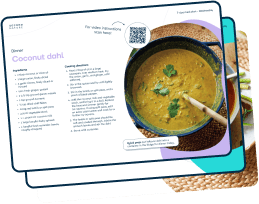
Use our free Weight Regain Prevention Planner
Appetite returning is the most common worry people have after stopping. Use our free planner to assess which of the 8 habits that protect against weight regain you have in place, including the eating patterns and protein habits that keep hunger manageable when the medication wears off.
It assesses your current habits across diet quality, protein, meal planning, aerobic exercise, strength training, emotional eating, sleep, and stress, then generates a personalised plan based on the same approach we use in our medication-supported programme.
It takes around 3 minutes. If you’re thinking about reducing or stopping your medication, the planner will also generate a tapering schedule based on your current dose.
How Mounjaro lowers appetite
Mounjaro works through two main pathways to reduce hunger and food cravings.
In the gut, the drug slows gastric emptying, keeping food in the stomach longer. This creates a sustained feeling of fullness after meals and reduces the frequency of hunger signals sent to the brain.4
In the brain, tirzepatide activates GLP-1 and GIP receptors, with GLP-1 signalling directly affecting appetite centres, including the hypothalamus.
These signals reduce food-seeking behaviour and quieten what’s often called ‘food noise’, the constant mental preoccupation with food.3
The drug also improves insulin sensitivity, which contributes to steadier blood sugar throughout the day. This may reduce the energy fluctuations that can trigger cravings, though it’s a secondary mechanism rather than a primary driver of appetite.
Together, these effects make it feel easier to eat less. The desire to snack between meals drops, and food occupies less mental space.
None of this changes your underlying biology in the long term. The habits you build while the drug controls hunger levels will help to maintain weight loss in the long term.
What happens when you stop
The biological changes that occur when stopping Mounjaro are predictable, but how strongly they affect your eating depends on the habits you’ve developed.
Your stomach empties at its normal pace again. The physical sensation of prolonged fullness that helped control portion sizes goes away within a few weeks of your last injection.1
Your natural hunger hormones return to baseline. Ghrelin (which drives hunger) rises as the medication clears, and this can feel more intense after months on the drug.3
Food noise often comes back. A 2025 case study using deep-brain electrode recordings in a single patient on tirzepatide found that the medication initially quietened activity in the nucleus accumbens, the brain’s reward centre.
After about five months of treatment, that activity returned along with episodes of severe food preoccupation, suggesting the drug’s effect on the reward circuit may be temporary for some people.5 This was a single case observation, not a multi-participant trial, but it provides a possible explanation for what many people describe in clinical practice.
Your blood sugar can return to pre-medication levels, leading to energy fluctuations that trigger overeating if your eating habits haven’t changed.
A 2025 systematic review and meta-analysis of GLP-1 cessation studies found that adults with obesity regained an average of 5.6 kg (around 5.8% of body weight) within a median follow-up of 21 weeks after stopping.
Subgroup analysis showed semaglutide users regained an average of 8.2 kg, with greater regain in studies that followed people for more than 26 weeks.2
The SURMOUNT-4 trial of tirzepatide, also reflected in the meta-analysis, showed that participants who stopped the medication regained around 14% of their body weight over 52 weeks, while those who continued to take it kept losing weight.6
Those figures are averages across trials where participants stopped abruptly without ongoing behavioural support. Outcomes vary depending on how you taper and the habits you have in place when you stop.
For more detailed guidance on the tapering process, see our complete guide to coming off Mounjaro.
When appetite comes back
Tirzepatide has a half-life of around 5 days, so the drug clears from your system in roughly 25 to 30 days after your last injection.1
Most people notice some increase in appetite within 7 to 14 days. Hunger returns gradually as drug levels drop, rather than appearing overnight.
Food noise often returns more noticeably between two and three weeks in, when tirzepatide concentrations fall below the level needed to effectively suppress the brain’s reward circuits.3
By 4 to 5 weeks after your last injection, appetite typically returns to baseline. Whether that baseline feels manageable or overwhelming depends on the habits you have in place.
Individual experiences vary. Treatment duration, the dose you were on when you stopped, and how abruptly you came off all influence the transition. People who taper slowly tend to report a smoother return rather than a sudden rebound.
Building natural appetite control
The most effective approach to managing appetite after Mounjaro is to replicate as much of the medication’s effect as possible through habits.
Eat protein at every meal. Protein lowers hunger more than fat or carbohydrate and helps you feel fuller for longer.7
Aim for around 30 to 40 grams at each main meal, roughly the size of your palm for meat, fish, tofu, or poultry.
When putting together meals, choose your protein first. Good sources include Greek yoghurt, eggs, lean meats, fish, beans, lentils, and tofu.
Fill half your plate with vegetables. The fibre slows the rate at which food moves through your digestive system, which mimics part of Mounjaro’s effect on gastric emptying. At breakfast, low-sugar fruits like berries with yoghurt work in the same way.
Add complex carbohydrates as a quarter of the plate. Wholegrain or sourdough bread, rolled oats, brown rice, potato, sweet potato, quinoa, beans and lentils, wholemeal pasta, or wholemeal couscous all release energy more slowly than refined options and keep you fuller for longer.
Include a serving of fat from whole foods. Nuts, seeds, avocado, and extra-virgin olive oil help naturally increase fullness hormones like GLP-1 and further slow digestion. They also support insulin sensitivity, which keeps blood sugar steadier.
Eat at consistent times. Three balanced meals a day at roughly the same times help train your hunger hormones to expect food at predictable points, which reduces between-meal cravings. Add a protein-rich snack if there’s a gap of 3 to 5 hours or more.
Design your environment so the easy choice is the healthy one. Move ultra-processed snacks out of easy reach and keep healthier options visible, like a fruit bowl on the counter, or pre-cut vegetable sticks ready to dip in hummus.
Designing your environment is more reliable than relying on willpower in the moment.
Handling cravings and food noise
Hunger and cravings aren’t the same thing. Hunger is your body asking for fuel; cravings are usually about reward, emotion, or habit, and how we respond to hunger and cravings may vary.
For physical hunger, the answer is usually a balanced meal with protein, fibre, complex carbohydrates, and a source of fat.
If you’re hungry between meals despite a balanced eating pattern, your meals may be too small or too low in protein.
For cravings, the most valuable technique to learn is urge surfing. It’s a mindfulness skill originally developed by Marlatt and colleagues for managing substance-use cravings, and is now widely used in eating-pattern work.8
The principle is that an urge isn’t a command. Most intense food urges peak and then fade within 10 to 15 minutes if you don’t act on them. Acknowledge the craving, notice where you feel it, and let it pass without immediately reaching for food.
Have a list of activities ready for when you experience cravings. Take a walk, call someone, get a glass of water, or do something that keeps your hands busy. The goal is to ride the urge out rather than acting on it without thought.
Sleep also affects our cravings. Poor sleep raises ghrelin (the hunger hormone) and increases cravings for energy-dense foods.9 Aim for 7 to 9 hours a night, with consistent bed and wake times.
Stress works the same way. Chronic stress increases cortisol, which drives appetite and makes high-reward foods more appealing.
Building in regular ways to wind down, whether that’s a walk, breathwork, or time outside, helps keep craving signals quieter.
Frequently asked questions
When does appetite return after stopping Mounjaro?
Most people notice an increase in appetite within 7 to 14 days, with food noise returning more noticeably between two and three weeks. By 4 to 5 weeks after your last injection, appetite has usually returned to its baseline level.
Will I regain weight if my appetite comes back?
Not necessarily. A 2025 meta-analysis found that adults with obesity regained an average of 5.6 kg within a median 21 weeks after stopping GLP-1 medications, with greater regain over longer follow-ups.2
Outcomes vary depending on how you taper and the habits you have in place at the point of stopping.
How can I control hunger without Mounjaro?
Build your meals around protein (around 30 to 40 grams per main meal), fill half the plate with vegetables, add complex carbohydrates and a serving of fat from whole foods, and eat at consistent times.
Get enough sleep, manage stress, and learn urge surfing for cravings.
Why am I so hungry after stopping Mounjaro?
Tirzepatide suppresses hunger signals and slows gastric emptying. Once the drug clears, both effects reverse, so you feel hungry sooner and more intensely than you did on the medication. This is expected biology, not a sign you’ve failed.
Does food noise come back?
Often yes. A 2025 case study tracking brain activity in a single patient on tirzepatide found that activity in the brain’s reward centre was initially quietened but returned after about five months on the drug, alongside episodes of severe food preoccupation.5
The case is one person, not a multi-patient study, but it provides a possible mechanism for what many people describe in practice.
Should I taper off Mounjaro gradually?
There’s no published clinical guideline mandating tapering, because pharmacologically tirzepatide doesn’t cause withdrawal.
Most prescribers recommend a gradual reduction for behavioural reasons: stepping down gives you time to monitor how your appetite changes at each stage and to bed in the habits you’ll rely on. Discuss the right approach with your prescriber.
What foods help control appetite naturally?
Protein-rich foods (eggs, fish, lean meats, Greek yoghurt, beans, lentils), high-fibre vegetables, fats from whole foods (nuts, avocado, extra virgin olive oil), and complex carbohydrates like rolled oats, brown rice, sweet potato, and wholegrain bread.
Can I restart Mounjaro if my appetite becomes unmanageable?
Yes, Mounjaro can be restarted under medical supervision. If you’re struggling, that’s a conversation to have with your prescriber rather than a sign you should push through.
Restarting isn’t a failure, but the underlying habits still need to be addressed for long-term results.
Take home message
Your appetite will return after stopping Mounjaro. That’s expected biology, not a sign of failure. The drug lowers hunger while it’s in your system, and within a few weeks of stopping, your hormones return to their baseline.
What changes the outcome is the habits you’ve built while on the medication. People who taper slowly and have a balanced eating pattern, regular meal timing, a supportive food environment, and a way of handling cravings in place tend to maintain their weight loss.
People who stop suddenly without those habits typically regain a meaningful proportion of what they lost.
If you haven’t already, scroll back up and use our Weight Regain Prevention Planner to see which of the 8 habits you have in place and which still need work. The earlier you start building those habits, the easier the transition is.
Second Nature's Mounjaro and Wegovy programmes
Second Nature provides Mounjaro or Wegovy as part of our Mounjaro and Wegovy weight-loss programmes.
Why choose Second Nature over other medication providers, assuming you're eligible?
Because peace of mind matters.
We've had the privilege of working with the NHS for over eight years, helping people across the UK take meaningful steps toward a healthier, happier life.
Our programmes are designed to meet people where they are, whether that means support with weight loss through compassionate one-to-one health coaching, or access to the latest weight-loss medications (like Mounjaro and Wegovy) delivered alongside expert care from a multidisciplinary team of doctors, psychologists, dietitians, and personal trainers.
At the heart of everything we do is a simple belief: real, lasting change comes from building better habits, not relying on quick fixes. We're here to support that change every step of the way.
With over a decade of experience, thousands of lives changed, and a long-standing record of delivering programmes used by the NHS, we believe we're the UK's most trusted weight-loss programme.
We hope to offer you something invaluable: peace of mind, and the support you need to take that first step.
References
- Electronic Medicines Compendium. (2026). Mounjaro KwikPen 15mg solution for injection in pre-filled pen — Summary of Product Characteristics. Eli Lilly and Company Limited.
- Tzang CC, Wu PH, Luo CA, et al. (2025). Metabolic rebound after GLP-1 receptor agonist discontinuation: a systematic review and meta-analysis. eClinicalMedicine, 90, 103680. doi:10.1016/j.eclinm.2025.103680.
- Hayes MR, Borner T, De Jonghe BC. (2021). The Role of GIP in the Regulation of GLP-1 Satiety and Nausea. Diabetes, 70(9), 1956-1961.
- Edholm T, Degerblad M, Gryback P, et al. (2010). Differential incretin effects of GIP and GLP-1 on gastric emptying, appetite, and insulin-glucose homeostasis. Neurogastroenterology & Motility, 22(11), 1191-1200.
- Choi W, Nho YH, Qiu L, et al. (2025). Brain activity associated with breakthrough food preoccupation in an individual on tirzepatide. Nature Medicine, 31(12), 4038-4043. doi:10.1038/s41591-025-04035-5.
- Aronne LJ, Sattar N, Horn DB, et al. (2024). Continued Treatment With Tirzepatide for Maintenance of Weight Reduction in Adults With Obesity: The SURMOUNT-4 Randomized Clinical Trial. JAMA, 331(1), 38-48.
- Batterham RL, Heffron H, Kapoor S, et al. (2006). Critical role for peptide YY in protein-mediated satiation and body-weight regulation. Cell Metabolism, 4(3), 223-233.
- Bowen S, Marlatt A. (2009). Surfing the urge: brief mindfulness-based intervention for college student smokers. Psychology of Addictive Behaviors, 23(4), 666-671.
- Spiegel K, Tasali E, Penev P, Van Cauter E. (2004). Brief communication: Sleep curtailment in healthy young men is associated with decreased leptin levels, elevated ghrelin levels, and increased hunger and appetite. Annals of Internal Medicine, 141(11), 846-850.
- Richards R, Lunt W, Whitman M, Spaltro G, Hall R. (2025). Semaglutide and Tirzepatide in a Remote Weight Management Program: 12-Month Retrospective Observational Study. JMIR Formative Research, 9, e81912. doi:10.2196/81912.