What is fatty liver disease?
Fatty liver disease occurs when excess fat builds up in your liver cells.
The medical term has recently changed from non-alcoholic fatty liver disease (NAFLD) to metabolic dysfunction-associated steatotic liver disease (MASLD), reflecting its close connection to metabolic health conditions like obesity and type 2 diabetes.
The condition exists on a spectrum:
- Simple fatty liver (steatosis): Fat accumulation without significant inflammation. This is the most common form and often causes no symptoms.
- MASH (metabolic dysfunction-associated steatohepatitis): Previously called NASH, this involves fat plus inflammation and liver cell damage. This is the form that can progress to more serious problems.
- Fibrosis and cirrhosis: Scarring of the liver that develops over years of ongoing damage. Cirrhosis is the most severe stage and can lead to liver failure.
Most people with fatty liver have no symptoms whatsoever. When symptoms do occur, they might include fatigue, discomfort in the upper right abdomen, or generally feeling unwell.
The condition is often discovered incidentally during blood tests or scans for other reasons.
The main risk factors include carrying excess weight (particularly around the middle), type 2 diabetes, and high blood pressure. If you have several of these conditions together, your risk increases.
How does Mounjaro help fatty liver disease?
Mounjaro works through several pathways that directly benefit liver health:
Weight loss reduces liver fat. The most straightforward benefit is weight reduction. Losing just 5-10% of your body weight can significantly reduce liver fat, while losing more than 10% can help resolve inflammation and even improve fibrosis.4
Mounjaro supports average weight loss of 15-22%, putting many people well into the range needed for liver improvement.
Improved insulin sensitivity. Insulin resistance is a key driver of fatty liver disease. When your cells don’t respond properly to insulin, your body stores more fat in the liver. Mounjaro improves how your body responds to insulin, helping to address this underlying problem.
Reduced inflammation. Research suggests GLP-1 medications may have direct anti-inflammatory effects on the liver, beyond what we’d expect from weight loss alone.5
Lower blood sugar and lipids. By improving blood sugar control and reducing the amount of fat in the bloodstream, Mounjaro helps create conditions where your liver can recover.
What does the research show?
The SYNERGY-NASH trial, published in the New England Journal of Medicine in June 2024, provides the strongest evidence we have for tirzepatide (the drug in Mounjaro) in fatty liver disease.1
The study details
- 190 participants with biopsy-confirmed MASH and moderate to severe fibrosis (stage F2 or F3)
- Participants were randomly assigned to receive 5mg, 10mg, or 15mg of tirzepatide, or placebo
- Treatment lasted 52 weeks
- Average BMI was 36, and 58% had type 2 diabetes
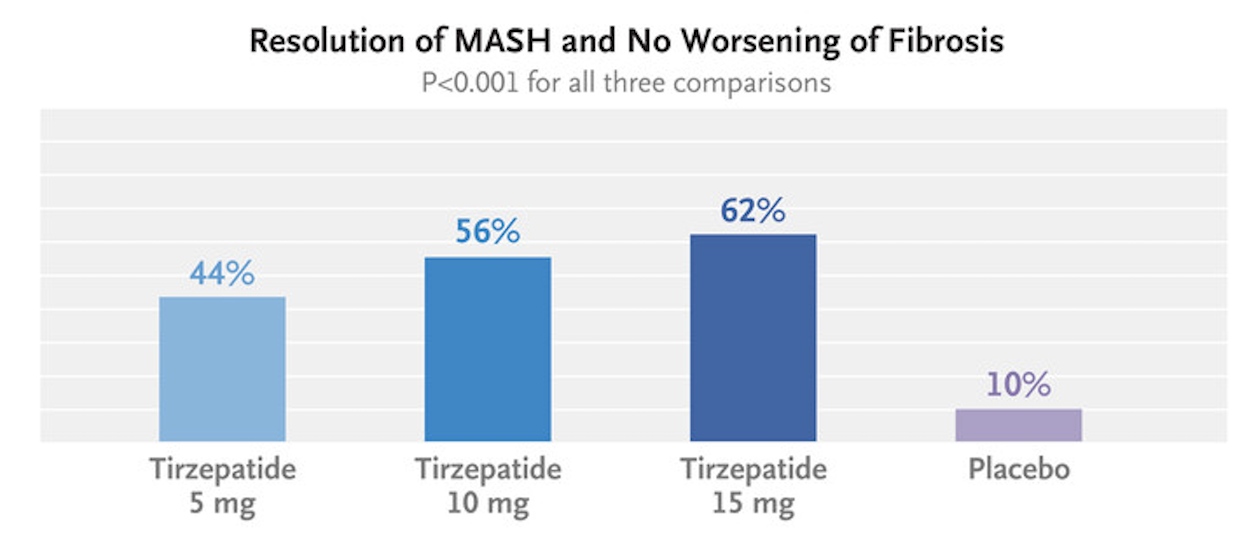
Resolution of MASH (primary outcome)
| Dose |
MASH resolution |
Difference vs placebo |
| Placebo |
10% |
— |
| 5 mg |
44% |
+34 percentage points |
| 10 mg |
56% |
+46 percentage points |
| 15 mg |
62% |
+53 percentage points |
All three doses showed statistically significant improvements compared to placebo (p<0.001 for all comparisons).
Fibrosis improvement (secondary outcome)
The study also looked at whether fibrosis improved by at least one stage:
| Dose |
Fibrosis improvement (≥1 stage) |
| Placebo |
30% |
| 5 mg |
55% |
| 10 mg |
51% |
| 15 mg |
51% |
Liver fat reduction
Participants also had significant reductions in liver fat content as measured by MRI, ranging from 42% to 57% reduction, depending on the dose.
Can Mounjaro reverse fatty liver disease?
Based on the SYNERGY-NASH trial results, Mounjaro can reverse the inflammatory component of fatty liver disease (MASH) in most people.
The trial showed that 62% of participants on the 15 mg dose achieved MASH resolution without worsening of fibrosis. This means the active disease process had stopped.
However, there are important caveats:
- The trial lasted 52 weeks. Longer-term outcomes aren’t yet known.
- Participants had moderate to severe fibrosis (F2-F3), not cirrhosis (F4)
- Results with cirrhosis may differ, and the trial didn’t include these patients
- Maintaining improvements likely requires ongoing weight management
For fibrosis, about half of the participants showed improvement of at least one stage. Complete reversal of significant scarring takes longer and may not be achievable for everyone.
How long does it take to see results?
Different aspects of fatty liver disease improve at different rates:
Liver fat reduction: This can begin within weeks to months of starting treatment, as weight loss occurs. MRI studies show measurable reductions in liver fat content relatively early.
Liver enzyme improvements: Blood markers like ALT and AST often improve within the first few months. Your doctor may check these periodically to track progress.
MASH resolution: The trial measured this at 52 weeks. Resolution of inflammation and liver cell damage takes time, typically several months to a year.
Fibrosis improvement: Liver scarring is the slowest to reverse. Even in the trial, fibrosis improvement rates were more modest than MASH resolution. Significant improvement may take a year or longer, if it occurs.
What to monitor while taking Mounjaro
If you have fatty liver disease and are taking Mounjaro, your healthcare provider may recommend:
Liver function blood tests: Periodic checks of liver enzymes (ALT, AST) can help track your liver’s response to treatment. These are simple blood tests your GP can arrange.
Side effect monitoring: The gastrointestinal side effects of Mounjaro (nausea, constipation) are usually manageable but should be reported to your prescriber. Dehydration from persistent vomiting or diarrhoea needs prompt attention.
Signs to report promptly: Contact your healthcare provider if you experience severe abdominal pain, persistent vomiting, yellowing of your skin or eyes, or dark urine. While rare, these could indicate a problem that needs attention.
Weight loss pace: Very rapid weight loss can occasionally worsen liver function in the short term. If you’re losing weight very quickly, your doctor may want to monitor more closely.
Your prescribing pharmacist or GP can advise on what monitoring is appropriate for your individual situation.
Diet tips for fatty liver on Mounjaro
While Mounjaro helps us feel fuller for longer, what you eat still matters for liver health. Here are some practical tips:
Focus on whole foods. A diet based on vegetables, lean proteins, whole grains, and healthy fats supports liver health better than processed foods.6
Prioritise protein. Getting enough protein (roughly a palm-sized portion at each meal) helps preserve muscle mass during weight loss and supports liver recovery.
Limit added sugars and refined carbohydrates. These are particularly problematic for fatty liver because they can increase liver fat production. This includes sugary drinks, sweets, pastries, and biscuits.
Be mindful of alcohol. Alcohol is metabolised in the liver, similar to sugar, and drinking alcohol to excess can worsen our liver health.
Include omega-3-rich foods. Oily fish like salmon, mackerel, and sardines contain omega-3 fatty acids that may help reduce liver fat and inflammation.
For more detailed guidance, see our guide on what to eat while on Mounjaro.
Frequently asked questions
Can Mounjaro cure fatty liver disease?
‘Cure’ is a strong word, but the SYNERGY-NASH trial showed that 62% of participants on the highest dose achieved resolution of MASH after one year.
This means the active disease process stopped, though maintaining a healthy weight remains important to prevent recurrence.
How long until I see improvements in my liver?
Liver enzymes (blood test markers) often improve within the first few months. Resolution of inflammation typically takes longer, with the trial showing significant results at 52 weeks.
Fibrosis improvement may take even longer.
Do I need liver function tests while taking Mounjaro?
Your prescriber may recommend periodic liver function blood tests, particularly if you have known fatty liver disease.
These help track your liver’s response to treatment and ensure everything is progressing safely.
Can I take Mounjaro if I have cirrhosis?
The main trial excluded people with cirrhosis (stage F4 fibrosis), so we don’t have strong evidence for this group.
If you have cirrhosis, you’d need specialist hepatology input before starting Mounjaro.
Will my liver recover completely?
This depends on how advanced your liver disease is. Simple fatty liver and MASH without significant fibrosis have the best chance of full recovery.
More advanced fibrosis may improve but might not reverse completely.
What are signs my liver is improving?
Improving liver enzyme levels on blood tests is often the first measurable sign.
You might also notice improved energy levels, though fatty liver often causes no symptoms to begin with.
Should I avoid alcohol while taking Mounjaro for fatty liver?
While moderate alcohol consumption isn’t absolutely prohibited, limiting or avoiding alcohol is generally sensible if you have fatty liver disease.
Your liver is already under stress, and alcohol adds to that burden.
Is fatty liver disease serious?
It can be. While simple fatty liver rarely causes problems, MASH can progress to cirrhosis and liver failure over years or decades.
The good news is that catching and treating it early significantly improves outcomes.
Can fatty liver disease come back after treatment?
Yes, if the underlying causes return. Maintaining a healthy weight and lifestyle after stopping Mounjaro (or while continuing it) is important for preventing recurrence.
Does Mounjaro work better than lifestyle changes alone for fatty liver?
The trial compared Mounjaro to a placebo rather than a lifestyle intervention directly.
However, the 62% resolution rate with Mounjaro is higher than typically seen with lifestyle changes alone in clinical trials, likely because of the greater weight loss achieved.
Take home message
Fatty liver disease affects roughly one in three adults, yet most people don’t know they have it until it’s discovered incidentally or has already progressed.
The SYNERGY-NASH trial showed that 62% of participants on the highest dose of Mounjaro achieved resolution of MASH after one year, with over half showing improvement in liver scarring.
If you have fatty liver disease and are considering Mounjaro, or you’re already taking it, the key points are:
- Weight loss is the most effective treatment for fatty liver, and Mounjaro supports significant weight loss
- Resolution of the inflammatory component (MASH) is achievable for many people within a year
- Fibrosis improvement is possible, but takes longer
- Maintaining healthy habits alongside medication gives you the best chance of lasting improvement
Your doctor can advise whether Mounjaro is appropriate for your situation and arrange any monitoring that might be helpful.
Second Nature's Mounjaro and Wegovy programmes
Second Nature provides Mounjaro or Wegovy as part of our Mounjaro and Wegovy weight-loss programmes.
Why choose Second Nature over other medication providers, assuming you're eligible?
Because peace of mind matters.
We've had the privilege of working with the NHS for over eight years, helping people across the UK take meaningful steps toward a healthier, happier life.
Our programmes are designed to meet people where they are, whether that means support with weight loss through compassionate one-to-one health coaching, or access to the latest weight-loss medications (like Mounjaro and Wegovy) delivered alongside expert care from a multidisciplinary team of doctors, psychologists, dietitians, and personal trainers.
At the heart of everything we do is a simple belief: real, lasting change comes from building better habits, not relying on quick fixes. We're here to support that change every step of the way.
With over a decade of experience, thousands of lives changed, and a long-standing record of delivering programmes used by the NHS, we believe we're the UK's most trusted weight-loss programme.
We hope to offer you something invaluable: peace of mind, and the support you need to take that first step.