How to time your medications
Levothyroxine is best absorbed on an empty stomach.
The NHS advises taking it once a day in the morning, at least 30 to 60 minutes before breakfast or a drink containing caffeine, like tea or coffee.1
Wegovy is a subcutaneous injection given once a week, on the same day each week.
You can inject at any time of day, with or without food, so the timing of your weekly injection doesn’t need to align with your daily tablet.
For most people, the simplest approach is to keep your levothyroxine routine exactly as it is and add Wegovy on a chosen day.
Morning or evening dosing
Take your levothyroxine with water as soon as you wake up, and wait at least 30 minutes before breakfast, tea, coffee, or any other tablets.
Some people prefer bedtime dosing, taken three to four hours after their last meal. Either routine works alongside Wegovy.
What to keep separate from levothyroxine
Calcium, iron, and antacids reduce levothyroxine absorption, so leave at least four hours between these and your tablet.
Soya and high-fibre meals taken at the same time can also interfere with levothyroxine absorption.1
Does Wegovy affect levothyroxine absorption?
The Wegovy prescribing information doesn’t list an interaction with levothyroxine and doesn’t recommend a dose adjustment for oral medications taken alongside it.
It notes no clinically relevant effect on gastric emptying rate at the 2.4 mg dose and no clinically relevant interactions with the oral medications tested.4
A widely quoted figure is that semaglutide increases thyroxine exposure by 33%, but that number comes from a study of the tablet form of semaglutide (sold as Rybelsus for type 2 diabetes), not the Wegovy injection.
In that trial, a single dose of levothyroxine taken with oral semaglutide increased total thyroxine exposure by 33%.5
The likely reason for this increased exposure is that the semaglutide tablet and levothyroxine share the same dosing conditions.
Both are taken first thing on an empty stomach with water, and taking them together appears to increase the amount of thyroxine absorbed.
Wegovy is injected, so it’s unlikely to have the same effect on thyroxine exposure as Rybelsus.
That said, semaglutide does slow gastric emptying, as do other medications in its class. The effect is most noticeable when you first start and after each dose increase, then settles over time.4
Because levothyroxine has a narrow therapeutic range, where too little brings thyroid symptoms back, and too much can cause palpitations, anxiety, or sleep problems, the sensible approach is to keep your usual timing, monitor your blood tests, and inform your prescriber of any symptoms you experience.
Symptoms worth watching for
If you’ve been stable on levothyroxine for many years and start Wegovy, these symptoms suggest your thyroid levels may have changed:
- Returning fatigue, feeling colder, constipation, or low mood, which can mean your levels have dropped
- A racing heart, anxiety, tremor, sweating, or trouble sleeping, which can mean your levels are too high, sometimes after weight loss has reduced how much levothyroxine you need
None of these is an emergency on their own, but they’re worth mentioning to your GP. A blood test usually shows whether your thyroid levels have changed.
TSH monitoring on Wegovy
NICE guidance on thyroid disease recommends measuring TSH (the hormone that tells your thyroid how much to produce) every three months until your level is stable, then once a year.6
Starting Wegovy would be considered a meaningful change, so it makes sense to bring your TSH check forward to roughly six to eight weeks after starting, and again after each dose increase. Ask your GP for this rather than waiting for your annual review.
Your TSH should stay in the target range your prescriber has set for you. If it increases, your absorption may have changed. If it decreases, you may have lost enough weight for your dose to be reduced.
The standard test is TSH. If your symptoms don’t match your TSH result, your GP may also check free T4 (the main hormone your thyroid produces).
NICE doesn’t recommend routine free T3 testing for an underactive thyroid, because the result rarely changes how you’re treated.6
Weight loss and your levothyroxine dose
A study in the Journal of Clinical Endocrinology & Metabolism found that lean body mass, not fat mass, is the strongest predictor of your thyroid hormone requirement, which is why your requirement often decreases as you lose weight.3
If you lose 10% to 15% of your body weight, your prescriber may reduce your levothyroxine to keep your TSH in range.
Wegovy produces substantial weight loss. In the STEP 1 trial, the 2.4 mg dose led to an average weight loss of 14.9% over 68 weeks.7
At the higher 7.2 mg dose, approved for weight management in people with obesity, the STEP UP trial reported an average weight loss of 20.7% over 72 weeks.8
If your prescriber reduces your dose, they’ll usually retest your TSH six to eight weeks later.
Changes are typically small, often a 25 microgram change. Don’t adjust your own dose because thyroid hormone has a long half-life, and it’s easy to take too much.
If you have Hashimoto’s disease, the most common cause of an underactive thyroid in the UK, weight loss won’t reverse the underlying autoimmune process. You’ll still need levothyroxine; the dose may simply be lower.
Eating well on both medications
Wegovy reduces appetite and quietens food noise, but the aim isn’t to eat as little as possible.
Eating three balanced meals a day helps preserve muscle, supports thyroid function, and keeps your energy levels even.
We recommend eating a diet based on whole foods that contains enough protein, fibre, fat, and complex carbohydrates, and limits ultra-processed foods.
Second Nature’s balanced plate is a useful starting point: half your plate vegetables, a quarter protein, a quarter complex carbohydrates, plus a serving of fat.
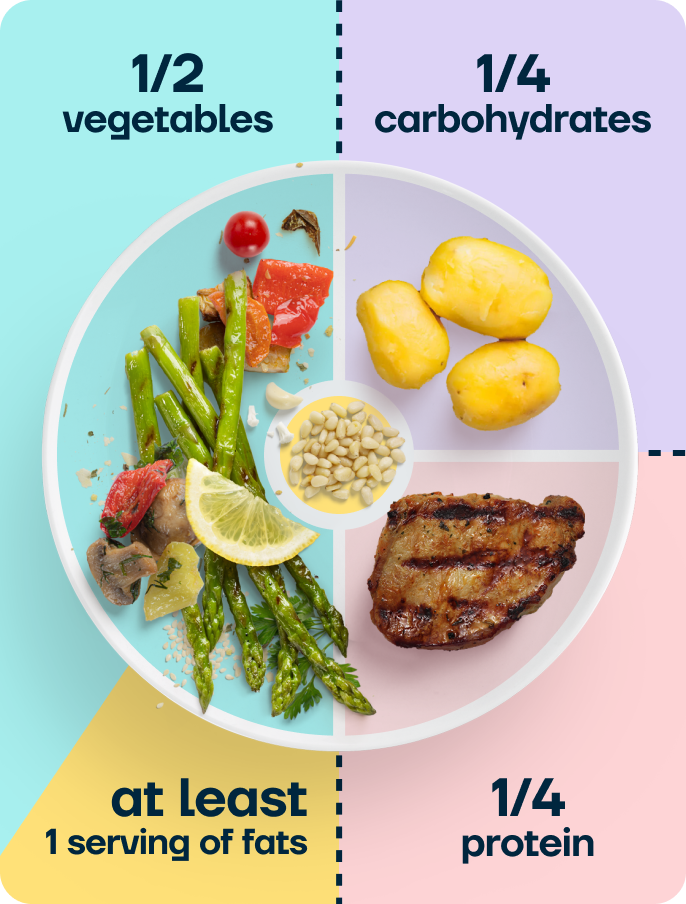
Protein at every meal
Protein protects muscle mass during weight loss and helps you feel fuller for longer.
A useful visual is a portion around the size of your palm at each meal: eggs, fish, chicken, turkey, lean red meat, Greek yoghurt, beans, lentils, or tofu.

Complex carbohydrates with fibre
Fibre-rich carbohydrates provide steady energy and support digestion, which helps, as constipation is common with both an underactive thyroid and in the early weeks of Wegovy.
Good options include wholegrain or sourdough bread, rolled oats, brown rice, potato, sweet potato, quinoa, beans and lentils, wholemeal pasta or noodles, and wholemeal couscous.
Healthy fats from whole foods
Fat helps you absorb fat-soluble vitamins, supports hormone production, and adds satisfaction to meals.
Choose extra virgin olive oil, avocado, nuts, seeds, and oily fish such as salmon, mackerel, or sardines.
Oily fish twice a week also provides iodine and selenium, two minerals your thyroid uses to make its hormones.
Vegetables and the balanced plate
Aim for half your plate as vegetables at lunch and dinner.
Cooking vegetables makes them easier to digest, which can be helpful when our appetite is reduced on the medication.
There’s no strong evidence that broccoli, kale, or cabbage harm thyroid function when consumed in regular dietary amounts.
Eating three balanced meals when you’re not hungry
Wegovy can reduce our hunger to the point that we might not feel like eating at all.
However, skipping meals or eating too little can increase the risk of muscle and hair loss, nutrient deficiencies, and low energy levels, as our bodies struggle to meet our everyday needs.
So, it’s essential to eat three balanced meals a day, even if you’re not hungry.
On days you’re not feeling that hungry, focus on easier-to-digest whole foods:
- Greek yoghurt with berries and nut butter
- Scrambled eggs and spinach on sourdough
- A smoothie with spinach, fruit, Greek yoghurt, and protein powder
- Soups with boiled eggs (or another protein source on the side) and toast
You could also try batch cooking once a week so you have meals ready to reheat on days you don’t feel like cooking.
Staying active
Movement supports weight loss, helps preserve muscle, and counteracts the fatigue that an underactive thyroid can cause.
We recommend focusing on building activity into your day as a habit first, before setting more ambitious movement targets.
Challenges like the NHS’ Coach to 5k are a perfect example of building something up slowly so that the habit sticks in the long term.
Running or walking a 5k doesn’t have to be the goal; more importantly, it’s about moving in ways you feel capable of and enjoy.
Research on habit formation suggests it takes an average of 66 days for a new behaviour to feel automatic.9
We’d recommend starting small and linking the habit to something you already do, like a 10-minute walk after dinner. Gradually do a little more as it feels manageable.
Resistance training will help to maintain muscle mass and improve muscle function while on GLP-1 medications.
But this is something you gradually introduce over time once you’ve cemented physical activity as a habit.
Our members love the concept of exercise snacking, where you introduce small amounts of movement into your day, such as calf raises while the kettle boils or squats in front of the TV.
Wegovy versus other weight-loss medications
The table compares Wegovy with the two other weight-loss medications most commonly prescribed in the UK, focusing on what’s relevant if you take levothyroxine.
| Feature |
Wegovy (semaglutide) |
Mounjaro (tirzepatide) |
Saxenda or generic liraglutide |
| Mechanism |
GLP-1 receptor agonist |
Dual GLP-1 and GIP receptor agonist |
GLP-1 receptor agonist |
| Dosing |
Once a week, subcutaneous injection |
Once a week, subcutaneous injection |
Once a day, subcutaneous injection |
| Average weight loss in trials |
14.9% at 68 weeks on 2.4 mg (STEP 1); 20.7% at 72 weeks on 7.2 mg (STEP UP)7,8 |
20.9% at 72 weeks on 15 mg (SURMOUNT-1)11 |
Around 8% at 56 weeks (SCALE)12 |
| Levothyroxine-relevant points |
No listed interaction with levothyroxine. Slows gastric emptying; strongest at initiation and with dose increases. Bring your TSH check forward to 6 to 8 weeks after starting. |
No listed interaction with levothyroxine. Also slows gastric emptying. Same monitoring approach applies. |
Daily injection means more frequent gut effects, but each is shorter-lived. Same monitoring approach applies. |
None of these medications has a listed interaction with levothyroxine.
The shared consideration is delayed gastric emptying, which is why we’d recommend a TSH check after starting them.
Frequently asked questions
Can you take Wegovy and levothyroxine on the same day?
Yes. Levothyroxine is a daily tablet, and Wegovy is a weekly injection, so they’ll often fall on the same day.
Take your levothyroxine in the morning on an empty stomach, and inject your Wegovy at any time that suits you. The timings don’t need to align.
Does Wegovy really increase thyroxine levels by 33%?
That 33% figure comes from a study of the tablet form of semaglutide (Rybelsus), not the Wegovy injection.5
The tablet and levothyroxine are both taken on an empty stomach first thing, and taking them together increased the amount of thyroxine absorbed.
Wegovy is injected, so this particular interaction doesn’t apply in the same way.
The Wegovy prescribing information lists no interaction with levothyroxine.4
Will Wegovy stop my levothyroxine working?
It’s unlikely. There’s no listed drug interaction, and the Wegovy prescribing information notes no clinically relevant effect on gastric emptying at the 2.4 mg dose.4
A TSH check six to eight weeks after starting Wegovy will pick up any meaningful change.
How often should I get my thyroid levels checked while on Wegovy?
NICE recommends every three months until your level is stable, then once a year.6
When starting Wegovy or moving up a dose, ask your GP to bring a TSH check forward to roughly six to eight weeks later.
Will I need a lower dose of levothyroxine after losing weight?
Possibly. Lean body mass is the main driver of your levothyroxine requirement, and significant weight loss often reduces the dose.3
Your GP will adjust your prescription based on your TSH, not your weight alone. Don’t change the dose yourself.
Can Wegovy cause thyroid problems?
There’s no evidence that Wegovy causes thyroid problems in people with a normal thyroid.
In studies in rodents, semaglutide caused a type of thyroid tumour, but humans have very few of the receptors involved, and large human trials haven’t shown a consistent increase in thyroid cancer risk.
Unlike the US label, the UK prescribing information doesn’t list a personal or family history of medullary thyroid cancer as a formal contraindication, though your prescriber will still take a full history before starting.4
What if Wegovy’s nausea makes me sick soon after my levothyroxine?
If you vomit within 30 minutes of taking your tablet, the dose may not have been fully absorbed. Speak to your GP or pharmacist about whether to retake it. Persistent nausea is worth flagging to your prescriber.
What if I forget my levothyroxine on the morning of my Wegovy injection?
Take it as soon as you remember, ideally 30 minutes before your next meal.
If it’s nearly time for the next day’s dose, skip the missed one.
Levothyroxine has a long half-life, so a single missed dose isn’t usually a problem.
Can I take Wegovy if I have Hashimoto’s?
Yes. Hashimoto’s is the most common cause of an underactive thyroid in the UK and isn’t a reason to avoid Wegovy.
You’ll continue your levothyroxine as usual, with the usual TSH monitoring after starting it.
Take home message
Wegovy and levothyroxine can be taken together, with no listed drug interaction.
Keep your usual levothyroxine routine, taking the tablet on an empty stomach 30 to 60 minutes before breakfast, and inject Wegovy at any time on its scheduled day.
The 33% increase in thyroxine exposure that’s often quoted comes from the tablet form of semaglutide, not the injection, so it doesn’t apply to Wegovy in the same way.
The two practical considerations are gastric emptying, which is strongest when you start and after each dose increase, and weight loss, which reduces your levothyroxine requirement.
Both are managed through a TSH check, ideally six to eight weeks after starting Wegovy and after each dose change.
Meaningful weight loss often leads to a small reduction in your levothyroxine dose. That’s an expected adjustment as your body changes, not a sign of a problem.
Second Nature combines medication with structured habit-change support from registered dietitians and coaches, built around the balanced plate of vegetables, protein, complex carbohydrates, and healthy fats.
A 2025 study published in JMIR Formative Research found that active subscribers on Second Nature’s GLP-1-supported programme lost an average of 19.1% of their body weight at 12 months, with 77.7% achieving at least 10% weight loss.10
Second Nature's Mounjaro and Wegovy programmes
Second Nature provides Mounjaro or Wegovy as part of our Mounjaro and Wegovy weight-loss programmes.
Why choose Second Nature over other medication providers, assuming you're eligible?
Because peace of mind matters.
We've had the privilege of working with the NHS for over eight years, helping people across the UK take meaningful steps toward a healthier, happier life.
Our programmes are designed to meet people where they are, whether that means support with weight loss through compassionate one-to-one health coaching, or access to the latest weight-loss medications (like Mounjaro and Wegovy) delivered alongside expert care from a multidisciplinary team of doctors, psychologists, dietitians, and personal trainers.
At the heart of everything we do is a simple belief: real, lasting change comes from building better habits, not relying on quick fixes. We're here to support that change every step of the way.
With over a decade of experience, thousands of lives changed, and a long-standing record of delivering programmes used by the NHS, we believe we're the UK's most trusted weight-loss programme.
We hope to offer you something invaluable: peace of mind, and the support you need to take that first step.