Why people gain weight after a knee or hip replacement
The main reasons for weight gain after a hip or knee replacement are likely related to the emotional and physical challenges associated with the post-surgery period.
The knee study found that 30.0% of patients gained at least 5% of their body weight over five years, compared with 19.7% in a comparison group who hadn’t had surgery.1
Even after accounting for age, starting weight, and other differences, their odds of meaningful weight gain were about 1.6 times higher.1
A larger 2025 analysis that pooled 39 studies and 60,837 patients found that around two-thirds kept roughly the same weight after a hip or knee replacement.3
In that analysis, 66% of hip replacement patients and 65% of knee replacement patients had no clinically meaningful change in weight.3
Physical mobility is extremely limited immediately after surgery, preventing us from performing the basic activities of daily living that can maintain our health, such as cooking, moving, and maintaining social relationships.
Plus, being physically limited and more house-bound can be extremely emotionally challenging, and we might be more inclined to use food as a coping mechanism to cope with the challenging situation.
Alongside this, if we led an unhealthy lifestyle before the operation, we might be more likely to gain weight post-surgery, as we won’t have the foundations of a healthy lifestyle to fall back on.
In comparison, individuals who led a healthier lifestyle pre-operation may be more inclined to continue focusing on healthier eating behaviours after surgery, as it will come more naturally to them.
Why a new joint doesn’t always mean more activity
Osteoarthritis can impact our activity levels and our ability to develop healthy habits due to the pain associated with the condition.
Counterintuitively, being more physically active can help reduce pain and improve muscle function to support the affected joints.
But many people struggle to overcome the pain barrier associated with activity and tend to avoid it.
By the time of surgery, many people have been less active for a long time, so their muscle mass and function have already declined, impacting their ability to respond well to rehab after surgery.
The initial recovery period after surgery also involves very limited mobility, with rest and light physiotherapy while the joint recovers.
When the pain eases and the joint recovers, many people may not follow a full rehabilitation programme to rebuild muscle mass and function, instead focusing on returning to activities of daily living.
All of this creates a scenario in which weight gain is more likely due to reduced muscle function, mobility, and a lifestyle where increased movement and exercise aren’t reintroduced after surgery.
How to eat for your activity level while you recover
We recommend eating a diet based on whole foods, that contains enough protein, fibre, fat, and complex carbohydrates, and limits ultra-processed foods.
While you recover, your body needs more protein than usual because it uses protein to repair tissue and to help you maintain muscle during a period of reduced activity.
A helpful guide is a portion of protein about the size of the palm of your hand at each meal, which works out at roughly 1.2 to 1.6 grams of protein per kilogram of body weight a day.

Good sources include chicken, fish, red meat, eggs, Greek yoghurt, tofu, beans, cottage cheese, and lentils.
Fibre helps you feel fuller for longer and helps manage constipation that’s common after surgery and with some pain medications.
You’ll find fibre in vegetables, fruit, beans, lentils, and complex carbohydrates such as wholegrain bread, oats, brown rice, and potatoes with the skin on.
A useful guide for each meal is the balanced plate: half vegetables, a quarter protein, a quarter complex carbohydrates, and a serving of fat, such as olive oil, nuts, or avocado.
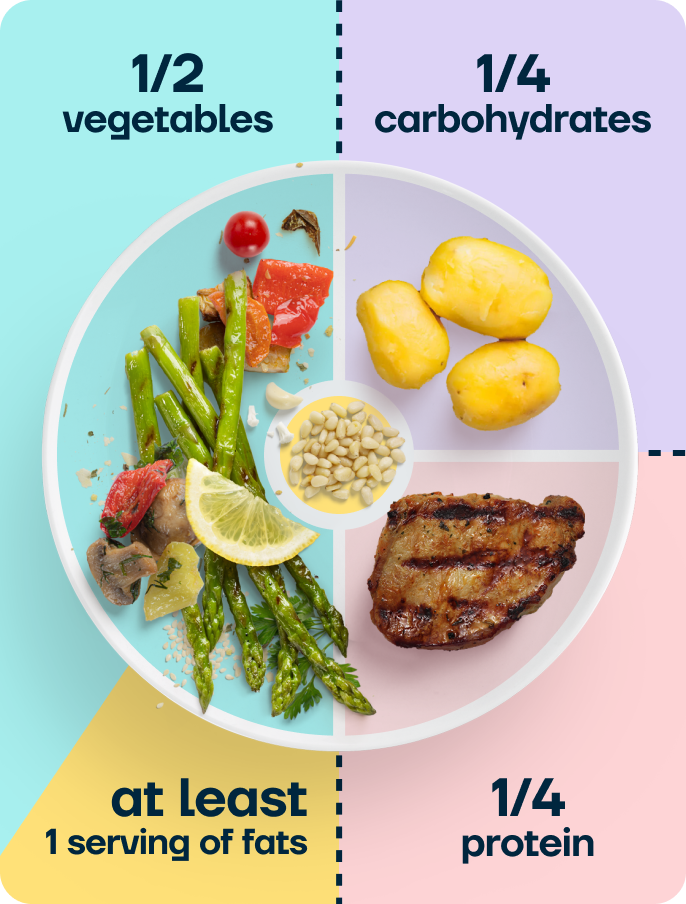
The balanced plate ensures your body gets everything it needs to recover from surgery.
Movement and rehab after a joint replacement
Your physiotherapy team will guide what you can do and when, and their plan should be your focus; the general principles here aren’t a substitute for it.
In the early weeks, the prescribed rehab exercises are the priority because they rebuild the strength and range of movement around the new joint.
Once your team has cleared you for more general activity, we recommend focusing on developing movement and exercise as a habit, rather than aiming for goals we’re not likely to achieve.
For example, introducing a 10-minute walk into your day and gradually increasing the length and intensity is a better approach than joining a gym, aiming to do 3 hours a week, and then giving up when it gets too challenging.
To start, attach a few minutes of walking to something you already do, such as a gentle walk after a meal, then gradually add a little more as it feels manageable.
Alongside, you should continue to maintain the strength exercises your physio has prescribed for you.
Walking rebuilds everyday fitness, while strengthening protects the muscles around the joint and supports it as you become more active.
If you’ve been asked to lose weight before your operation
Many people first explore weight loss because they’ve been asked to reduce their weight before they can have elective knee or hip surgery.
Having a high BMI and excess body fat can raise the risk of complications during and after surgery.
Excess weight also puts extra strain on the joints that bear most of the body’s weight, including the knees and hips.6
Losing weight can also help with the management of pain and function in osteoarthritis.
NICE advises that, for people living with overweight or obesity, weight loss “will improve their quality of life and physical function, and reduce pain”, and that losing 10% of body weight “is likely to be better than 5%”.4
On eligibility, NICE is clear that people shouldn’t be excluded from referral for joint replacement because of overweight or obesity, or because of a measurement such as body mass index (BMI).4
In practice, some local NHS areas still set their own BMI thresholds before they’ll fund elective surgery, which is why people are often asked to lose weight first.
If you’ve been given a BMI target to reach, our GLP-1 BMI calculator guide explains how BMI is worked out and what the common thresholds mean.
Both five-year studies found that the people most likely to regain weight after surgery were those who had lost the most weight in the years before it.1,2
That research on weight regain doesn’t mean you should avoid losing weight before your operation, only that it’s better to lose it in a way you can maintain, by building eating and activity habits you can sustain during recovery and beyond.
Losing weight quickly through strict dieting is usually regained, because the eating pattern that led to the weight loss was never sustainable.
|
Losing weight before surgery |
Losing weight after surgery |
| Main goal |
Reach a BMI target and reduce the risk of complications |
Reverse or prevent the gain that often follows the operation |
| Main obstacle |
Joint pain can limit activities of daily living that support healthy habits |
Recovery limits movement, and we can turn to food for comfort |
| What helps most |
Eating a diet based on whole foods and losing weight slowly |
Eating a diet based on whole foods and following the rehab plan from your physio |
| Medication role |
Can support sustainable weight loss before surgery |
Can lower appetite and manage cravings when movement is limited |
For some people, changes to diet and activity alone are enough to reach their target BMI for surgery.
For others, the pain and reduced mobility of the affected joint make losing weight through movement very hard, and a weight-loss medication can be one route to reducing BMI before surgery, if you’re eligible.
Second Nature has worked with the NHS since 2017, combining medication with structured habit support to help people lose weight before surgery and keep it off afterwards. Take our 3-minute eligibility quiz, and a clinician will review your answers.
Medication options if you’re still not losing weight
If you’ve changed how you eat and you’re as active as the joint allows, but you’re still not losing weight, a GLP-1 medication is one option to discuss with your GP.
Mounjaro (tirzepatide) and Wegovy/the Wegovy pill (semaglutide) mimic the appetite hormones the body makes, reducing hunger and quietening ‘food noise’, the constant intrusive thoughts about food that many people describe on these medications.
Having lower cravings during recovery may help to prevent weight regain while movement is limited.
If you have osteoarthritis alongside excess weight, our guide on taking Mounjaro with osteoarthritis covers how weight loss can reduce the load on your joints.
NHS access to Mounjaro is strict but widening in stages.
The rollout began on 23rd June 2025 with a narrow first group, covering adults with a BMI of 40 or higher who also had at least four other weight-related conditions, with eligibility broadening over the next few years.7
Wegovy is available on the NHS only through a specialist weight-management service, and only for up to two years.8
Our guide to weight-loss injections on the NHS covers who currently qualifies, and our guide to getting Mounjaro on the NHS explains the pathway in more detail.
If you don’t meet the NHS criteria, a private prescription is the other route, and many people use one to reduce their BMI before surgery or to manage their weight while recovery limits how much they can move.
Frequently asked questions
Is it normal to gain weight after a knee replacement?
Gaining some weight after a knee replacement is common.
In a five-year study, almost a third of patients (30.0%) gained at least 5% of their body weight, compared with 19.7% of people who hadn’t had surgery.1
The main reasons are likely the physical and emotional challenges associated with the post-surgery period.
Why am I gaining weight after a hip replacement?
The experiences of weight regain after knee replacement are similar to those of hip replacement.
A five-year study found that the odds of meaningful weight gain were about 70% higher than among people who hadn’t had surgery.2
The main reasons are likely the physical and emotional challenges associated with the post-surgery period.
How do I lose weight after a knee replacement?
Aim to eat a diet based on whole foods, follow the rehab plan provided by your physiotherapist, and seek psychological support if you need to.
Can I take weight-loss injections after a joint replacement?
You often can, though the timing around surgery should be agreed with your surgeon and GP.
Because GLP-1 medications such as Mounjaro and Wegovy slow how quickly the stomach empties, your surgical team may advise pausing the medication around the operation itself, and that decision is made on an individual basis.
Once you’re recovering, these medications reduce appetite, which can help when activity is still limited.
Always get individual advice before starting, pausing, or restarting any medication around an operation.
I’ve been told to lose weight before my operation. How do I start?
Aim to eat a diet based on whole foods and consider introducing more movement into your day.
NICE is clear that you shouldn’t be excluded from referral because of your BMI, though some local NHS areas still set their own thresholds.4
If diet and activity aren’t enough, a weight-loss medication is one route to reducing BMI before surgery.
Will losing weight help my new joint last longer?
Carrying less weight means less load on the joint with every step, and excess weight is a known strain on the knees and hips.6
Results vary between people, but reducing that load is part of why NICE recommends weight loss for people living with overweight or obesity and osteoarthritis.4
How soon after a knee replacement can I exercise?
Your physiotherapy team decides the timing, and their plan should be prioritised.
Gentle prescribed rehab usually starts very soon after surgery, while more general activity, like longer walks, is added gradually once you’re able to.
We recommend focusing on developing the habit of moving more regularly, and gradually introducing more when you’re ready.
Does weight come off once I’m walking again?
Walking and movement will help, but don’t guarantee weight loss or preventing weight regain on their own.
The main factor influencing our weight is our diet, so it’s essential to aim to eat a diet based on whole foods to lose weight and prevent weight regain in the future.
Does losing weight before surgery make me more likely to regain it afterwards?
Losing weight before surgery can make regaining weight more likely, but only if you lose it in a way you can’t maintain.
Both five-year studies found that the people who had lost the most weight before surgery were the most likely to regain it afterwards.1,2
This increased risk of regain was likely due to how the participants lost weight before surgery, as their approach was likely not sustainable.
Take home message
Gaining weight after a knee or hip replacement is extremely common and likely due to the physical and emotional challenges of the post-surgery period.
In one five-year study, almost a third of knee replacement patients (30.0%) gained at least 5% of their body weight, more than the comparison group who hadn’t had surgery, and a separate study found the same pattern after hip replacement.1,2
Osteoarthritis can limit our mobility and our ability to maintain the healthy habits that prevent weight gain in the first place.
Weight gain isn’t inevitable, though. Across 39 studies with more than 60,000 patients, around two-thirds kept roughly the same weight after surgery.3
After surgery, we recommend eating a diet based on whole foods and following the rehab plan prescribed by your physiotherapist.
If you’ve been asked to lose weight before surgery and the joint makes moving too painful, or if you’re still not losing weight afterwards, a weight-loss medication can help, ideally alongside introducing healthier eating habits.
At Second Nature, we combine GLP-1 medication with structured habit support from registered dietitians, using the balanced plate model of half vegetables, a quarter protein, a quarter complex carbohydrates, plus a serving of fat.
Our published JMIR research showed an average weight loss of 19.1% at 12 months for active subscribers, with 77.7% achieving at least 10% weight loss.9
Second Nature's Mounjaro and Wegovy programmes
Second Nature provides Mounjaro or Wegovy as part of our Mounjaro and Wegovy weight-loss programmes.
Why choose Second Nature over other medication providers, assuming you're eligible?
Because peace of mind matters.
We've had the privilege of working with the NHS for over eight years, helping people across the UK take meaningful steps toward a healthier, happier life.
Our programmes are designed to meet people where they are, whether that means support with weight loss through compassionate one-to-one health coaching, or access to the latest weight-loss medications (like Mounjaro and Wegovy) delivered alongside expert care from a multidisciplinary team of doctors, psychologists, dietitians, and personal trainers.
At the heart of everything we do is a simple belief: real, lasting change comes from building better habits, not relying on quick fixes. We're here to support that change every step of the way.
With over a decade of experience, thousands of lives changed, and a long-standing record of delivering programmes used by the NHS, we believe we're the UK's most trusted weight-loss programme.
We hope to offer you something invaluable: peace of mind, and the support you need to take that first step.