Jump to: What are Wegovy and Ozempic? | Same drug, different doses | Clinical evidence at each dose | Side effects and tolerability | Practical differences | Cost and access in the UK | Who might benefit from each? | Frequently asked questions | Take home message
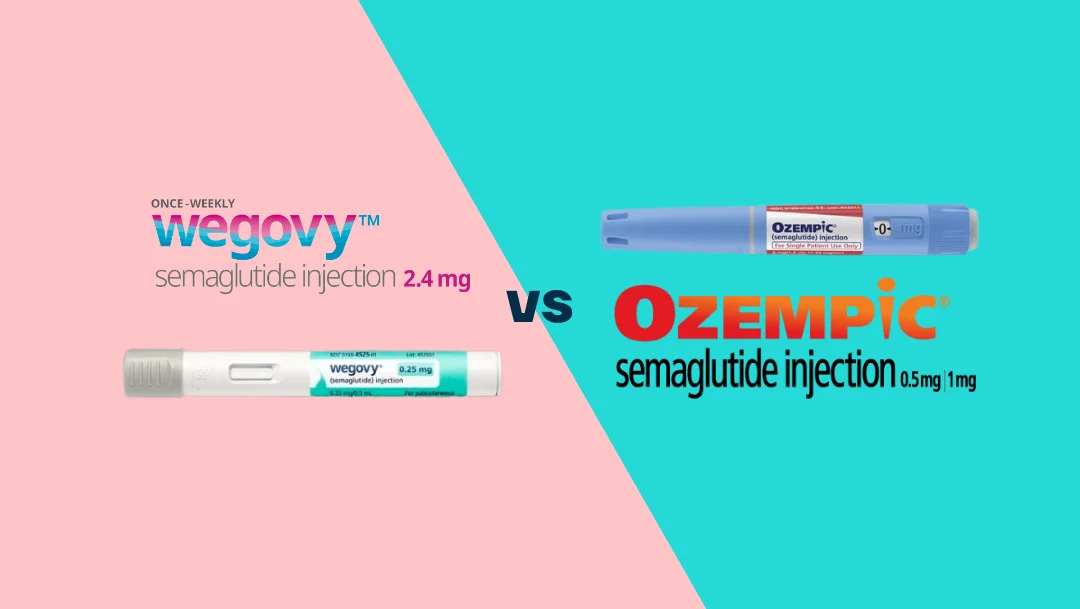
Wegovy and Ozempic both contain the same drug, semaglutide, but at different doses for different purposes. Ozempic (up to 2 mg) is licensed for the treatment of type 2 diabetes.
Wegovy (2.4 mg) is licensed for weight management and has been shown to produce approximately 15% body weight loss in clinical trials.1
A higher dose of Wegovy, 7.2 mg, was approved by the MHRA in January 2026 for adults with a BMI of 30 or higher, resulting in around 20% weight loss in clinical trials.
If you’re looking to manage your weight, Wegovy is the appropriate semaglutide option. Ozempic isn’t licensed for weight loss in the UK.
Important safety information: Wegovy (semaglutide 2.4 mg or 7.2 mg) is a prescription-only medication licensed for weight management. Ozempic (semaglutide up to 2 mg) is a prescription-only medication licensed for type 2 diabetes only. This article is for informational purposes only. Always consult with your healthcare provider before starting, stopping, or switching any medication.
| Comparison point |
Wegovy (semaglutide) |
Ozempic (semaglutide) |
| UK licence |
Weight management |
Type 2 diabetes only |
| Drug |
Semaglutide |
Semaglutide |
| Maintenance dose |
2.4 mg weekly (7.2 mg approved for BMI 30 or above) |
0.5 mg, 1 mg, or 2 mg weekly |
| Weight loss (clinical trials) |
-14.9% at 2.4 mg (STEP 1);1 -20.7% at 7.2 mg (STEP UP)5 |
~4-7% (SUSTAIN trials, in T2D) |
| Cardiovascular benefit |
20% MACE reduction (SELECT)2 |
Not studied at Ozempic doses |
| NICE approval for weight management |
Yes (TA875) |
Not approved for weight loss |
| Pen type |
Single-dose disposable |
Multi-dose |
| Manufacturer |
Novo Nordisk |
Novo Nordisk |
What are Wegovy and Ozempic?
Wegovy and Ozempic are both made by Novo Nordisk and contain the same drug: semaglutide, a GLP-1 receptor agonist. The difference is the dose and what they’re licensed to treat.
Wegovy is licensed for weight management. Its standard maintenance dose is 2.4 mg once a week, reached after a 17-week titration period. It received NICE approval (TA875) in 2023 for use in specialist weight management services.3
In January 2026, the MHRA approved a higher dose of Wegovy, 7.2 mg, for adults with obesity (BMI of 30 or above).
This 7.2 mg dose is available from private providers for patients who’ve plateaued at 2.4 mg. NHS access is expected later in 2026 following a NICE health technology assessment.5
Wegovy now also comes as a tablet. In June 2026, the MHRA approved the Wegovy pill, an oral form of semaglutide taken at 25 mg a day and licensed for weight loss.
It produced an average weight loss of 13.6% in trials, and gives people who would rather not inject an oral option. Our Wegovy pill UK guide covers it in detail.
Ozempic is licensed only for the treatment of type 2 diabetes. Its doses range from 0.5 mg to 2 mg once a week. It isn’t approved for weight loss in the UK.
The confusion between the two is largely due to Ozempic becoming widely associated with weight loss in the media, but this is based on the weight-loss effects observed at the higher Wegovy dose. At lower doses of Ozempic, weight loss is more modest.
Same drug, different doses
Because they contain the same molecule, Wegovy and Ozempic work in exactly the same way. Semaglutide mimics the GLP-1 hormone to:
- Slow food movement through your stomach, helping you feel fuller for longer
- Reduce hunger signals in your brain’s appetite centre
- Improve blood sugar control by enhancing insulin function
The difference in outcomes comes down to dose. Wegovy’s standard 2.4 mg maintenance dose is higher than Ozempic’s maximum 2 mg, and significantly higher than the standard Ozempic doses of 0.5 mg and 1 mg. With the new 7.2 mg dose option, the difference between Wegovy and Ozempic widens further.
Research consistently shows that semaglutide’s effects on weight loss and appetite are dose-dependent. More semaglutide leads to a greater reduction in appetite and more weight loss.
The STEP UP trial showed that increasing the dose from 2.4 mg to 7.2 mg resulted in an additional 3% body weight loss.5
Clinical evidence at each dose
Wegovy: the STEP 1 trial
The STEP 1 trial published in the New England Journal of Medicine tested semaglutide 2.4 mg in 1,961 adults with obesity (without diabetes) over 68 weeks.1
Key results:
- Average weight loss: -14.9% of body weight (vs -2.4% with placebo)
- 86.4% achieved at least 5% weight loss
- 69.1% achieved at least 10% weight loss
- 50.5% achieved at least 15% weight loss
Wegovy 7.2 mg: the STEP UP trial
The STEP UP trial compared semaglutide 7.2 mg with the standard 2.4 mg dose in adults with obesity over 72 weeks.5
Key results at 7.2 mg:
- Average weight loss: -20.7% of body weight (vs -17.5% at 2.4 mg)
- An additional 3.2 percentage points of weight loss compared with the standard dose
The 7.2 mg dose is administered as three separate 2.4 mg injections on the same day, given at least 5 cm apart. It can be considered after a minimum of four weeks at the 2.4 mg dose.
Ozempic: the SUSTAIN trials
Ozempic was studied in the SUSTAIN trial programme, primarily in people with type 2 diabetes. At Ozempic’s typical doses, weight loss was more modest:
- Semaglutide 0.5 mg: approximately 3-5 kg weight loss
- Semaglutide 1 mg: approximately 4.5-6.5 kg weight loss
These figures translate to roughly 4-7% of body weight, considerably less than the 15% seen at the Wegovy dose.
How the dose difference affects results
Ozempic’s maximum dose (2 mg) is close to Wegovy’s maintenance dose (2.4 mg), so people on Ozempic 2 mg may see weight loss approaching that of Wegovy.
However, many people use Ozempic at 0.5 mg or 1 mg, where weight loss is substantially lower.
The difference isn’t the molecule but the amount. Expecting Ozempic at 0.5 mg to match Wegovy’s results would be like expecting half a dose of any medication to work as well as the full dose.
Cardiovascular outcomes: the SELECT trial
The SELECT trial tested semaglutide 2.4 mg (the Wegovy dose) in 17,604 people with obesity and established cardiovascular disease.2
It found a 20% reduction in major cardiovascular events (heart attack, stroke, or cardiovascular death) compared with placebo. This is the first trial to demonstrate cardiovascular benefit with a weight-management medication in people without diabetes.
This cardiovascular protection has been demonstrated at the 2.4 mg Wegovy dose, not at the lower Ozempic doses.
Side effects and tolerability
Because Wegovy and Ozempic contain the same drug, they cause the same types of side effects. However, side effects are dose-dependent, so expect more gastrointestinal effects at higher doses.
| Side effect |
Wegovy (2.4-7.2 mg) |
Ozempic (0.5-1 mg) |
| Nausea |
Higher rates at 2.4 mg1 |
17-20%4 |
| Diarrhoea |
Common1 |
12-13%4 |
| Vomiting |
Common1 |
6-8%4 |
| Constipation |
Common1 |
Common4 |
Both Wegovy and Ozempic use gradual dose-increasing schedules to minimise side effects.
Wegovy’s 17-week titration (starting at 0.25 mg and increasing every 4 weeks) allows your body to adjust incrementally to the higher dose.
Most gut-related side effects occur during dose escalation and reduce significantly over time. The side effects at the starting doses are identical because the starting doses are the same.
Practical differences
Dosing and titration
Wegovy follows a 17-week titration: 0.25 mg, then 0.5 mg, 1 mg, 1.7 mg, and 2.4 mg, with increases every 4 weeks. The standard maintenance dose is 2.4 mg.
After at least 4 weeks at 2.4 mg, your prescriber may increase the dose to 7.2 mg if you have a BMI of 30 or higher and would benefit from additional weight loss.
Ozempic starts at 0.25 mg for four weeks, then increases to 0.5 mg. Further increases to 1 mg or 2 mg are at your prescriber’s discretion based on your blood sugar response.
Pen design
Wegovy uses single-dose disposable pens. Each pen contains one weekly dose. You don’t dial a dose or attach needles.
Ozempic uses a multi-dose pen. You attach a new needle before each injection and dial your prescribed dose. One pen lasts several weeks.
Storage
Both should be refrigerated (2 to 8°C) before first use. Once in use:
- Wegovy: room temperature (below 30°C) for up to 28 days
- Ozempic: room temperature (below 30°C) for up to 56 days
Ozempic’s longer room-temperature window may be more convenient for travel.
Cost and access in the UK
NHS access
Wegovy received NICE approval (TA875) for weight management in 2023, available through specialist weight management services.3
Eligibility criteria include a BMI of 35 or above with at least one weight-related health condition (or 32.5 for certain ethnic backgrounds).
Ozempic is available on the NHS for type 2 diabetes only. It can’t be prescribed on the NHS for weight loss.
Private prescription costs
On private prescription, typical monthly costs are:
- Wegovy: £100-£135 per month during titration, rising to £219-£249 per month at the 2.4 mg maintenance dose. The 7.2 mg dose costs around £329 per month.
- Ozempic: £150-250 per month, depending on dose and provider
Some people seek Ozempic for weight loss because it can be cheaper than Wegovy.
However, this is an off-label use that the MHRA has specifically discouraged, partly because it threatens supply for diabetes patients who rely on it.
Who might benefit from each?
Wegovy is the right choice if:
- Weight management is your primary goal. It’s specifically licensed for this purpose at the dose proven to be effective
- You want the full clinical benefit of semaglutide for weight loss. The 2.4 mg dose produces approximately 15% weight loss in trials
- You’re eligible through an NHS specialist service, under the NICE TA875 criteria
- Cardiovascular risk is a concern. The SELECT trial demonstrated a 20% reduction in major cardiovascular events at this dose
Ozempic is the right choice if:
- You have type 2 diabetes. It’s specifically licensed and effective for blood sugar control.
- Blood sugar management is your primary concern. Ozempic is an established diabetes treatment.
- Weight loss is a secondary benefit, not the main goal. You may lose some weight, but it’s not what Ozempic is designed for.
Frequently asked questions
Are Wegovy and Ozempic the same thing?
They contain the same drug (semaglutide) but at different doses for different purposes.
Wegovy (2.4 mg) is for weight management. Ozempic (up to 2 mg) is used to treat type 2 diabetes. They’re not interchangeable (you can’t use them both at the same time).
Is there a tablet version of Wegovy or Ozempic?
Yes. Semaglutide comes as a tablet and an injection.
The Wegovy pill is an oral version licensed for weight loss, taken at 25 mg a day, and approved by the MHRA in June 2026. Rybelsus is an oral version licensed for type 2 diabetes, so it’s the tablet counterpart to Ozempic.
Our Wegovy pill UK guide, Wegovy pill vs injection guide, and Wegovy pill vs Rybelsus guide cover the tablets in more detail.
Can I use Ozempic for weight loss instead of Wegovy?
Ozempic isn’t licensed for weight loss in the UK. The MHRA has specifically stated that Ozempic should only be prescribed for type 2 diabetes.
Using it off-label for weight loss has contributed to supply shortages for diabetes patients. If you want semaglutide for weight management, Wegovy is the appropriate option.
Why is Ozempic so popular for weight loss if it’s not licensed for it?
Ozempic gained attention after clinical trials of semaglutide at the higher Wegovy dose showed dramatic weight-loss results.
Because Ozempic was available before Wegovy launched, some prescribers began using it off-label.
Media coverage and celebrity interest amplified awareness. However, at Ozempic’s lower doses, weight loss is considerably less than that observed in the Wegovy trials.
Will I lose more weight on Wegovy than Ozempic?
Almost certainly, if comparing the maintenance doses. Wegovy’s 2.4 mg dose has been shown to produce approximately 15% body weight loss in clinical trials.1
Ozempic at 0.5-1 mg typically produces 4-7% weight loss. The difference is primarily due to dose, not the medication itself.
Can I switch from Ozempic to Wegovy?
Yes, if weight management is your primary goal and you don’t have type 2 diabetes. Your prescriber would transition you to the appropriate Wegovy dose based on your current Ozempic dose.
If you have type 2 diabetes and want weight management, Mounjaro (tirzepatide) may be more appropriate as it’s licensed for both.
Are the side effects worse with Wegovy because the dose is higher?
Side effects are dose-dependent, so you may experience more gastrointestinal effects at 2.4 mg than at lower Ozempic doses.
However, Wegovy’s 17-week titration helps your body adjust gradually. Most side effects are temporary and improve over time.
Is Wegovy available on the NHS?
Yes, through specialist weight management services following NICE TA875 criteria.3 Eligibility typically requires a BMI of 35 or above with at least one weight-related condition. Availability varies by area.
Mounjaro also received NICE approval for weight management in 2024, giving NHS services another option.
What is the Wegovy 7.2 mg dose?
In January 2026, the MHRA approved a higher dose of Wegovy, 7.2 mg per week, for adults with obesity (BMI of 30 or above). It’s given as three 2.4 mg injections on the same day.
In the STEP UP trial, the 7.2 mg dose resulted in 20.7% body weight loss, compared with 17.5% at the standard 2.4 mg dose.5
It’s currently available through private providers, with NHS access expected later in 2026.
How does Wegovy compare to Mounjaro?
Both are effective weight-management medications, but Mounjaro (tirzepatide) acts on two hormone receptors (GLP-1 and GIP), whereas Wegovy acts on one (GLP-1).
In the SURMOUNT-5 trial, which directly compared the two, Mounjaro produced a 20.2% weight loss, compared with 13.7% for semaglutide 2.4 mg over 72 weeks.
Can I take Wegovy and Ozempic together?
No. Both contain semaglutide and should never be combined. Taking two doses of the same medication would significantly increase the risk of serious side effects.
Does Ozempic have cardiovascular benefits like Wegovy?
The cardiovascular benefits demonstrated in the SELECT trial were at the 2.4 mg Wegovy dose, not at the lower Ozempic doses.2
It’s unclear whether the lower Ozempic doses provide the same level of cardiovascular protection.
Take home message
Wegovy and Ozempic contain the same drug but serve different purposes.
Wegovy at 2.4 mg is the licensed option for weight management, producing approximately 15% body weight loss and a 20% reduction in cardiovascular events in clinical trials.1,2
The new 7.2 mg dose, approved by the MHRA in January 2026, produces around 20% weight loss for people with a BMI of 30 or above.5
Ozempic, at its lower doses, is an effective treatment for diabetes but isn’t designed or licensed for weight loss.
Using Ozempic off-label for weight management is discouraged by the MHRA and contributes to supply problems for diabetes patients.
Semaglutide now also comes as a tablet: the Wegovy pill for weight loss, and Rybelsus for type 2 diabetes.
If weight management is your goal, Wegovy or Mounjaro (tirzepatide) are the appropriate, licensed options in the UK. Speak with your prescriber about which is right for your situation.
Second Nature combines medication with personalised nutrition guidance from registered dietitians and nutritionists, built around a balanced plate of vegetables, protein, complex carbohydrates, and healthy fats.
Our published research found an average weight loss of 19.1% at 12 months in active subscribers on a GLP-1-supported programme, with 77.7% losing at least 10% of their body weight.6
Second Nature's Mounjaro and Wegovy programmes
Second Nature provides Mounjaro or Wegovy as part of our Mounjaro and Wegovy weight-loss programmes.
Why choose Second Nature over other medication providers, assuming you're eligible?
Because peace of mind matters.
We've had the privilege of working with the NHS for over eight years, helping people across the UK take meaningful steps toward a healthier, happier life.
Our programmes are designed to meet people where they are, whether that means support with weight loss through compassionate one-to-one health coaching, or access to the latest weight-loss medications (like Mounjaro and Wegovy) delivered alongside expert care from a multidisciplinary team of doctors, psychologists, dietitians, and personal trainers.
At the heart of everything we do is a simple belief: real, lasting change comes from building better habits, not relying on quick fixes. We're here to support that change every step of the way.
With over a decade of experience, thousands of lives changed, and a long-standing record of delivering programmes used by the NHS, we believe we're the UK's most trusted weight-loss programme.
We hope to offer you something invaluable: peace of mind, and the support you need to take that first step.