When Foundayo may be suitable after breast cancer
Second Nature wouldn’t start Foundayo during surgery, chemotherapy, or radiotherapy.
These treatments and Foundayo can all change our appetite, weight, and digestion, which could make it harder to maintain adequate eating habits to support healthy weight loss or identify the cause of a side effect.1
Tamoxifen, anastrozole, letrozole, and exemestane may continue for years after the main treatment has ended. These medicines don’t automatically rule out being able to take Foundayo, but the exact combination needs checking.
Foundayo also usually isn’t suitable if you’re losing weight unintentionally, struggling to eat, or rebuilding strength after treatment.
Your oncology team should confirm that intentional weight loss supports your recovery before treatment starts.
The UK guidelines on Foundayo don’t set a waiting period after cancer treatment before it’s appropriate to take the drug; it will always be judged on a case-by-case basis.
Does Foundayo affect breast cancer risk?
No trial has tested Foundayo in breast cancer survivors. Most of the available evidence comes from studies of other GLP-1 medicines.
A 2026 review combined 48 trials with 94,245 participants. The trials randomly assigned participants to treatment.
The estimated odds of a breast cancer diagnosis were 5% lower with a GLP-1 medicine than with placebo.2
Still, most trials didn’t follow people for long enough to assess cancer risk and weren’t designed to study recurrence among breast cancer survivors.
An earlier review of 52 trials observed similar results. Breast cancer occurred in 130 of 48,267 people assigned to a GLP-1 medicine and 107 of 40,755 people in the comparison groups. The researchers found no clear difference between the groups.3
In plain English, these results tell us that individuals on GLP-1 medications experience a similar rate of breast cancer to those not on GLP-1 medications, suggesting there’s no link between GLP-1 medications and breast cancer occurrence.
Another 2026 U.S. study used health records from women living with breast cancer.
Among similar groups living with obesity or type 2 diabetes, women who used a GLP-1 medicine were less likely to die and more likely to remain free of recurrence.4
Doctors chose each woman’s treatment rather than assigning it at random, so the study can’t show that GLP-1 medicines caused women to live longer or remain free of recurrence. It didn’t test Foundayo, and differences in cancer stage, treatment, healthcare access, or blood sugar control may have affected the result.
Still, current human research hasn’t found an increase in breast cancer diagnoses among people taking GLP-1 medicines. It also hasn’t shown that Foundayo prevents recurrence or is suitable for every breast cancer survivor.
In animal studies, Foundayo had no effect on cancer cell tumours in mice. The product information notes that other GLP-1 medicines have caused thyroid C-cell tumours in rodents, although experts consider it unlikely that the same effect occurs in humans.1
The thyroid finding is separate from breast cancer and doesn’t show that Foundayo raises the risk of breast cancer returning.
Interactions with breast cancer treatment
The Foundayo prescribing information doesn’t list a direct interaction with tamoxifen, anastrozole, letrozole, or exemestane.1
No clinical interaction trial has tested any of these combinations, so a pharmacist should check the full medicines and supplements list before treatment starts.
Orforglipron is partly broken down by a liver enzyme called CYP3A4. Medicines that strongly block this enzyme can increase Foundayo levels in the bloodstream, so the maximum dose is 9 mg. Medicines that strongly increase the enzyme’s activity can reduce Foundayo levels in the bloodstream and should be avoided.1
Foundayo doesn’t block or increase CYP2D6 or CYP3A4 activity enough to affect how medicines work. These two liver enzymes process some hormone treatments.1
Foundayo also delays stomach emptying. Calculations used for the UK guidelines didn’t predict a change large enough to affect how commonly used oral medicines work, but they didn’t cover every cancer treatment.1
The drug’s UK licence gives a specific warning about oral topotecan, which needs careful monitoring for side effects if used with Foundayo.
If you take any oral chemotherapy or targeted treatment, the oncology pharmacist should check it before prescribing Foundayo.1
| Treatment situation |
What to check before starting Foundayo |
| Chemotherapy or radiotherapy |
Reduced appetite and digestive side effects can overlap. Second Nature wouldn’t start Foundayo during active treatment. |
| Tamoxifen or an aromatase inhibitor |
No direct interaction is listed, but the exact medicine, symptoms and treatment plan need review. |
| Oral chemotherapy or targeted therapy |
Ask the oncology pharmacist whether Foundayo could change how the cancer medicine is broken down or absorbed. |
| Finished treatment and in complete remission |
Foundayo may be considered if intentional weight loss is appropriate and you otherwise qualify for treatment. |
Cancer status, medicines, and recovery before Foundayo
Ask your oncology team whether your recovery is far enough along for intentional weight loss to be appropriate. The team should review:
- your current cancer status and follow-up plan
- all prescription medicines, supplements, and herbal remedies
- recent unintentional weight loss or difficulty eating
- ongoing nausea, diarrhoea, taste changes, or bowel symptoms
- bone health, lymphoedema, fatigue, and physical activity
- upcoming scans, surgery, endoscopy, or sedation
Foundayo delays stomach emptying, which can leave food in the stomach before a general anaesthetic or deep sedation. Tell the surgical and anaesthetic team that you take it rather than stopping it on your own.1
Continue mammograms, oncology appointments and your existing personalised follow-up plan. Foundayo appointments don’t replace cancer follow-up.
Does losing weight reduce breast cancer recurrence?
Healthy, intentional weight loss is likely to reduce some of the excess recurrence risk linked with obesity, but no trial has yet proved how much it changes the chance of breast cancer returning.
In the research reviewed by the World Cancer Research Fund, people who were within the healthy weight range after breast cancer tended to have better outcomes.
However, most of this evidence is observational, so it can’t show that deliberate weight loss caused those outcomes.5
Obesity changes the hormonal, inflammatory, and metabolic environment around breast tissue in ways that may support cancer-cell growth.
Body fat produces hormones and inflammatory signals that can affect breast tissue.
When fat cells enlarge and become dysfunctional, they attract immune cells, which release cytokines (proteins that send inflammatory signals). Some of these signals can encourage tumour growth.8
Fat tissue also produces oestrogen. After menopause, it can become an important source of oestrogen, which may stimulate hormone receptor-positive breast cancer cells.8
Obesity is also closely linked to insulin resistance, where the body becomes less responsive to insulin and must release more to manage blood sugar.
For people living with type 2 diabetes, blood sugar may also remain higher. Higher insulin and glucose can activate signals that encourage breast cancer cells to grow and divide.8
In the WISER trial, 318 breast cancer survivors living with overweight or obesity were assigned to exercise, weight loss, both, or usual care for 12 months.
C-reactive protein (CRP), a blood marker of inflammation, fell by 35.2% with weight loss alone compared with usual care.9
The trial measured inflammatory markers rather than breast cancer recurrence. It therefore can’t tell us whether reduced inflammation prevented cancer from returning.
Body weight is influenced by biology, medication, health, environment, and behaviour, so it isn’t a simple measure of how healthy someone’s lifestyle is.
However, the habits used to lose weight can improve health beyond the weight change itself.
We recommend eating a diet based on whole foods, that contains enough protein, fibre, fat, and complex carbohydrates, and limits ultra-processed foods.
Regular movement helps maintain muscle and improves insulin sensitivity and cardiovascular health. Limiting alcohol also reduces an established breast cancer risk factor.5
For adults living with obesity after breast cancer, healthy weight loss is a sensible way to reduce a modifiable risk factor while improving metabolic and cardiovascular health.
It can’t eliminate recurrence risk, and breast cancer can return in people at any weight.
Cancer treatment and follow-up should remain the priority, with weight management supporting overall health rather than replacing oncology care.
The World Cancer Research Fund recommends avoiding weight gain during and after treatment if you’re not underweight. It also recommends following its cancer-prevention guidance and being physically active with professional support.5
Foundayo can support weight loss for eligible adults, but it should be prescribed for weight management, not as a treatment to prevent breast cancer recurrence.
In ATTAIN-1, adults with obesity or overweight and a weight-related condition lost an average of 11.2% of their body weight over 72 weeks on the highest Foundayo dose, compared with 2.1% on placebo.
The 11.2% figure included everyone assigned to treatment, whether or not they stopped.6
The trial didn’t include breast cancer survivors or measure cancer outcomes. It can tell us how Foundayo affects weight in the population studied, but not whether it reduces breast cancer recurrence.
Our guide to the first month on Foundayo explains why the starting dose doesn’t reflect the medicine’s full effect.
How to maintain protein, fibre, and fluids on Foundayo
Foundayo lowers appetite, which can make it harder to eat enough during cancer recovery.
We recommend eating a diet based on whole foods that contains enough protein, fibre, fat, and complex carbohydrates, and limits ultra-processed foods.
Use the Second Nature balanced plate as a guide: half non-starchy vegetables, a quarter protein, a quarter complex carbohydrates, and a portion of healthy fat.
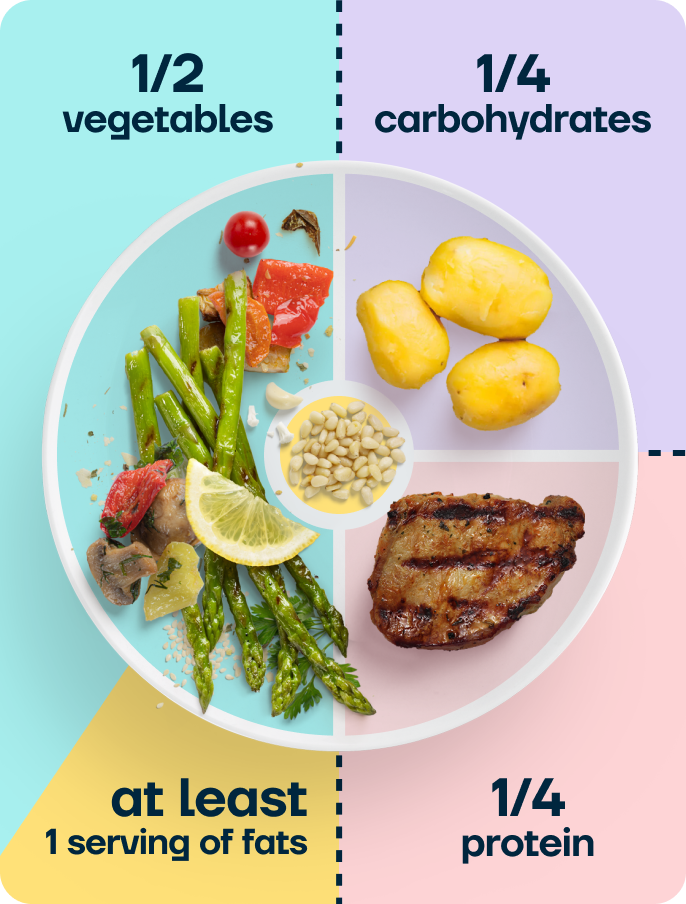
Protein helps maintain muscle during weight loss. Include a portion about the size of your palm at each meal, using foods such as eggs, fish, chicken, Greek yoghurt, tofu, beans, or lentils.

Fibre supports bowel health and can help with constipation, which is a common side effect of Foundayo.
Good sources include beans, lentils, vegetables, fruit, oats, brown rice, wholegrain bread, and potatoes with the skin on.
Increase fibre gradually with wholegrains, vegetables, fruit, beans, lentils, nuts, and seeds. Increase fluids at the same time, particularly if Foundayo causes constipation.
If you already eat soy foods, such as tofu, edamame, or unsweetened soya yoghurt, current guidance for people who have had cancer doesn’t advise stopping them. Evidence is insufficient to recommend starting concentrated isoflavone supplements.5
Fear of recurrence and body image
Starting a new medicine can increase fear of recurrence for some people. If an online claim concerns you, check whether it refers to thyroid tumours in rodents or breast cancer in humans.
Write down the specific question you want answered and ask your oncology clinical nurse specialist. Ask for advice based on your cancer type and treatment, not general claims about GLP-1 medicines.
Breast surgery and reconstruction can change breast shape, sensation, and scarring. Tell the clinical team if weight management increases anxiety about these changes, food, body weight, or cancer follow-up.
The clinical team can pause or change the weight-management plan.
Symptoms to report to your oncology or Foundayo team
Contact your oncology team, GP or Foundayo prescriber if:
- you notice a new breast, chest-wall, or underarm change
- you’re losing weight unintentionally or much faster than planned
- you can’t keep food, fluids, or oral medicines down
- persistent side effects are stopping you from attending cancer follow-up
- your oncology medicine changes
- fear of recurrence or low mood is affecting daily life
Seek urgent help for persistent, severe abdominal pain, with or without vomiting, because this can be a symptom of pancreatitis, which is inflammation of the pancreas.1
Frequently asked questions
How long after breast cancer treatment can I start Foundayo?
The UK clinical guidelines don’t set a fixed waiting period. At Second Nature, you must finish active treatment and document complete remission before we can prescribe Foundayo.
Your oncology team should still advise on timing based on your recovery, medicines and follow-up plan.
Can I take Foundayo with tamoxifen?
Tamoxifen isn’t listed as a direct interaction in the Foundayo prescribing information.
The combination hasn’t been tested directly, so your oncologist or oncology pharmacist should review it before you start.1
Can I take Foundayo with anastrozole or letrozole?
Anastrozole and letrozole aren’t listed as direct Foundayo interactions. They still need to be included in the medication review, along with any treatment for bone health, cholesterol, or other conditions.
Will Foundayo increase the risk of breast cancer returning?
No study has tested whether Foundayo changes recurrence risk. Reviews of other GLP-1 medicines haven’t found an increase in breast cancer diagnoses.2,3
A 2026 health-records study found that women who used GLP-1 medicines were less likely to die and more likely to remain free of recurrence. It couldn’t show that the medicines caused those results.4
Will losing weight reduce my recurrence risk?
People at a healthy weight after breast cancer tend to have better outcomes, but it remains uncertain whether deliberate weight loss reduces recurrence. Foundayo shouldn’t be presented as a cancer-prevention treatment.5
Does Foundayo replace my cancer follow-up?
Foundayo doesn’t replace mammograms, oncology reviews, or hormone treatment, which should continue exactly as planned.
Tell both teams about changes in medicines or symptoms so clinicians can judge whether a symptom is related to Foundayo or needs cancer assessment.
Our guides cover what Foundayo is and how it works, Foundayo side effects, and current UK prices.
Take home message
Foundayo may be suitable after breast cancer treatment when active treatment has finished, complete remission is documented, and intentional weight loss supports recovery.
Breast cancer isn’t a contraindication (a reason not to prescribe a medicine) in the UK, and research on other GLP-1 medicines hasn’t found an increase in breast cancer diagnoses. No trial has tested Foundayo in breast cancer survivors.
Tamoxifen and aromatase inhibitors aren’t listed as direct interactions, but the full oncology medication list needs review. Continue all cancer follow-up and report unintentional weight loss or difficulty eating.
Second Nature combines GLP-1 medication with structured support from registered dietitians and nutritionists.
A peer-reviewed service evaluation found that active subscribers lost an average of 19.1% of their body weight at 12 months, with 77.7% losing at least 10%.7
Second Nature's Mounjaro and Wegovy programmes
Second Nature provides Mounjaro or Wegovy as part of our Mounjaro and Wegovy weight-loss programmes.
Why choose Second Nature over other medication providers, assuming you're eligible?
Because peace of mind matters.
We've had the privilege of working with the NHS for over eight years, helping people across the UK take meaningful steps toward a healthier, happier life.
Our programmes are designed to meet people where they are, whether that means support with weight loss through compassionate one-to-one health coaching, or access to the latest weight-loss medications (like Mounjaro and Wegovy) delivered alongside expert care from a multidisciplinary team of doctors, psychologists, dietitians, and personal trainers.
At the heart of everything we do is a simple belief: real, lasting change comes from building better habits, not relying on quick fixes. We're here to support that change every step of the way.
With over a decade of experience, thousands of lives changed, and a long-standing record of delivering programmes used by the NHS, we believe we're the UK's most trusted weight-loss programme.
We hope to offer you something invaluable: peace of mind, and the support you need to take that first step.