Does a hysterectomy cause weight gain?
Weight gain can occur after a hysterectomy, but it depends whether the ovaries are also removed, as this is more closely linked to post-surgical weight gain.
A hysterectomy removes the womb (uterus), but what tends to cause the weight gain is whether the ovaries are also removed at the same time.
If the ovaries are left in place, the womb itself plays no major role in regulating weight, so any gain tends to be modest and is often linked to the recovery period rather than the surgery itself.2
If the ovaries are removed (an oophorectomy), oestrogen levels drop suddenly, and the menopause begins straight away, whatever your age.4 This is called surgical menopause, and it’s the change most strongly associated with weight gain afterwards.1
Thus, hysterectomy alone rarely results in significant weight gain, but surgical menopause can lead to weight gain due to the impact on hormone balance and energy expenditure.
| Type of surgery |
What’s removed |
Effect on hormones |
Likely effect on weight |
| Subtotal hysterectomy |
Main body of the womb, cervix, and ovaries kept |
No sudden change; ovaries keep producing oestrogen |
Small, mostly tied to the recovery period |
| Total hysterectomy |
Womb and cervix; ovaries kept |
No sudden change; ovaries keep producing oestrogen |
Small, mostly tied to the recovery period |
| Total hysterectomy with bilateral oophorectomy |
Womb, cervix, and both ovaries |
Oestrogen falls suddenly; surgical menopause begins straight away |
Larger, with a faster rise in BMI than after a natural menopause |
Why weight changes after a hysterectomy
Most of the weight change after a hysterectomy comes from one of two things: a drop in oestrogen if the ovaries were removed, or how limited you are in the recovery period post-surgery.
When the ovaries aren’t removed
If your ovaries aren’t removed, they carry on producing oestrogen as normal until your natural menopause arrives.
In a prospective study that followed women for a year, those who had a hysterectomy with their ovaries conserved gained slightly more than women who didn’t have surgery, an average of 1.36 kg versus 0.61 kg.2
Nearly a quarter of them gained more than 10 pounds (about 4.5 kg) over the year, compared with 15% of the women who didn’t have surgery.2
The most likely reason for weight gain in this type of surgery is how limited we are in the recovery period, rather than any direct hormonal effect of removing the womb.2
For example, if the surgery leaves us housebound with limited mobility, we’re less likely to follow our regular eating habits and will burn fewer calories due to the lack of movement.
Plus, going through surgery is an incredibly stressful experience, and it’s possible that we’d turn to food for comfort to help us deal with the situation.
When the ovaries are removed: surgical menopause
Removing both ovaries brings on the menopause immediately, so oestrogen levels fall significantly within days rather than over the years a natural menopause takes.4
In the Study of Women’s Health Across the Nation, BMI increased faster after hysterectomy with both ovaries removed than after natural menopause, at 0.21 versus 0.08 kg/m² per year.1
Oestrogen also influences where we store fat. As levels fall, fat tends to move from the hips and thighs towards the abdomen, so many women notice more weight around the middle even when their overall weight remains the same.3
The menopause shifts body composition, too. As oestrogen declines, we tend to lose fat-free mass, which includes muscle and bone, while fat mass increases.3
Muscle is where much of our glucose (sugar) is burned for energy and stored, so losing it makes the body less sensitive to insulin (the hormone that manages our blood sugar levels).3 This can lead to higher insulin resistance, which makes it easier to store fat and harder to lose it.3
All of this isn’t to say that weight loss, or maintaining a healthy weight, is impossible. But it does mean that maintaining a healthier weight can be more challenging after a surgical menopause.
The recovery period
Whatever type of hysterectomy you had, the post-surgery recovery period will be a challenging time that completely moves you away from your normal routine.
The NHS advises around 6 to 8 weeks to recover fully, avoiding heavy lifting and strenuous activity while the abdominal tissues heal.4
As we discussed above, if the surgery leaves us housebound with limited mobility, we’re less likely to follow our regular eating habits and will burn fewer calories due to the lack of movement.
Plus, going through surgery is an incredibly stressful experience, and it’s possible that we’d turn to food for comfort to help us deal with the situation.
Still, weight gain isn’t inevitable, and it’s possible to maintain healthier habits to support recovery post-surgery.
How to eat to support your body after a hysterectomy
After surgical menopause, how you eat has a greater influence on your weight because protecting muscle and managing appetite can help counter some of the effects of the hormonal changes that have occurred.
Plus, if we’re less physically active after surgery, it becomes more important to focus on our eating habits to maintain our weight.
We recommend eating a diet based on whole foods that contains enough protein, fibre, fat, and complex carbohydrates and limits ultra-processed foods.
Protein at every meal
Protein helps protect muscle, which becomes harder to maintain as oestrogen falls, and it’s the most filling macronutrient, helping us feel fuller for longer.
A useful guide is to eat a portion of protein about the size and thickness of the palm of your hand at each main meal, which works out to roughly 1.2 to 1.6 grams of protein per kilogram of body weight per day.
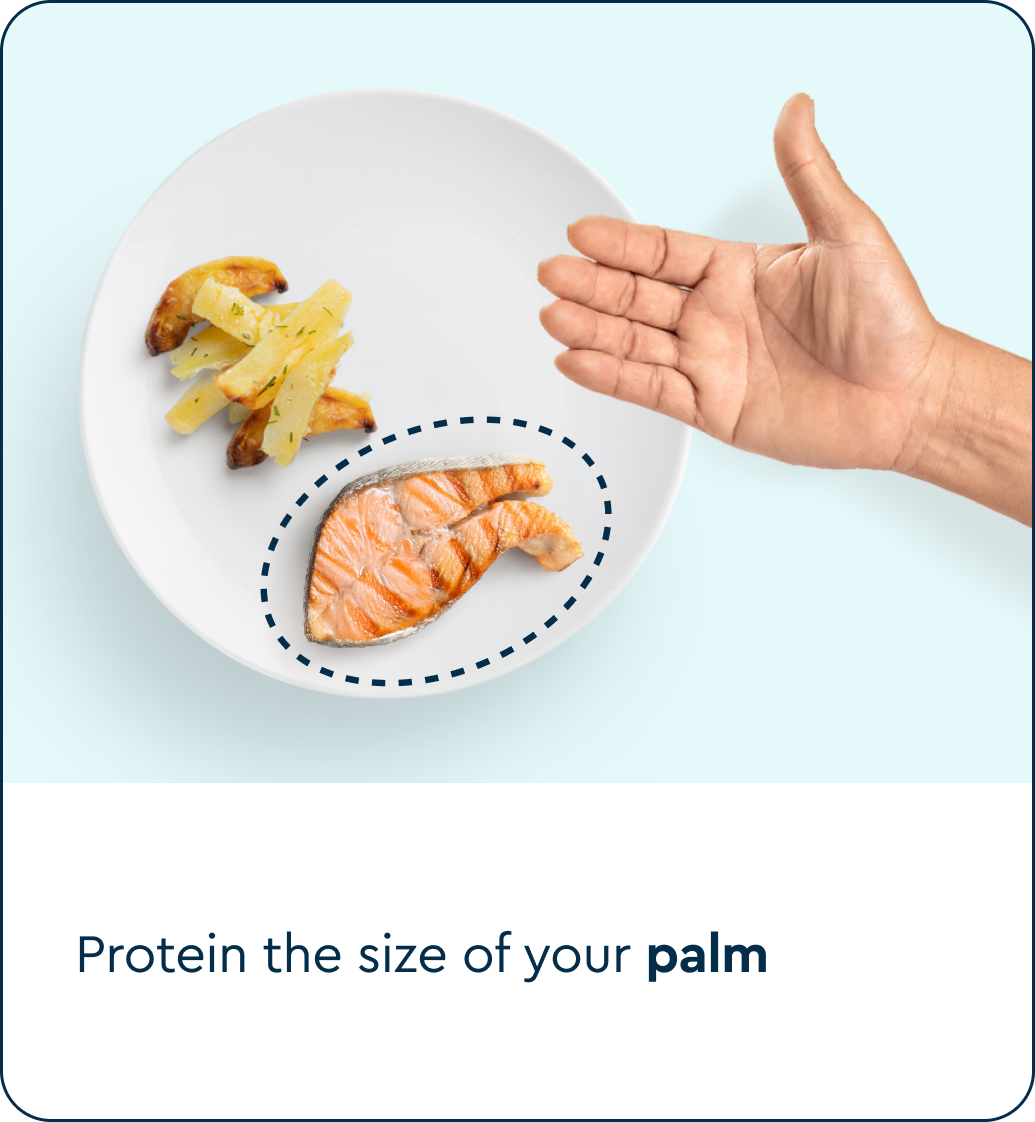
Good sources include eggs, red meat, chicken, fish, Greek yoghurt, tofu, beans, and lentils.
Oily fish such as salmon, mackerel, and sardines also supply omega-3 fats.
Fibre and complex carbohydrates
Fibre slows digestion, supports the gut, and helps you feel full for longer.
Complex carbohydrates release energy more slowly than refined ones because of their higher fibre content.
Wholegrain or sourdough bread, rolled oats, brown rice, potato, sweet potato, quinoa, beans, and lentils are all good choices.
The balanced plate
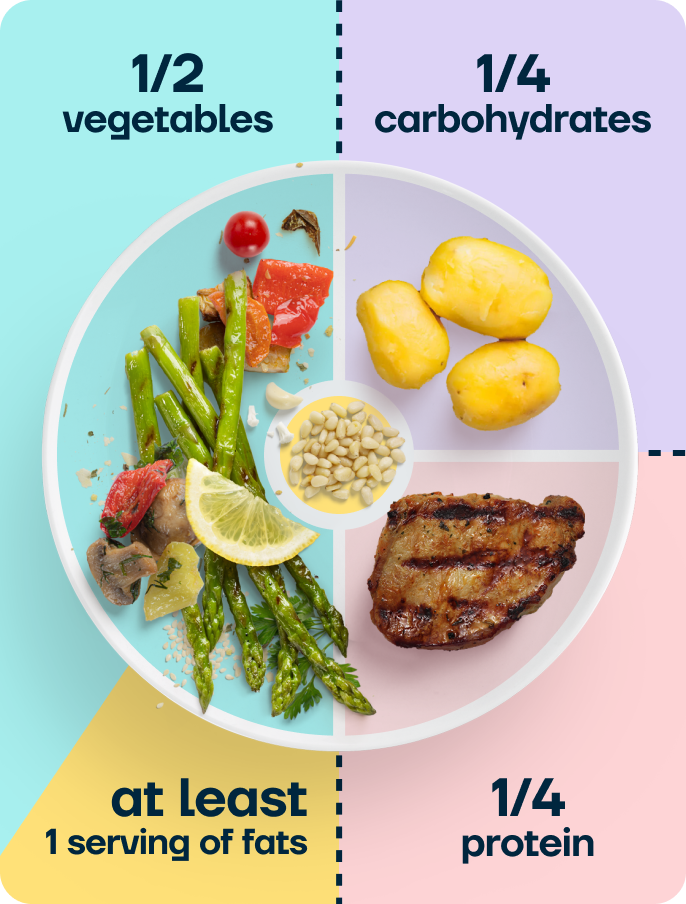
A practical guide for each meal is half the plate vegetables, a quarter protein, and a quarter complex carbohydrates, plus a serving of fat such as olive oil, nuts, or avocado.
The balanced plate helps to encourage the intake of everything that our bodies need to thrive.
Second Nature has worked with the NHS since 2017, combining this whole-food approach with structured support for women managing their weight through and after a surgical menopause. Take our 3-minute eligibility quiz, and a clinician will review your answers.
Movement and exercise after a hysterectomy
In the first 6-8 weeks after surgery, your movement is likely to be limited, but you should have been provided with exercise guidelines by your surgeon, which will likely include some physiotherapy to prevent excessive muscle and strength loss post-surgery.
Don’t restart your usual exercise routine until your surgical team’s approval, which is usually around 6 to 8 weeks, and longer for more strenuous activity.4
Still, gentle walking is usually the first thing you can introduce during this time, along with home-based physio exercises.
A short walk after a meal is an easy habit to attach to something you already do, and you can gradually do a little more as it feels manageable.
Once you’re able to, strength training can help maintain muscle mass, which becomes more challenging with lower oestrogen levels.3
A hysterectomy can also affect the pelvic floor muscles. Your physiotherapist or surgical team can guide you on pelvic floor exercises and when to start them.
The aim isn’t to train hard, but to move regularly, protect your muscles, and gradually introduce more exercise when appropriate.
Hormones, HRT, and weight
If your ovaries were removed, hormone replacement therapy (HRT) is worth discussing with your GP.
The NHS advises that women who go through a surgical menopause after a hysterectomy should be offered HRT.4
HRT is mainly used to manage menopausal symptoms such as hot flushes, poor sleep, and low mood, and to protect bone health after an early loss of oestrogen.
It isn’t a weight-loss treatment, and you shouldn’t expect it to remove weight on its own.
HRT can ease the symptoms that make it more challenging to maintain healthy habits.
We’d recommend speaking with your GP to discuss HRT and whether it’s a good option for you.
Medication options if you’re struggling to maintain your weight
Losing weight is extremely challenging, particularly post-menopause, when the hormonal changes in the body can lead to increased hunger and lower energy expenditure. So, you might consider more support to help manage weight during this period.
Weight-loss medications that mimic the hormone GLP-1, such as Mounjaro (tirzepatide) and Wegovy (semaglutide), are one option to discuss with your GP.
GLP-1 medications reduce appetite and quiet ‘food noise’, the constant intrusive thoughts about food that can make maintaining healthy eating habits extremely challenging.
NHS access to Mounjaro is strict but widening in stages. The rollout began on 23rd June 2025 with a narrow first group, covering adults with a BMI of 40 or higher who also had at least four other weight-related conditions, with eligibility broadening over the next few years.5
Wegovy is available on the NHS only through a specialist weight-management service, and only for up to two years.6
Our guide to weight-loss injections on the NHS covers who currently qualifies and how to ask your GP, and our guide to getting Mounjaro on the NHS walks through the primary care route in detail.
If you don’t meet the NHS criteria, a private prescription is the other route, available through a regulated provider after a clinical assessment, such as Second Nature,
Our GLP-1 BMI calculator guide can help you check where your BMI sits against the thresholds.
Frequently asked questions
Does a hysterectomy make you gain weight?
It can, but the effect is usually small if your ovaries are kept.
Most of the early weight gain comes from the recovery period rather than the surgery itself.
If your ovaries are removed, the resulting surgical menopause and drop in oestrogen make weight gain more likely.1
Why am I gaining weight after a hysterectomy with my ovaries removed?
Removing both ovaries causes oestrogen to fall suddenly, bringing on the menopause straight away.
Lower oestrogen encourages our bodies to store more fat around our middle, makes muscle harder to hold onto, and increases insulin resistance, all of which make weight gain easier.1,3
How do I lose weight after a hysterectomy?
Once you’ve recovered, focus on protein at every meal, plenty of fibre and complex carbohydrates, and rebuilding activity gradually with both walking and resistance work. These protect muscle and help manage our hunger levels.3
Does HRT cause or prevent weight gain?
HRT isn’t a weight-loss treatment and doesn’t directly cause weight gain either.
It mainly manages menopausal symptoms like hot flushes, poor sleep, and low mood, which can indirectly make eating well and staying active easier.
Whether it’s right for you is a conversation to have with your GP.4
Can I take weight-loss injections after a hysterectomy?
Generally yes, once you’ve recovered, but only after a clinical assessment.
Medications like Mounjaro and Wegovy reduce appetite and can help when fatigue or recovery limits how much you can move.
Speak to a clinician about whether they’re suitable for you, particularly if you’re on HRT or other medications.
How long after a hysterectomy can I exercise?
The NHS advises around 6 to 8 weeks to recover fully, avoiding heavy lifting and strenuous activity while you heal.
Gentle walking usually comes first, and your surgical team will confirm when you can return to more demanding exercise.4
Is rapid weight gain after a hysterectomy normal?
A faster rise in weight is more common after a surgical menopause, when both ovaries are removed, than after a hysterectomy with the ovaries kept.
If your weight is climbing quickly and you’re concerned, it’s worth seeing your GP to rule out other causes such as thyroid changes.1
Will the weight come off on its own?
Weight gained during recovery often eases once you’re able to return to your normal routine.
The surgical menopause makes it more challenging to lose weight, but your body is still able to respond to positive lifestyle changes, like healthier eating habits and more physical activity.3
Take home message
Some weight gain after a hysterectomy is common, but it isn’t inevitable, and how much depends mostly on whether your ovaries were removed.
If your ovaries were kept, any gain tends to be small and is usually linked to the change in your normal eating and activity habits while you recover.
If your ovaries were removed, the sudden fall in oestrogen increases the chances of weight regain after a hysterectomy.
Fat storage increases around our middle, muscle becomes harder to hold onto, and the body becomes less sensitive to insulin, all of which make weight gain more likely.
Still, we can still manage our health and weight through healthier eating habits, physical activity, and adequate sleep.
If you feel that you’re already leading a healthy lifestyle but you’re still struggling to lose weight, weight-loss medications might be an option to discuss with your GP.
At Second Nature, we combine GLP-1 medication with structured habit support from registered dietitians, using the balanced plate model of half vegetables, a quarter protein, a quarter complex carbohydrates, plus a serving of fat.
Our published JMIR research showed an average weight loss of 19.1% at 12 months for active subscribers, with 77.7% achieving at least 10% of their starting weight.7
Second Nature's Mounjaro and Wegovy programmes
Second Nature provides Mounjaro or Wegovy as part of our Mounjaro and Wegovy weight-loss programmes.
Why choose Second Nature over other medication providers, assuming you're eligible?
Because peace of mind matters.
We've had the privilege of working with the NHS for over eight years, helping people across the UK take meaningful steps toward a healthier, happier life.
Our programmes are designed to meet people where they are, whether that means support with weight loss through compassionate one-to-one health coaching, or access to the latest weight-loss medications (like Mounjaro and Wegovy) delivered alongside expert care from a multidisciplinary team of doctors, psychologists, dietitians, and personal trainers.
At the heart of everything we do is a simple belief: real, lasting change comes from building better habits, not relying on quick fixes. We're here to support that change every step of the way.
With over a decade of experience, thousands of lives changed, and a long-standing record of delivering programmes used by the NHS, we believe we're the UK's most trusted weight-loss programme.
We hope to offer you something invaluable: peace of mind, and the support you need to take that first step.