What the 3-year Mounjaro study found
SURMOUNT-1 was a phase 3 trial, a large trial that tests how well a medicine works and how safe it is. It compared Mounjaro with placebo in adults living with obesity, or with overweight and a weight-related health condition.3
Of the 2,539 people who joined, the 1,032 with prediabetes continued treatment for 176 weeks. They were randomly assigned to Mounjaro 5 mg, 10 mg, or 15 mg once a week, or placebo.3
At 176 weeks, people with prediabetes taking Mounjaro had an average weight loss of 12.3% on 5 mg, 18.7% on 10 mg, and 19.7% on 15 mg, compared with 1.3% on placebo.3
The new analysis only included the 690 people who took most of their weekly Mounjaro injections and lost at least 5% of their starting weight. That’s 90.6% of the 762 people with prediabetes who were given Mounjaro.1
Because the analysis only included people who stayed on treatment and responded well, its weight-loss figures are higher than the 12.3% to 19.7% reported for everyone with prediabetes taking Mounjaro in the main 3-year results.1,3
The researchers compared each person’s lowest recorded weight with their weight at week 176, and expressed the regain as a share of their starting weight. Where a week-176 weight was missing, they used the person’s last recorded weight.1
At their lowest weight, people had lost an average of 19.0% of their starting weight on 5 mg, 24.3% on 10 mg, and 26.0% on 15 mg. At week 176, they’d lost 15.5%, 20.1%, and 22.5%.1
Between 39% and 49% of people, depending on the dose, reached their lowest weight within the first 72 weeks (about 16 and a half months), and the rest reached it later.1
The researchers then grouped people by how much weight they regained after their lowest recorded weight, and the table below shows each group at week 176.1
The median is the middle figure, so half the people in each group regained less than it and half regained more.
| Weight regained after the lowest recorded weight, as a share of starting weight |
Weight regained for someone who started at 100 kg |
Share of people |
Median weight regained |
Median share of weight loss maintained |
Normal blood sugar at week 176 |
| Less than 5% |
Less than 5 kg |
70% (484 people) |
1.2 kg |
94.8% |
96.1% |
| 5% to less than 10% |
5 kg to less than 10 kg |
22% (149 people) |
7.2 kg |
69.9% |
92.6% |
| 10% or more |
10 kg or more |
8% (57 people) |
13.7 kg |
44.3% |
91.2% |
Across all 690 participants, the median regain was 2.7 kg, and people had maintained a median of 88.5% of the weight they’d lost.1
The share of people in each regain group was similar across doses.1
SURMOUNT-1 assigned each person a fixed dose, so no one could move to a higher dose as their weight increased.
At the end of treatment, 96% of the 5 mg group, 86% of the 10 mg group, and 78% of the 15 mg group were still on their assigned dose.1,3
Why we can regain some weight on Mounjaro
The short answer is that we don’t exactly know why people on Mounjaro, on average, regain some of their lost weight over time, as research hasn’t specifically investigated all the possible factors that could contribute to it.
Still, it’s likely a combination of the body adapting to the medication (so its hunger-lowering effects aren’t as strong as they were in the first year or so), changes in hormones that affect appetite, and the inherent difficulty of maintaining a healthier lifestyle over the long term.
A 2011 Australian study (which predates the availability of Mounjaro and this latest generation of GLP-1 medications) measured how the hormones that control hunger and fullness change after weight loss.
Researchers measured these hormones in 50 adults before and after a 10-week very low-calorie diet, during which they lost an average of 13.5 kg.4
After the intervention, people had lower levels of leptin, peptide YY (PYY), and cholecystokinin (CCK), hormones that help us feel fuller for longer. They also had higher levels of ghrelin, a hormone that makes us feel hungry, and they said they felt hungrier.4
A year later, these hormones still hadn’t returned to their starting levels, and people still felt hungrier than they had before losing weight.4
Nobody in that study took a weight-loss medicine, so it can’t show how these hormones change while someone takes Mounjaro.4 Still, it’s entirely plausible that these hormonal changes will still occur in the body when someone is on GLP-1 medications.
Mounjaro mimics two gut hormones, GLP-1 and GIP, that reduce appetite, so it can counteract the extra hunger we might typically experience after losing weight.1
But as we lose weight, our body releases more of the hormone that makes us feel hungry (ghrelin) and less of the hormones that make us feel full (GLP-1, PYY, and CCK).
So after a year or two of weight loss, Mounjaro may no longer fully counteract these hormonal changes, and we might start to feel hungrier again and regain some weight.
If we feel hungrier after losing weight, we may start eating more than we did earlier on Mounjaro. You might consider this as our body building up a Mounjaro ‘tolerance’. Still, this is purely speculative at this stage. But we think this could help explain why some people regain a few kilograms while still taking Mounjaro.1,4
The SURMOUNT-1 analysis doesn’t show that Mounjaro stops working over time. At week 176, average weight was still 15.5% to 22.5% below baseline, depending on dose.1
The SURMOUNT-1 analysis didn’t measure hunger, what people ate, or how active they were, so it can’t tell us why some people regained more than others.1
The authors say more research is needed to understand why weight changes vary so much between people during treatment. They argue that individual behaviour isn’t the main cause of weight regain during treatment, but their analysis didn’t measure behaviour, so it can’t show this.1
Still, maintaining weight loss is complex, whether we’re taking a weight-loss medication or not.
Hundreds of factors can affect our weight over the years, including changes in our metabolism as we lose weight, hormonal changes, the menopause, our activity levels, our sleep, and stress.
Additionally, a period of depression or anxiety, or a difficult life event such as losing someone close to us or going through trauma, can change how we eat, sleep, and move.
Any of these could contribute to someone regaining weight while taking Mounjaro, and the trial didn’t measure most of them. So it’s impossible to say why one person regained weight, or why people in the study regained a few kilograms on average.
Our guide to the science of long-term weight-loss maintenance examines the many factors that influence our ability to maintain in the long term in more detail.
What happened to blood sugar, blood pressure, and waist size
For most people, regaining some weight while taking Mounjaro didn’t reverse the improvements in their blood sugar, lipids, and blood pressure.1
The researchers measured blood sugar, lipids, and blood pressure at the start, at week 72, and at week 176, but not at each person’s lowest weight. So we can’t tell exactly how much these readings changed between someone’s lowest weight and week 176.1
At week 176, 96.1% of people who regained less than 5% of their starting weight had normal blood sugar. So did 92.6% of those who regained 5% to less than 10%, and 91.2% of those who regained 10% or more.1
The improvements in blood lipids (fat in the blood) seen at week 72 had been maintained at week 176 in all three regain groups.1
The authors of the SURMOUNT-1 analysis think Mounjaro may also lower blood sugar directly by helping the pancreas release insulin and helping the body respond to it. This could explain why blood sugar stayed normal even in people who regained 10% or more.1
Plus, liver fat levels are tightly linked to blood sugar regulation. It’s possible that during weight loss, those on Mounjaro lowered their liver fat levels, and despite regaining some weight, this might not have been enough to increase liver fat levels sufficiently to affect blood sugar.
Our guide to taking Mounjaro with prediabetes examines the effect of the medication on blood sugar levels in more detail.
However, waist circumference (a proxy for visceral fat levels) and blood pressure increased again in people who regained more weight.1
The SURMOUNT-1 researchers measured waist-to-height ratio, our waist measurement divided by our height, which they used as a proxy for visceral fat levels.
They grouped people by their risk of conditions like heart disease and type 2 diabetes: healthy (up to 0.49), increased risk (over 0.49 to 0.59), and high risk (over 0.59).1
At the start, 94% of people were in the high-risk category. At their lowest weight, about 43% of each group were.1
By week 176, 45% of people who regained less than 5% were in the high-risk category, compared with 59% of those who regained 5% to less than 10%, and 68% of those who regained 10% or more.1
Between their lowest weight and week 176, 6.4% of people who regained less than 5% moved up a risk category, compared with 24.3% of those who regained 5% to less than 10%, and 36.8% of those who regained 10% or more.1
By week 176, people who regained less than 10% of their starting weight had maintained most of the blood pressure drop seen at week 72. In people who regained 10% or more, average blood pressure had risen again.1
Blood pressure was still lower at week 176 than at the start in every group except people on 10 mg who regained 10% or more.1
In the SURMOUNT-4 trial, which tested what happens when people stop Mounjaro, 670 people took Mounjaro for 36 weeks, then were randomly assigned to continue it or switch to placebo for a year.5
People who switched to placebo regained 14% of their body weight, while those who continued lost a further 5.5%.5
A further analysis of the people who switched to placebo found that even those who regained only 2 to 3 kg, less than a quarter of the weight they’d lost, had systolic blood pressure (the top number) 6.8 mmHg higher a year later.1,6
The SURMOUNT-1 analysis of continuing Mounjaro and the SURMOUNT-4 analysis of stopping it involved different people, so we can’t compare their results directly.
Still, the two analyses suggest that blood pressure rises less when people regain a few kilograms while still taking Mounjaro than when they regain a similar amount after stopping it.1,6
How weight changes over several years with other weight-loss treatments
In the SELECT trial, average weight in the Wegovy group fell for the first 65 weeks and remained fairly stable over the rest of the 4-year trial.7
Researchers randomly assigned 17,604 adults to weekly injections of Wegovy (semaglutide, up to 2.4 mg) or placebo.
The trial included adults with cardiovascular disease and either overweight or obesity, without diabetes.7
After 4 years, people in the Wegovy group had lost an average of 10.2% of their starting weight, compared with 1.5% in the placebo group.7
The Mounjaro analysis measured how much weight each person regained from their lowest recorded weight.
SELECT reported the average weight of each group, so we can’t tell how much weight individual people regained from their lowest recorded weight.1,7
A U.S. study followed 1,406 adults after gastric bypass surgery. They reached their lowest recorded weight a median of 2 years after surgery, by which point they’d lost a median of 37.4% of their pre-surgery weight.8
One year after reaching their lowest weight, people had regained a median of 9.5% of the weight they’d lost. Five years after reaching that point, they’d regained a median of 26.8% of the weight they’d lost.8
The researchers compared several ways of measuring weight regain. The share of lost weight people regained was more closely linked to worsening diabetes, high blood pressure, and declining quality of life than measures such as kilograms regained or changes in BMI.8
People regained some weight after reaching their lowest recorded weight with both Mounjaro and gastric bypass surgery. In both studies, people had still maintained most of their weight loss several years later.1,8
So, regaining some weight after a few years of weight loss and maintenance isn’t unique to Mounjaro.
Several lines of evidence suggest it’s quite common, whether you’re on GLP-1 medication, have weight-loss surgery, or lose weight solely through diet and lifestyle changes.
If your weight has risen since its lowest recorded weight, we recommend assessing how much of your weight loss you’ve maintained. We show you how to do that in the next section.
What to do if you’re regaining some weight on Mounjaro
If your weight has increased a few kilograms from your lowest recorded weight, we’d recommend judging your progress by how much of your weight loss you’ve maintained, rather than by how far you are from your lowest weight.
To work out the percentage of your weight loss you’ve maintained, first subtract your current weight from your starting weight.
Then subtract your lowest weight from your starting weight to find the most weight you lost.
Divide the weight loss you’ve maintained by the most weight you lost, then multiply by 100.
For someone who started at 100 kg, reached 75 kg, and now weighs 78 kg, that’s 22 divided by 25, multiplied by 100, or 88%.
Our GLP-1 weight-loss progress checker shows how your weight loss on Mounjaro compares with the clinical trials.
For blood pressure and blood sugar checks, we’d recommend speaking with your local pharmacist, who can often arrange these for free via the NHS, without having to book a GP appointment.
Speak to your prescriber if your weight has risen from its lowest recorded weight by 10% or more of your starting weight and hasn’t come back down. For someone who started at 100 kg, that means regaining 10 kg or more.
In the study, people who regained this much were the most likely to move up a waist-to-height risk category. Their blood pressure also slightly increased again.1
Don’t increase your dose or stop Mounjaro without speaking to your prescriber. SURMOUNT-1 assigned each person a fixed dose, so the trial can’t tell us whether moving to a higher dose would reduce regain or whether this is suitable for you.1,3
The maximum dose of Mounjaro is 15 mg once a week, so if you already take 15 mg, there’s no higher dose to move to.2
Our guide to the higher doses of Mounjaro covers how much more weight people lose on each dose.
If we experience increased hunger, cravings, and food noise, we’d recommend reflecting on your eating habits.
We recommend eating a diet based on whole foods that contains enough protein, fibre, fat, and complex carbohydrates, and limits ultra-processed foods.
In practice, that means 3 balanced meals a day, each with a protein portion about the size of your palm or open hand.
If you’re hungry between meals, add a protein-rich snack such as tuna or Greek yoghurt.
Our balanced plate is half vegetables, a quarter protein, and a quarter complex carbohydrates, plus a serving of fat.
Our approach gives our body everything it needs and should help us feel fuller for longer between meals.
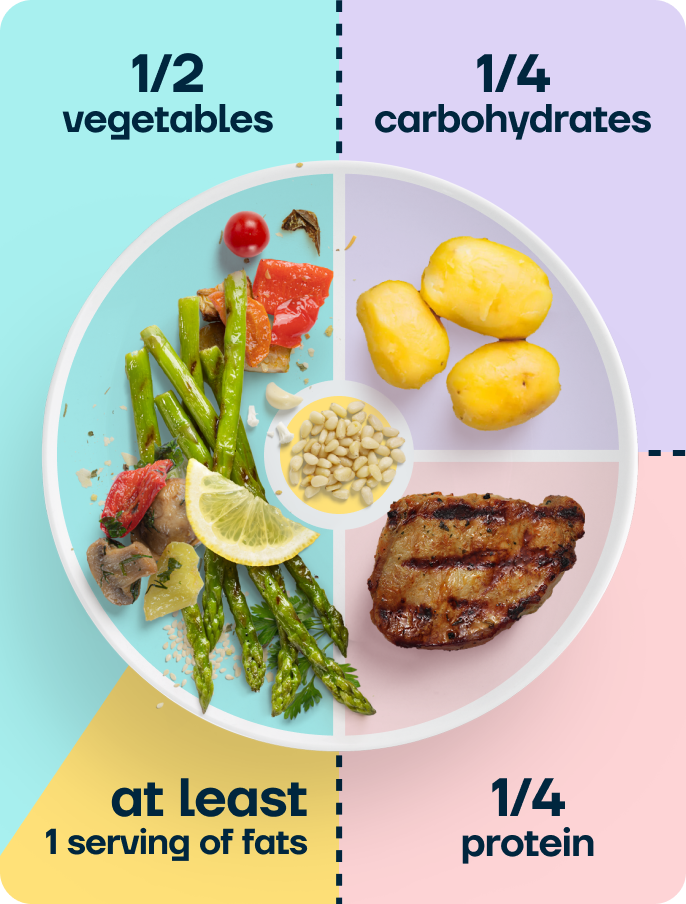
For example, that could be a palm-sized chicken breast with roasted peppers, courgette, and red onion, a fist-sized portion of new potatoes, and a drizzle of olive oil.
Our meal plan generator can create a personalised 7-day meal plan for you based on your goals and preferences.
Why weight shouldn’t be our only measure of progress
If we judge our progress solely by our weight, regaining 2 or 3 kg can feel like failure, even when we’ve maintained most of the weight we lost and made other improvements to our health and lifestyle.
At Second Nature, we see weight as one measure of health, alongside energy, fitness, mood, sleep, relationships, and markers of physical health like blood sugar and blood pressure.
Counterintuitively, if we want to maintain our weight in the long term, we need to move away from relying on measuring it.
In a Portuguese trial of 221 women living with overweight or obesity, a year-long programme helped participants find their own reasons to exercise, such as enjoying it or valuing what it did for their health, rather than exercising because they felt they should.10
Women in the programme were more active 2 years after starting it and had lost more weight after 3 years than women in the comparison group.
Women who exercised for their own reasons, rather than out of guilt or pressure, also lost more weight over the 3 years.10
This study shows that if we can identify our intrinsic (internal) motivations to make changes to our lifestyle, we’re more likely to sustain them in the long term.
Similarly, a review of 26 studies in which 710 people described their experiences of maintaining weight loss found that many came to enjoy cooking and being active for reasons beyond their weight.11
Some began to see themselves as someone who cooks or exercises, so these changes stopped feeling like temporary rules they were waiting to stop.11
As James Clear famously says in his book Atomic Habits, “The goal isn’t to read a book; it’s to become a reader. The goal isn’t to run, it’s to become a runner.”
When we eat well and stay active because of things we value, such as having more energy for our family, feeling stronger, or sleeping better, the odd weight fluctuation is less likely to make us give up on those habits.
And if we maintain those habits because they’re intrinsically valuable to us and help give our life meaning and purpose, our weight is more likely to take care of itself.
Take home message
In a 3-year analysis of SURMOUNT-1, people taking Mounjaro reached their lowest recorded weight after an average of 21 to 23 months, then regained a median of 2.7 kg while continuing treatment. Seven in 10 regained less than 5% of their starting weight.1
By week 176, people had maintained a median of 88.5% of the weight they’d lost.1
For most people, regaining some weight didn’t reverse the improvements in their blood sugar and blood lipids.
Everyone had started with prediabetes, and over 90% had normal blood sugar at week 176, including people who regained 10% or more of their starting weight.1
The 8% who regained 10% or more of their starting weight experienced slight increases in their waist circumference and blood pressure.
The analysis included only people with prediabetes who took most of their weekly Mounjaro injections and lost at least 5% of their starting weight, so it reflects what happens to people who respond to Mounjaro and keep taking it, not everyone who starts it.1
Most of its authors work for Eli Lilly, which makes Mounjaro.1
Regaining some weight after reaching our lowest weight isn’t unique to Mounjaro.
In a U.S. study of 1,406 adults who had gastric bypass surgery, people regained a median of 26.8% of the weight they’d lost in the 5 years after their lowest recorded weight, so they’d still maintained most of their weight loss.8
If you’ve been on Mounjaro for over 2 years and are experiencing some weight regain, we’d recommend judging your progress by how much of your weight loss you’ve maintained, rather than by how far you are from your lowest weight.
Speak to your prescriber if your weight has risen from its lowest recorded weight by 10% or more of your starting weight and hasn’t come back down, and before changing your dose.
If hunger, cravings, and food noise return, we’d recommend 3 balanced meals a day based on whole foods, each with a protein portion about the size of your palm or open hand, to help you feel fuller for longer between meals.
We’d also recommend judging your progress by measures beyond weight, like energy levels, fitness, mood, sleep, and mental health.
Research on people who maintain weight loss suggests that when we eat well and stay active for reasons we value, rather than out of guilt or pressure, we’re more likely to maintain those habits over the long term.10,11
At Second Nature, our registered dietitians and nutritionists support members through one-to-one messaging in our app, alongside prescribed medication.
If you’re a member and your weight starts to increase, you can ask our clinical team about your dose in your monthly check-in form.
Our published JMIR study reported an average weight loss of 19.1% at 12 months among active subscribers on the semaglutide-supported programme. Among members with recorded 12-month weights, 77.7% lost at least 10% of their starting weight.9
Second Nature's Mounjaro and Wegovy programmes
Second Nature provides Mounjaro or Wegovy as part of our Mounjaro and Wegovy weight-loss programmes.
Why choose Second Nature over other medication providers, assuming you're eligible?
Because peace of mind matters.
We've had the privilege of working with the NHS for over eight years, helping people across the UK take meaningful steps toward a healthier, happier life.
Our programmes are designed to meet people where they are, whether that means support with weight loss through compassionate one-to-one health coaching, or access to the latest weight-loss medications (like Mounjaro and Wegovy) delivered alongside expert care from a multidisciplinary team of doctors, psychologists, dietitians, and personal trainers.
At the heart of everything we do is a simple belief: real, lasting change comes from building better habits, not relying on quick fixes. We're here to support that change every step of the way.
With over a decade of experience, thousands of lives changed, and a long-standing record of delivering programmes used by the NHS, we believe we're the UK's most trusted weight-loss programme.
We hope to offer you something invaluable: peace of mind, and the support you need to take that first step.