What the safety evidence shows
GLP-1 medications, the drug class that includes Wegovy and Mounjaro, have been in clinical use since exenatide (Byetta) was first licensed in 2005, giving researchers over 20 years of safety data on this class of drugs.
Newer medications in the class, like semaglutide and tirzepatide, have now been studied in tens of thousands of people across long-running Phase 3 trials (large human trials with thousands of participants).
Cardiovascular outcomes
The SELECT trial followed more than 17,000 adults with overweight or obesity and existing heart disease for an average of 40 months.
Semaglutide reduced the risk of major heart events, including heart attack, stroke, and cardiovascular death, by 20% compared to placebo.6
A 2025 follow-up analysis of the same trial found that these heart benefits appear largely independent of the amount of weight participants lost, suggesting the medication protects the heart through mechanisms beyond weight reduction alone.6
Suicidal thoughts and mental health
After early reports in 2023, both the FDA (January 2024) and the EMA (April 2024) reviewed the evidence and concluded there is no causal link between GLP-1 medications and suicidal thoughts or behaviour.4
In 2025, the FDA went a step further and asked manufacturers to remove the suicidal-ideation warning from GLP-1 product labels, based on a comprehensive review of 91 placebo-controlled trials and large real-world cohort studies.7
Thyroid cancer and pancreatitis
The thyroid cancer concern came from early rodent studies, where high doses of liraglutide (an older GLP-1) caused thyroid C-cell tumours in rats.
In human data, thyroid cancer incidence in people taking semaglutide is below 1% and not statistically different from placebo.5
Pancreatitis has also been studied closely. A 2025 meta-analysis of randomised trials found no meaningful effect of semaglutide on the risk of pancreatic cancer, and observational data are broadly reassuring.5
Personal or family history of medullary thyroid cancer or multiple endocrine neoplasia type 2 (MEN-2) remains a contraindication.
A history of pancreatitis doesn’t mean you can’t take GLP-1 medications, but prescribers will be more cautious before approving.
Side effects to expect
Most people on Wegovy or Mounjaro will experience at least one side effect, particularly when doses are increased.3
The most common side effects are gastrointestinal:
- Nausea
- Constipation
- Diarrhoea
- Indigestion or reflux
- Stomach pain
In the STEP 1 trial of semaglutide, 4.5% of participants stopped the medication because of gastrointestinal side effects, compared with 0.8% on placebo.3 Most side effects were mild to moderate and resolved as the body adjusted.
Fatigue is also a common but underdiscussed side effect. A 2023 service evaluation published in JMIR Formative Research found that 44% of people on Second Nature’s semaglutide-supported programme reported feeling more tired than usual after four weeks on the medication.8
After eight weeks, that figure had halved to 22%, suggesting fatigue reduces as the body adapts and patients develop healthier eating habits to improve energy levels on the medication.8
Practical steps that help include moving up dose steps slowly, eating smaller protein-rich meals, staying well hydrated, and getting more rest during dose increases.
Who shouldn’t take weight-loss injections
Weight-loss injections aren’t suitable for everyone. Wegovy and Mounjaro aren’t recommended if you:
- Are pregnant, planning a pregnancy, or breastfeeding
- Have a personal or family history of medullary thyroid cancer
- Have multiple endocrine neoplasia type 2 (MEN-2)
- Have had a severe allergic reaction to semaglutide, tirzepatide, or any inactive ingredients
- Have a history of pancreatitis (caution and specialist input required)
- Have severe gastrointestinal disease, including gastroparesis
People with type 1 diabetes, severe liver or kidney disease, or a history of diabetic retinopathy need specialist assessment before starting either medication.1,2
A separate UK safety issue is the rise of compounded and unlicensed GLP-1 products sold through online sellers and social media.
The MHRA has repeatedly warned that these products are not regulated, may contain incorrect doses, and have been linked to hospital admissions.
Always obtain Wegovy or Mounjaro from a registered UK pharmacy after a clinician review.9
How well weight-loss injections work
The 2025 evidence on how well weight-loss injections work is the strongest part of the safety-versus-benefit case for the newer medications.
Wegovy (semaglutide)
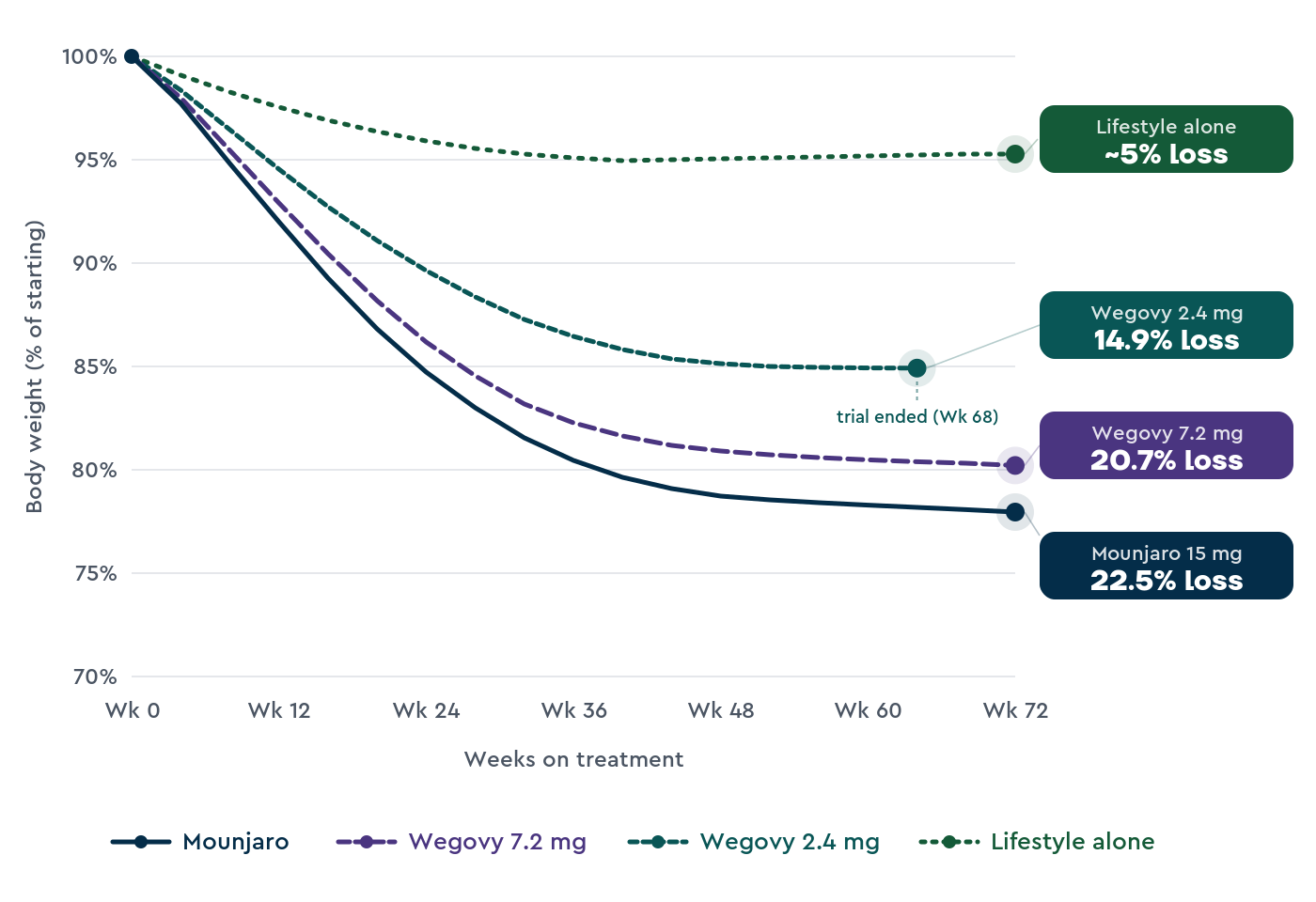
In the STEP 1 trial, adults on Wegovy 2.4 mg lost an average of 14.9% of body weight over 68 weeks, compared with 2.4% on placebo.3 Around 86% of participants lost at least 5% of body weight, and 32% lost at least 20%.
The MHRA approved a higher-dose Wegovy 7.2 mg pen in early 2026, based on data showing an average weight loss of 20.7% at 72 weeks.10
Mounjaro (tirzepatide)
The SURMOUNT-1 trial of adults living with obesity (and without type 2 diabetes) found an average weight loss of 22.5% on the highest 15 mg dose at 72 weeks.11
A three-year extension of SURMOUNT-1, published in 2025, showed that weight loss was largely sustained, with an average of 22.9% maintained at 176 weeks.
Nearly 99% of participants who had pre-diabetes at the start did not progress to type 2 diabetes.12
Compared with lifestyle changes alone
Lifestyle changes without medication can produce meaningful weight loss for many people, but the average tends to be much smaller, around 5% of body weight at 12 months across published behavioural-programme trials.
For people who have tried diet and exercise repeatedly without success, particularly where genetic or biological factors affect hunger and cravings, adding a weight-loss injection typically takes average weight loss from around 5% to between 15% and 22% of body weight.
Second Nature has worked with the NHS since 2017, combining medication with the structured habit support designed for people who haven’t achieved sustained weight loss through diet and exercise alone. Take our 3-minute eligibility quiz, and a clinician will review your answers: check your eligibility.
Maintaining muscle mass during weight loss
When people lose weight quickly, about a quarter of that weight loss typically comes from lean tissue, including muscle. This isn’t unique to GLP-1 medications, but the speed of weight loss possible with Wegovy and Mounjaro makes the issue more visible.
Three things help protect muscle mass during weight loss on a weight-loss injection.
1. Losing weight at a steady pace
The faster the weight comes off, the higher the share that comes from muscle.
We recommend losing weight at a sustainable rate of around 1lb per week.
We also recommend staying on the lowest effective dose for as long as possible.
Many of our members stay on lower doses of Wegovy and Mounjaro and achieve significant weight loss without losing excess muscle.
2. Eating enough protein
Research on adults losing weight suggests 1.2 to 1.6 grams of protein per kilogram of body weight per day, higher than the standard adult recommendation.
For someone weighing 90 kg, this is around 110-145 grams of protein daily, or a serving the size of the palm of your hand at each meal.
Common sources are eggs, Greek yoghurt, red meat, chicken, fish, tofu, lentils, beans, and cottage cheese.
Because Wegovy and Mounjaro reduce appetite, it can be hard to eat enough protein throughout the day. To make this easier, eat your protein first, and opt for easy-to-digest protein sources, like minced meat, dairy, eggs, and cooked lentils.
3. Resistance training
Resistance training is any form of exercise that works the muscles against weight or resistance. This includes bodyweight exercises like squats, lunges, and press-ups, as well as resistance bands, dumbbells, and machines.
Even short sessions, two or three times a week, can help protect muscle mass during weight loss.
Start small, then gradually do a little more as it feels manageable.
What happens when you stop
If you stop a weight-loss injection suddenly without having built the habits needed to maintain your new weight, some weight regain is likely.
In the STEP 4 extension trial, people who stopped semaglutide after 20 weeks regained around two-thirds of the weight they had lost over the next year.13
This pattern of regain is consistent across the trials investigating what happens when patients stop taking the medication suddenly.
To prevent weight regain, we recommend coming off the medication slowly by gradually reducing the dose and ensuring you have habits in place to manage hunger naturally.
For more guidance on how to prevent weight regain on GLP-1 medications, use our free weight regain prevention planner.
UK access on the NHS and privately
Both Wegovy and Mounjaro are MHRA-approved for the management of obesity.
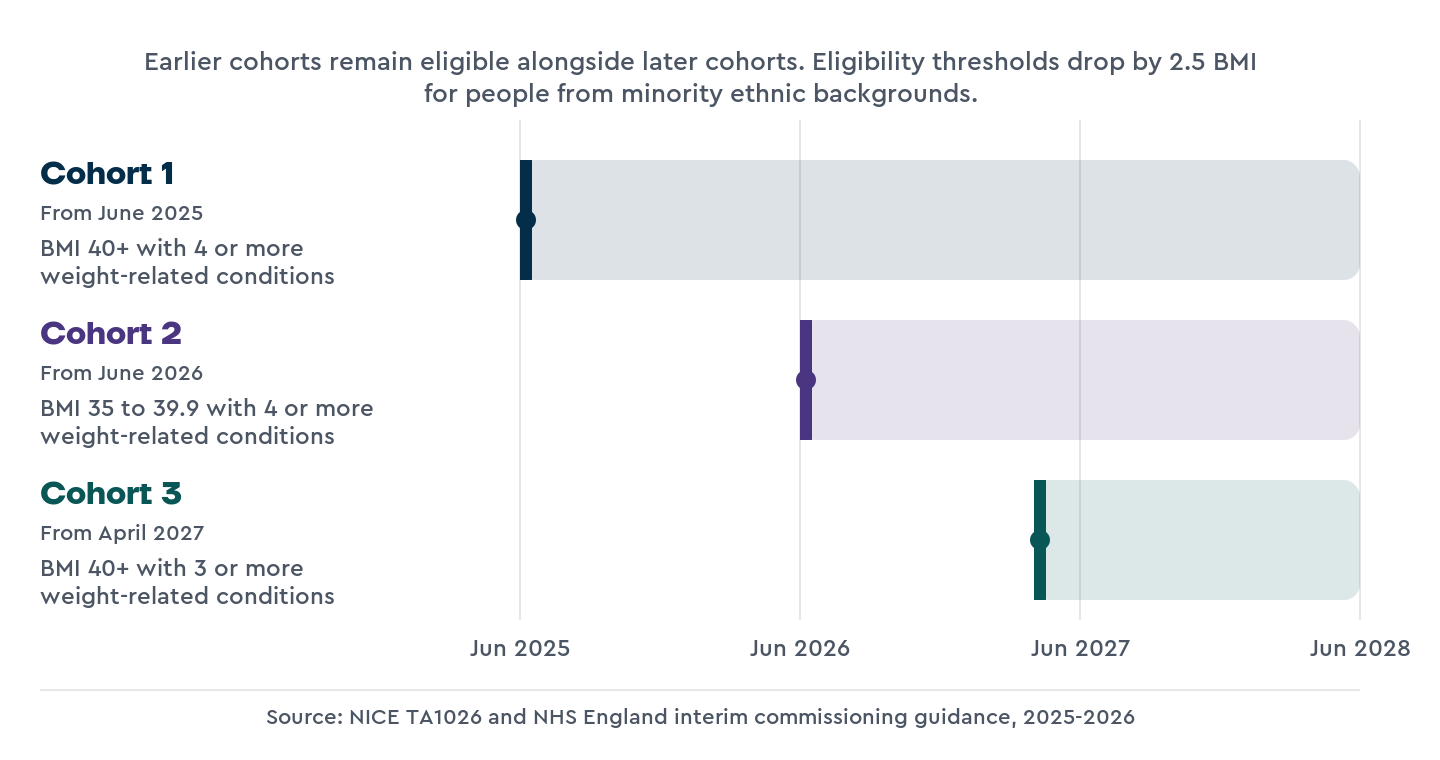
NHS access is more strict than the MHRA licence and is being rolled out in phases under NICE Technology Appraisal TA1026.
Under the current NHS commissioning guidance:
- Cohort 1 (from June 2025): adults with a BMI of 40 or higher and at least four weight-related conditions
- Cohort 2 (from June 2026): adults with a BMI of 35 to 39.9 and at least four weight-related conditions
- Cohort 3 (from April 2027): adults with a BMI of 40 or higher and at least three weight-related conditions
Weight-related conditions include type 2 diabetes, high blood pressure, dyslipidaemia, obstructive sleep apnoea, and cardiovascular disease.
For people from South Asian, Chinese, other Asian, Middle Eastern, Black African, or African-Caribbean backgrounds, the BMI threshold is reduced by 2.5 kg/m2.14
For people who don’t meet the NHS criteria, both Wegovy and Mounjaro are available privately through registered UK pharmacies with a prescription from a clinician.
Wegovy and Mounjaro safety profile
|
Wegovy (semaglutide) |
Mounjaro (tirzepatide) |
| Drug class |
GLP-1 receptor agonist |
GIP and GLP-1 receptor agonist |
| Dosing |
Once a week, subcutaneous injection |
Once a week, subcutaneous injection |
| Average weight loss in trials |
14.9% at 68 weeks (STEP 1)3; 20.7% at 72 weeks on the new 7.2 mg dose10 |
22.5% at 72 weeks; 22.9% sustained at 176 weeks (SURMOUNT-1)11,12 |
| Most common side effects |
Nausea, constipation, diarrhoea, fatigue |
Nausea, diarrhoea, constipation, fatigue |
| Cardiovascular benefit |
20% reduction in major heart events in adults with established heart disease (SELECT)6 |
Cardiovascular outcomes trial (SURPASS-CVOT) reported 2026 |
| NHS access |
Limited through specialist weight-management services |
Phased GP rollout under NICE TA102614 |
Frequently asked questions
Are weight-loss injections safe for long-term use?
Current evidence suggests that yes, weight-loss injections are safe for long-term use in people who meet the prescribing criteria.
The longest published trial, the SURMOUNT-1 extension, followed people on Mounjaro for over three years, with sustained weight loss and no new safety signals.12
The SELECT trial followed semaglutide use for an average of 40 months and showed cardiovascular benefit alongside the established safety profile.6
What is the most serious risk of GLP-1 medications?
Pancreatitis is the most relevant serious risk, though it remains uncommon.
People with a personal history of pancreatitis should discuss the risks with a specialist before starting a GLP-1 medication.
Do weight-loss injections cause depression or suicidal thoughts?
Both the FDA and the EMA have reviewed the evidence and concluded there is no causal link between GLP-1 medications and suicidal thoughts or behaviour.4,7
The FDA asked manufacturers to remove the warning from product labels in 2025.
Any history of severe depression or active suicidal ideation should be discussed with the prescribing clinician.
How long do side effects last?
For most people, the gastrointestinal side effects ease within four to eight weeks as the body adjusts to the medication, particularly during dose escalation.3,8
Will I lose muscle on Wegovy or Mounjaro?
Around a quarter of weight loss on GLP-1 medications typically comes from lean tissue, including muscle.
Eating enough protein (a palm-sized serving at each meal, plus around 1.2 to 1.6 g per kg of body weight per day), doing some form of resistance training, and following the dose-escalation schedule all help protect muscle mass.
Is Saxenda still available in the UK?
Saxenda (the branded version of liraglutide) has been discontinued by Novo Nordisk.
Generic liraglutide is available in the UK under the brand name Nevolat (manufactured by Zentiva).
The drug, doses, and side-effect profile are unchanged. Daily liraglutide is generally less effective than the once-a-week medications Wegovy and Mounjaro.
Can I get weight-loss injections on the NHS?
NHS access is limited under NICE TA1026 and is being rolled out in phases.
The current Cohort 1 covers adults with a BMI of 40 or higher and at least four weight-related conditions.
The phased rollout is scheduled to expand each year until 2027.14
Specialist weight-management services and private prescribing remain the main routes for most people.
What happens if I buy weight-loss injections online?
The MHRA has warned that compounded and unlicensed GLP-1 products sold through online sellers and social media are not regulated, may contain incorrect doses, and have been linked to hospital admissions in the UK.9
Wegovy and Mounjaro should only be obtained from a registered UK pharmacy after a clinician review.
Take home message
The current evidence indicates that weight-loss injections like Wegovy and Mounjaro are safe and effective for people who meet the prescribing criteria.
Side effects are common but typically mild and transient. Serious side effects are rare, and the regulatory reviews of suicidal thoughts, pancreatitis, and thyroid cancer signals have been broadly reassuring.
The medications work best when paired with the habits that support sustained weight loss: eating enough protein, doing some form of resistance training, getting good-quality sleep, and managing stress.
Second Nature’s programme combines medication support with structured habit change from registered dietitians and nutritionists, built around a balanced plate of vegetables, protein, complex carbohydrates, and a serving of fat.
A peer-reviewed study published in JMIR Formative Research in 2025 found that active subscribers on Second Nature’s GLP-1-supported programme lost an average of 19.1% of their body weight at 12 months, with 77.7% achieving at least 10% weight loss.15
Second Nature's Mounjaro and Wegovy programmes
Second Nature provides Mounjaro or Wegovy as part of our Mounjaro and Wegovy weight-loss programmes.
Why choose Second Nature over other medication providers, assuming you're eligible?
Because peace of mind matters.
We've had the privilege of working with the NHS for over eight years, helping people across the UK take meaningful steps toward a healthier, happier life.
Our programmes are designed to meet people where they are, whether that means support with weight loss through compassionate one-to-one health coaching, or access to the latest weight-loss medications (like Mounjaro and Wegovy) delivered alongside expert care from a multidisciplinary team of doctors, psychologists, dietitians, and personal trainers.
At the heart of everything we do is a simple belief: real, lasting change comes from building better habits, not relying on quick fixes. We're here to support that change every step of the way.
With over a decade of experience, thousands of lives changed, and a long-standing record of delivering programmes used by the NHS, we believe we're the UK's most trusted weight-loss programme.
We hope to offer you something invaluable: peace of mind, and the support you need to take that first step.