What the evidence says
For knee osteoarthritis in adults who are overweight, the non-surgical foundation is weight loss with exercise. Wegovy now has trial data in that population.
STEP 9: Wegovy in knee osteoarthritis
STEP 9 enrolled 407 adults living with moderate knee osteoarthritis and obesity, with a mean body mass index of 40.3, and 81.6% of participants were women.1
Participants were randomly assigned to receive Wegovy 2.4 mg or a placebo, alongside lifestyle counselling, for 68 weeks.1
The dose used was 2.4 mg because it was the licensed maximum dose of Wegovy at the time of the trial.
The current licensed top dose in the UK is Wegovy 7.2 mg, MHRA-approved in January 2026, but the osteoarthritis evidence is based on 2.4 mg.
The October 2024 results:
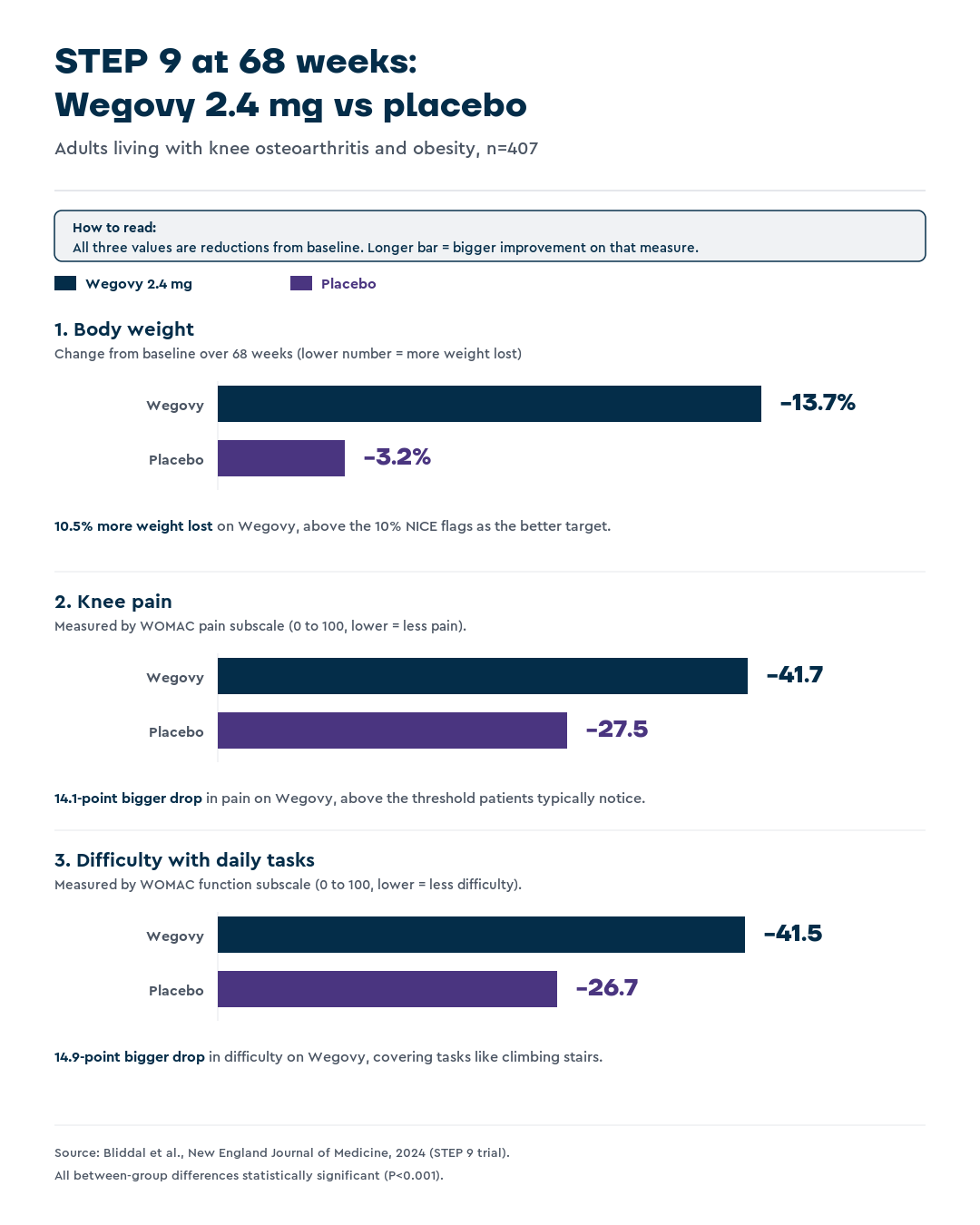
- An average weight loss of 13.7% with Wegovy, compared with 3.2% on placebo1
- WOMAC pain score (0 to 100, higher is worse) dropped by 41.7 points with Wegovy versus 27.5 on placebo, a 14.1-point difference between the two groups1
- WOMAC physical function score dropped by 41.5 points versus 26.7 on placebo, a 14.9-point difference covering tasks like climbing stairs and getting up from a chair1
- The 14.1-point pain improvement is comfortably above the threshold most researchers use as the minimum patients actually feel in their day-to-day pain1
STEP 9 is the first large trial to test a GLP-1 medication specifically in adults with osteoarthritis.
IDEA: the foundation behind the weight-loss recommendation
The IDEA trial, published in JAMA in 2013, randomised 454 adults with knee osteoarthritis and overweight or obesity to diet alone, exercise alone, or diet plus exercise for 18 months.3
The diet-plus-exercise group lost more weight and reported less pain and better function than either intervention alone (WOMAC pain: 3.6 versus 4.7 in the exercise-only group, on a 0 to 20 scale).3
IL-6, an inflammatory marker linked to joint pain, also dropped alongside the weight in the diet-plus-exercise group.3
NICE NG226 on weight and osteoarthritis
NICE guideline NG226 on osteoarthritis advises that for adults with osteoarthritis who are overweight or living with obesity, weight reduction “will improve their quality of life and physical function, and reduce pain”.2
Losing 10% of body weight “is likely to be better than 5%”, NICE adds.2
The STEP 9 average of 13.7% sits above the 10% mark; NICE flags as the better target.1,2
A note on UK access: Wegovy is approved and NICE-recommended for obesity, not for osteoarthritis specifically.
NHS access runs through specialist weight management services on obesity criteria, so a knee osteoarthritis diagnosis doesn’t open a separate NHS pathway.
Is the pain relief from the drug or the weight loss?
This is the most common question raised by STEP 9.
The published paper identifies weight loss as the primary driver of pain reduction, but doesn’t fully disentangle the two effects.1
Three lines of evidence suggest that the weight loss is leading to most of the benefits.
- Less body weight means less compressive load on the knee with every step
- Adipose tissue produces inflammatory signalling molecules (IL-6 and TNF-alpha) that drive joint pain, and reducing fat tissue reduces those signals3
- The IDEA trial in 2013 demonstrated clinically meaningful reductions in pain through diet and exercise alone, without any GLP-1 medication3
Whether semaglutide also has anti-inflammatory effects independent of weight loss, through GLP-1 receptors on immune cells, is a separate question.
The evidence on that is preliminary, and the STEP 9 paper doesn’t make the claim.
If you stopped Wegovy in the future but kept the weight off through habit change, the pain benefit would likely persist because the pain reduction comes from weight loss rather than the medication.
Still, we know that insulin resistance and higher blood sugar levels can increase inflammation, and Wegovy reduces these.
So, it’s possible that Wegovy reduces inflammation and joint pain by improving blood sugar levels alongside supporting weight loss.
How weight affects your joints
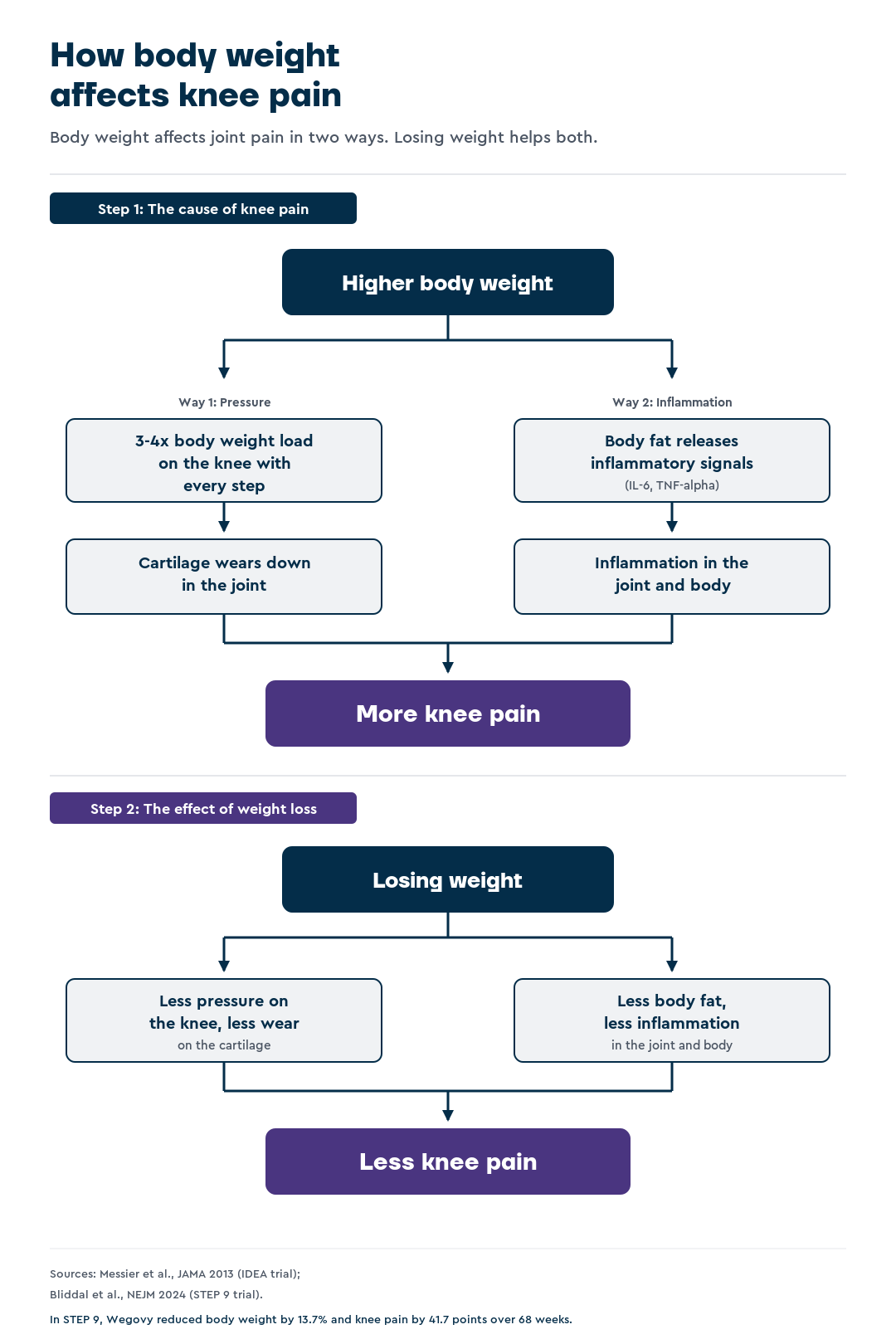
Weight affects osteoarthritis through two routes, and losing weight reduces the burden on both.
The mechanical load
The knee carries roughly three to four times your body weight with every step on flat ground, and more on stairs or hills.3
Reducing your body weight reduces the load on the same joint surface with every step, which is the mechanical reason that even modest weight loss usually reduces pain.
The inflammatory side
Adipose tissue (body fat) releases pro-inflammatory signalling molecules, including IL-6 and TNF-alpha, both of which contribute to joint inflammation throughout the body.3
That mechanism is why some adults with hand osteoarthritis, a joint that bears no body weight, also report less pain after losing weight.
A note on hip osteoarthritis
STEP 9 was knee-specific.1
The same mechanisms apply to the hip, which carries 2.5 to 3 times body weight when walking, so the benefit is biologically plausible, but Wegovy hasn’t been tested in a published hip trial.
Talk to your GP or orthopaedic team if hip osteoarthritis is your main concern.
What pain reduction looks like in practice
WOMAC scores translate into the activities the questionnaire asks about: pain when walking, climbing stairs, lying in bed at night, sitting, and standing.
In STEP 9, Wegovy improved all of those activities, and many participants reduced their painkiller use over the 68-week period.1
Pain reduction was significant on average, but not universal.
Some participants reported substantial improvement, others reported modest improvement, and a smaller group reported little change.
What dose works for joint pain
STEP 9 tested Wegovy at the 2.4 mg dose, which is the only Wegovy dose with published evidence in knee osteoarthritis.
Wegovy 7.2 mg is the highest available dose and produces around 20.7% average weight loss in STEP UP, compared with around 15% at 2.4 mg in STEP 1.5 It hasn’t been tested in osteoarthritis specifically.
If your goal is joint pain reduction, there’s a reasonable case for staying on 2.4 mg once you reach it: the evidence is at that dose, and the weight loss STEP 9 produced was above the 10% NICE recommendation.1,2
We recommend staying on the lowest effective dose for as long as possible.
Many of our members stay on lower doses of Wegovy and achieve significant weight loss without losing excess muscle, the muscle that supports joints.
Foods that support joint health
The eating pattern that supports joint health on Wegovy is the same eating pattern that supports weight loss and protects muscle mass.
We recommend eating a diet based on whole foods that contains enough protein, fibre, fat, and complex carbohydrates and limits ultra-processed foods.
Anti-inflammatory foods
Some foods reduce inflammatory markers more reliably than others:
- Oily fish (salmon, mackerel, sardines, trout) for omega-3 fatty acids. Aim for 2 portions of fish a week, one of which is oily.
- Extra virgin olive oil contains monounsaturated fats and oleocanthal, an anti-inflammatory compound
- Colourful vegetables and fruit for polyphenols linked to lower inflammatory markers: berries, leafy greens, peppers, broccoli, tomatoes, beetroot
- Herbs and spices like turmeric, ginger, garlic, and rosemary, which contain anti-inflammatory compounds
Complex carbohydrates, fibre, and vegetables
Fibre supports a healthier gut microbiome, which is linked to systemic inflammation.
At Second Nature, we recommend carbohydrates like wholegrain or sourdough bread, rolled oats, brown rice, potato, sweet potato, quinoa, beans and lentils, wholemeal pasta or noodles, and wholemeal couscous.
Eating 3 meals a day, even if you’re not hungry
Wegovy reduces appetite and quietens food noise.
However, some people on the medication find that they have very little desire to eat and they reduce their calorie intake too drastically.
We recommend 3 balanced meals a day, even when you’re not hungry, with a protein-rich snack between if needed.
Our guide on eating too little on Mounjaro provides more information from our team of registered nutritionists on how to approach this.
Calcium, vitamin D, and bone density
Rapid weight loss on a GLP-1 medication can lower bone density. The Wegovy SmPC lists hip fracture as a rare adverse reaction from the SELECT cardiovascular outcomes trial.6
The signal was small overall but more visible in women (1% vs 0.2%) and in adults aged 75 and over (2.4% vs 0.6%).6
For this reason, calcium and vitamin D intake becomes more important during weight loss on Wegovy than it would be otherwise.
Calcium-rich foods include dairy (milk, yoghurt, cheese), fortified plant milks, tinned sardines and salmon with bones, calcium-set tofu, and leafy greens like kale.
Research suggests taking a 1,000IU vitamin D supplement during autumn and winter in the UK, and year-round if you spend little time outside.
If you’re concerned about your vitamin D levels, speak with your GP.
Maintaining muscle mass while you lose weight
The muscles around your knee, hip, and other joints absorb load that would otherwise go through cartilage. Losing muscle alongside fat reduces that support.
Losing weight at a steady pace
Research shows that when you lose weight quickly, you’re more likely to lose a greater share of muscle and potentially bone mass as a proportion of the total weight you lose. We recommend a sustainable rate of around 1lb per week.
On Wegovy, this means staying on the lowest effective dose for as long as possible.
Many of our members stay on lower doses of Wegovy and Mounjaro, achieve significant weight loss, and don’t lose excess muscle.
Eating enough protein
Adults losing weight need 1.2 to 1.6 grams of protein per kg of body weight per day.
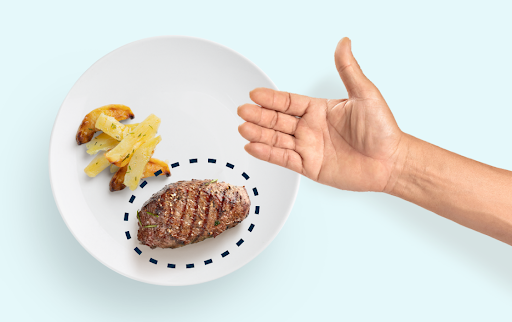
For someone weighing 90 kg, that’s around 110 to 145 grams of protein daily, or a serving the size of a palm at each of 3 meals.
Good sources include eggs, Greek yoghurt, chicken, fish, tofu, lentils, beans, and cottage cheese.
If you struggle to eat enough in your main meals due to the hunger-lowering effects of Wegovy, then consider meals that are easier to digest, like soups with a side of protein (like boiled eggs, sliced chicken, or smoked salmon), smoothies, casseroles, bolognese, and scrambled eggs with vegetables.
Our GLP-1 muscle and protein planner helps you identify a personal protein target with a list of recipe ideas.
Resistance training
Resistance training is any movement that uses your muscles against resistance. This includes bodyweight exercises such as squats, lunges, and press-ups, as well as resistance bands, dumbbells, and weight machines.
Research suggests that even two short sessions a week can help maintain muscle mass during weight loss. Build up gradually from there over the following weeks.
For osteoarthritis specifically, stronger quadriceps absorb load that would otherwise be borne by the knee joint, and stronger glutes do the same for the hip.
NICE recommends both as part of the exercise that’s first-line treatment for osteoarthritis.2
Joint-friendly movement on Wegovy
NICE recommends therapeutic exercise as a core treatment for osteoarthritis.
The guideline notes that joint pain may increase when you first start exercising, but that long-term adherence reduces pain and improves function.2
Early discomfort is part of the process and shouldn’t stop you from continuing.
Building a movement habit, not hitting a target
Movement habits are most likely to stick when they’re small, regular, and tied to something you already do.
Examples include a 10-minute walk after your evening meal, a short stretching routine while you make your morning coffee, or seated resistance-band work while you watch TV.
Research from Lally et al. (2010) found that the average time for a new behaviour to feel automatic was 66 days, with a wide individual range of 18 to 254 days.4
In the first 2 to 3 months of building a movement habit, consistency is more important than intensity.
Low-impact aerobic options
For knee and hip osteoarthritis, the gentlest aerobic options are walking on flat terrain with supportive footwear, swimming or water aerobics (buoyancy reduces joint load), and cycling.
Build up gradually rather than aiming for a fixed weekly target.
Practical starting points for strength work
Two short sessions a week are enough to begin with: bodyweight squats to a chair, sit-to-stands, wall press-ups, and resistance-band work for the legs.
A physiotherapist can tailor a programme if you can access an NHS or private referral.
Managing a flare
Osteoarthritis flares are a normal part of the condition and don’t mean your medication or movement plan has failed.
During a flare, switch to gentler movements, use heat or cold packs, and contact your GP if your pain medication needs to be reviewed.
Our Wegovy exercise plan covers a more structured progression once flares are settled.
Second Nature has worked with the NHS since 2017. Our registered dietitians help you build the daily routines around food, protein, and movement that support both weight loss and joint health on Wegovy. Take our 3-minute eligibility quiz and a clinician will review your answers.
Wegovy and knee or hip surgery
If you’re considering joint replacement, two things about Wegovy matter.
Weight loss before surgery
Many NHS orthopaedic services apply BMI thresholds for elective joint replacement, typically a BMI below 35 or 40, depending on the trust.
Weight loss can move you into eligibility, reduce the risk of surgical complications, and improve postoperative recovery.
For some patients, the pain-reducing effect of Wegovy may also delay the need for surgery.
STEP 9 didn’t measure surgery rates directly, but a 14.1-point improvement on the WOMAC pain scale is clinically meaningful, and the trial ran for 68 weeks.1
Anaesthesia and the pre-surgery pause
GLP-1 medications slow gastric emptying. Anaesthetists are concerned about food remaining in the stomach during general anaesthesia due to the risk of aspiration.
The 2023 American Society of Anesthesiologists guidance recommended pausing GLP-1 medications, including Wegovy, for 1 week before elective surgery.
The 2024 multi-society update softened this: many patients can continue their medication if they follow a clear-liquid diet for 24 hours before the procedure.
UK hospitals vary in the guidance they apply.
Tell your anaesthetist that you’re on Wegovy when you schedule surgery, and ask for their specific protocol.
Don’t pause the medication on your own without speaking to the team.
Living with chronic pain
Persistent joint pain affects mood, sleep, and daily function, not only the joint itself.
The pain-mood loop
Research shows that adults living with chronic pain have a higher risk of depression and anxiety, and that depression and anxiety can intensify how pain feels.
Part of this is a process pain researchers call pain catastrophising, where worry about the pain amplifies the felt experience.
Sleep is one of the strongest links between pain and mood.
Persistent pain often disturbs sleep, poor sleep amplifies pain perception the next day, and the cycle becomes self-reinforcing over weeks and months.
If Wegovy reduces your joint pain over time, your sleep and mood are likely to improve alongside it.
Practical sleep changes that help
Research on chronic pain suggests that keeping a consistent bedtime and wake time, even at weekends, is one of the most effective sleep changes you can make.
For knee or hip osteoarthritis, sleeping with a pillow between or under the knees can reduce overnight pain. A mattress that supports your spine without sinking too far also helps.
If pain regularly wakes you, ask your GP about a pain medication review or a referral to an NHS pain service.
Reduced mobility and body image
Osteoarthritis often reduces the range of activities people can enjoy.
Long walks become shorter, gardening becomes harder, and social events that involve standing for long periods are often avoided.
This loss of activity has a real effect on our mood.
A weight-loss plan that includes joint-friendly movement can help rebuild some of those activities over time.
Rapid weight loss on a GLP-1 medication can also affect body image.
Loose skin, clothes fitting differently, and changes in how other people respond to you all contribute, and talking to a friend, partner, or therapist about these changes can help.
When to speak to your GP about mental health
If pain or low mood is affecting your sleep, your relationships, or your ability to function day-to-day, ask your GP for support.
The NHS offers Talking Therapies, which you can self-refer to in most parts of England.
Wegovy clinical data table
| Trial |
Population |
Intervention |
Weight outcome |
Pain or function outcome |
| STEP 9 (2024)1 |
407 adults with knee osteoarthritis and obesity |
Wegovy 2.4 mg vs placebo, 68 weeks |
13.7% vs 3.2% |
WOMAC pain difference of 14.1 points; function 14.9 points |
| IDEA (2013)3 |
454 adults with knee osteoarthritis and overweight or obesity |
Diet + exercise vs exercise alone vs diet alone, 18 months |
Greatest in diet + exercise group |
WOMAC pain 3.6 (diet + exercise) vs 4.7 (exercise alone) on a 0-20 scale, p=0.004 |
| STEP 1 (2021)5 |
1,961 adults with overweight or obesity |
Wegovy 2.4 mg vs placebo, 68 weeks |
14.9% vs 2.4% |
Not measured |
| STOP KNEE-OA (ongoing)8 |
Adults with knee osteoarthritis and obesity (Mounjaro/tirzepatide) |
Tirzepatide vs placebo, 72 weeks |
Not yet reported |
Main outcome: reduction in need for knee replacement |
Frequently asked questions
Will Wegovy help my knee pain?
STEP 9 showed that adults living with knee osteoarthritis and obesity who took Wegovy 2.4 mg for 68 weeks reported clinically meaningful improvements in pain and function compared with placebo.1
Responses varied among individuals, but the average effect was significant.
Can I take Wegovy with NSAIDs like ibuprofen or naproxen?
The Wegovy summary of product characteristics lists no specific interaction with NSAIDs.6
In STEP 9, many participants reduced their painkiller use as their weight came down and their knee pain improved.1
NSAIDs carry their own risks (kidney function, gastric bleeding, and blood pressure), so discuss long-term NSAID use with your GP.
Our guide on painkillers while on Wegovy covers the common combinations.
What about topical NSAIDs, paracetamol, or glucosamine?
NICE NG226 recommends topical NSAIDs (such as ibuprofen gel) as first-line pharmacological treatment for knee osteoarthritis, ahead of oral NSAIDs, because they reduce pain effectively with fewer systemic side effects.2
Paracetamol can help in the short term, but should not be used regularly in the long term without medical advice.
NICE doesn’t recommend glucosamine or chondroitin: the evidence is inconsistent, and the larger trials have not shown benefit.2
Turmeric (curcumin) has some evidence in small trials but isn’t a NICE-recommended treatment.
Should I tell my rheumatology or orthopaedic team I’m starting Wegovy?
Yes. Anyone involved in your osteoarthritis care should know what other medications you’re taking, and they may want to track pain and function as your weight changes.
If joint replacement is on the table, your orthopaedic team also needs Wegovy information for surgical planning and anaesthesia (see “Wegovy and knee or hip surgery” above).
Will Wegovy help hip osteoarthritis, too?
STEP 9 was a knee-specific trial.1
The same mechanical and inflammatory mechanisms apply to the hip, and the NICE recommendation on weight loss for osteoarthritis isn’t limited to the knee, so it may also aid hip arthritis.2
However, Wegovy hasn’t been tested in a published trial for hip osteoarthritis.
What about Mounjaro for joint pain?
Mounjaro (tirzepatide) hasn’t been tested in a published osteoarthritis trial yet.
The STOP KNEE-OA trial is ongoing: 72 weeks of tirzepatide versus placebo in adults with knee osteoarthritis and obesity, with a reduction in the need for knee replacement as the main outcome.8
The weight-loss pathway that helped joints in STEP 9 applies to Mounjaro as well, and Mounjaro produces greater average weight loss than Wegovy at all available doses.
Whether that translates to more pain reduction in osteoarthritis is something STOP KNEE-OA may answer.
I’ve heard some people get more joint pain on Wegovy. Is that true?
Arthralgia (joint pain) isn’t listed as a recognised adverse reaction in the Wegovy summary of product characteristics.
The only musculoskeletal adverse reaction listed is hip fracture, classified as rare and reported in the SELECT cardiovascular outcomes trial.6
In SELECT, hip and pelvis fractures were more common on Wegovy than placebo in women (1% vs 0.2%) and in adults aged 75 and over (2.4% vs 0.6%), so calcium, vitamin D, and resistance training matter for bone density on the medication.6
Some people report joint or muscle aches during dose escalation, particularly at night, although the evidence for this is anecdotal.
Possible explanations include rapid changes in body composition, biomechanical adjustment, or dehydration.
If aches become a significant issue, speak to your prescriber.
Can Wegovy delay or replace the need for knee replacement?
STEP 9 didn’t measure surgery rates, so the direct answer isn’t in the data yet.1
Weight loss is one of the few non-surgical interventions with strong evidence for reducing pain in knee osteoarthritis, and, where appropriate, delaying surgery by a few years is a goal many orthopaedic teams will support.
The STOP KNEE-OA trial with tirzepatide is specifically measuring whether the medication reduces the need for knee replacement surgery.8
How long until my pain might improve?
STEP 9 measured outcomes at 68 weeks, with some participants reporting earlier improvement as weight came off.1
Research from STEP 9 and the earlier IDEA trial shows that pain reduction tends to be gradual and that participants who lost more weight reported greater pain reduction on average.1,3
Can I get Wegovy on the NHS specifically for osteoarthritis?
No. NHS access to Wegovy is through specialist weight management services, based on obesity criteria (BMI of 35 or higher, plus at least one weight-related condition).
A knee osteoarthritis diagnosis doesn’t open a separate NHS pathway, although it would count as a weight-related condition on the obesity criteria.
Private prescriptions are available for adults who meet the licensed MHRA criteria (BMI of 30 or higher, or 27 to 30 with a weight-related condition).
How much does Wegovy cost privately in the UK?
Private Wegovy in the UK costs around £100 a month at the lowest titration doses and £200-£300 a month at maintenance, depending on the provider and dose. Annual costs typically range from £1,800 to £3,600.
Some providers include consultation, delivery, and clinical support in the monthly fee, while others charge for them separately.
Compare the total monthly cost, not just the medication price.
What if I have rheumatoid arthritis as well as osteoarthritis?
Many adults live with both. Osteoarthritis is mechanical and inflammatory; rheumatoid arthritis is an autoimmune condition.
Our companion article on Wegovy with rheumatoid arthritis covers the dietary and exercise differences.
Take home message
The STEP 9 trial showed that Wegovy 2.4 mg taken alongside lifestyle support for 68 weeks reduced knee pain and improved physical function in adults living with knee osteoarthritis and obesity, with an average weight loss of 13.7%.1
The pain benefit appears to follow the weight loss rather than the prescription, so if you maintain the weight loss through long-term habit change, the pain reduction is likely to persist.
NICE already recommends weight loss as a core treatment for osteoarthritis, and Wegovy is the first evidence-backed pharmacological tool to support that recommendation in adults living with knee osteoarthritis and obesity.1,2
We recommend taking Wegovy alongside introducing habits that protect muscle mass, joint health, and weight maintenance, including 3 balanced meals a day, adequate protein intake, anti-inflammatory foods, and consistent low-impact movement.
If you’re considering knee or hip replacement, tell your anaesthetist and orthopaedic team that you’re on Wegovy, so they can plan around the medication’s effect on gastric emptying.
Our research suggests that you’re more likely to avoid weight regain when Wegovy is combined with structured habit-change support than when it’s prescribed on its own.
Second Nature’s programme combines Wegovy with structured habit support from registered dietitians, using the balanced plate model (half vegetables, quarter protein, quarter complex carbohydrates, plus a serving of fat) to support both weight loss and joint health.
Our published JMIR research showed an average weight loss of 19.1% at 12 months for active subscribers, with 77.7% achieving at least 10% weight loss.7
Second Nature's Mounjaro and Wegovy programmes
Second Nature provides Mounjaro or Wegovy as part of our Mounjaro and Wegovy weight-loss programmes.
Why choose Second Nature over other medication providers, assuming you're eligible?
Because peace of mind matters.
We've had the privilege of working with the NHS for over eight years, helping people across the UK take meaningful steps toward a healthier, happier life.
Our programmes are designed to meet people where they are, whether that means support with weight loss through compassionate one-to-one health coaching, or access to the latest weight-loss medications (like Mounjaro and Wegovy) delivered alongside expert care from a multidisciplinary team of doctors, psychologists, dietitians, and personal trainers.
At the heart of everything we do is a simple belief: real, lasting change comes from building better habits, not relying on quick fixes. We're here to support that change every step of the way.
With over a decade of experience, thousands of lives changed, and a long-standing record of delivering programmes used by the NHS, we believe we're the UK's most trusted weight-loss programme.
We hope to offer you something invaluable: peace of mind, and the support you need to take that first step.