What atrial fibrillation is
AF is an irregular and often fast heart rhythm. It happens when the heart’s upper chambers, the atria, fire chaotic electrical signals instead of beating in a steady rhythm.4
Some people experience obvious symptoms, such as palpitations, breathlessness, chest tightness, dizziness, and fatigue.
Others notice nothing at all, and their AF is picked up by chance during a routine check or while being investigated for something else.4
The clinical concern with AF isn’t the rhythm itself. It’s the increased risk of stroke, which is roughly five times higher than for people without AF.4
There’s also a higher risk of heart failure if AF is poorly controlled over time.4
The 2024 European Society of Cardiology guidelines manage AF using an approach called AF-CARE.4
The C stands for comorbidity and risk-factor management, which the guidelines now place first because it applies to everyone with AF, whatever their stroke risk or symptoms.4
The A is to avoid stroke and blood clots, the R is to reduce symptoms through rate or rhythm control, and the E is ongoing evaluation as things change.4
Weight is one of the comorbidities named in that first step, and it’s where Wegovy becomes relevant.
How Wegovy works
Wegovy is a once-a-week injection that contains the drug semaglutide.
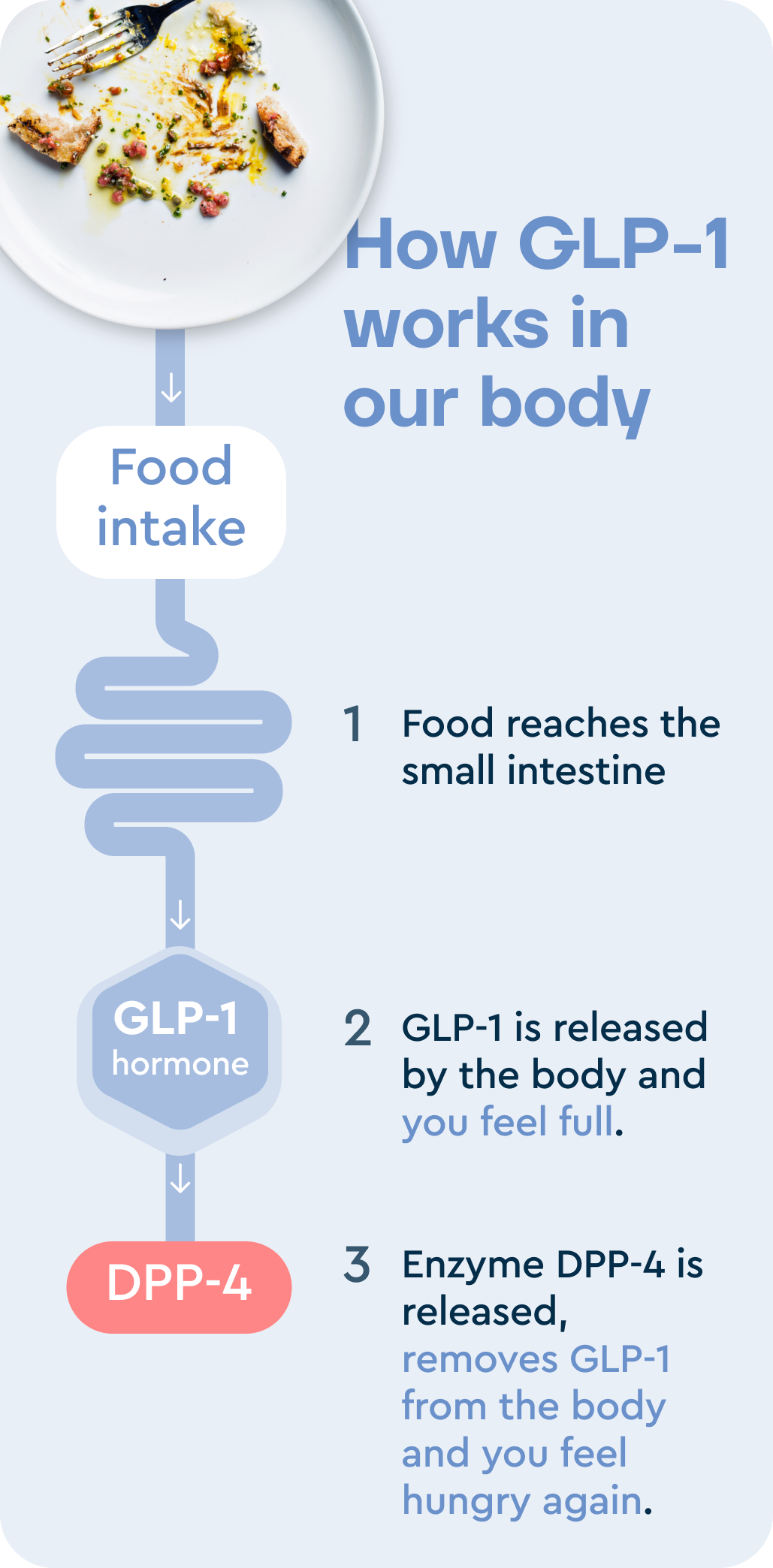
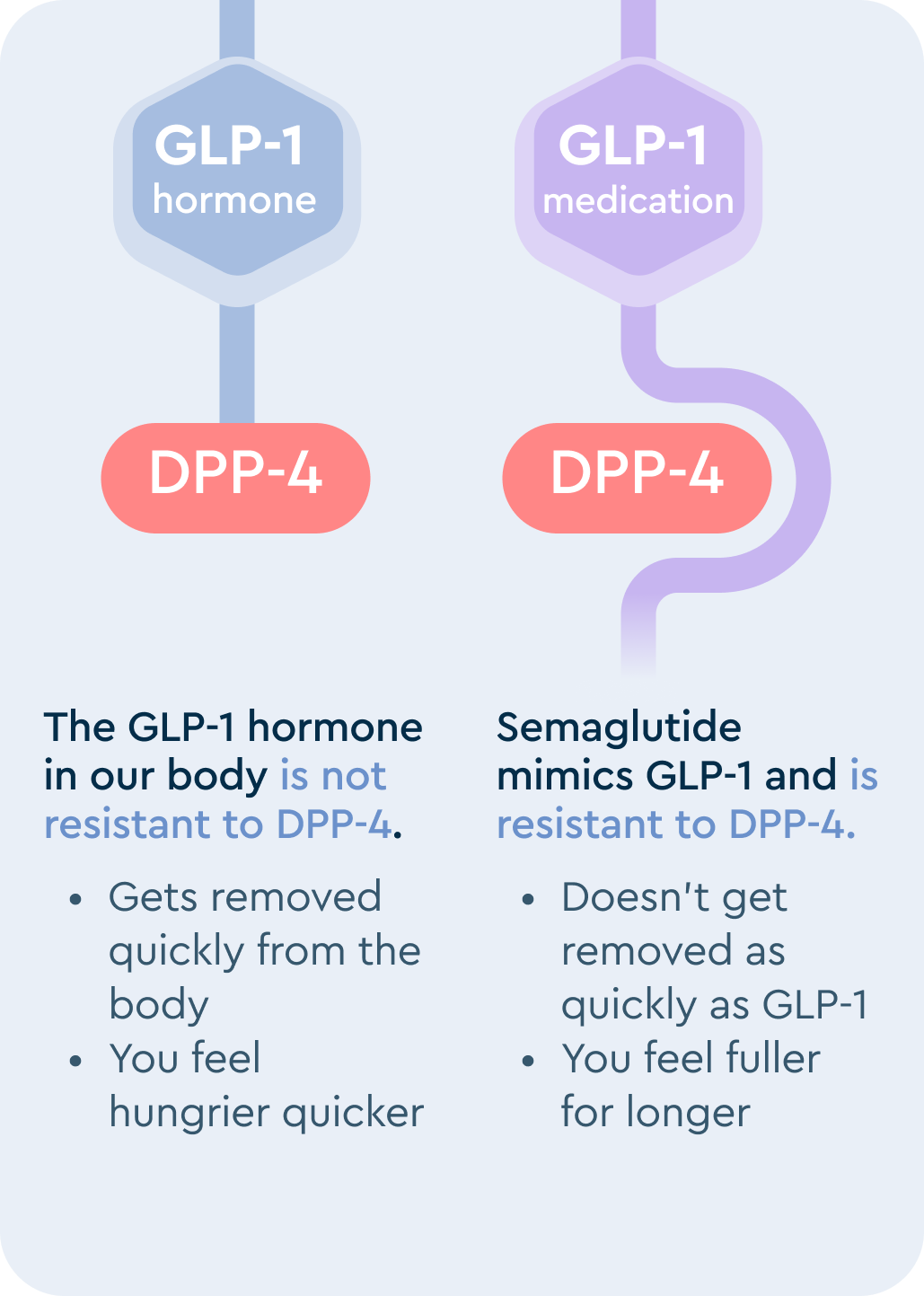
It mimics a gut hormone called GLP-1, which communicates with the brain’s appetite centre to reduce hunger and food noise (the constant pre-occupation with food, even if not physically hungry).6
It also slows down digestion, so food stays in your stomach longer. You feel full sooner during a meal and stay satisfied for longer afterwards.
In the STEP UP trial, people taking the 7.2 mg dose of Wegovy lost an average of 20.7% of their body weight over 72 weeks, compared with around 3% on placebo.5
For someone with AF, the relevance isn’t a direct effect on heart rhythm.
The relevance is that meaningful, sustained weight loss is one of the few lifestyle changes with strong evidence for reducing AF burden over time.3
How semaglutide lowers heart disease risk
The SELECT trial followed 17,604 adults with established cardiovascular disease and a BMI of 27 or above, none of whom had diabetes.1
They took either semaglutide 2.4 mg or a placebo for an average of around three and a half years.1
Wegovy reduced the risk of major adverse cardiovascular events, meaning cardiovascular death, non-fatal heart attack, or non-fatal stroke, by 20%.1
These events happened in 6.5% of people taking Wegovy, compared with 8.0% of those on placebo.1
On the strength of SELECT, the MHRA approved Wegovy in July 2024 to reduce cardiovascular risk in adults with established heart disease and obesity or overweight.7
It’s the first weight-loss medication approved in the UK for that purpose.1,7
Everyone in SELECT had established heart disease, and none had diabetes, so the findings don’t automatically apply to every person with AF.
Wegovy and atrial fibrillation specifically
A 2025 analysis of the SELECT trial, presented at the European Society of Cardiology Congress, looked specifically at AF.2
Among the 1,614 participants who already had AF when the trial began, Wegovy was linked to a 27% lower risk of AF coming back.2
Throughout the trial, the risk of a first AF event was 17% lower with Wegovy than with placebo.2
These results support the well-established link between weight loss and reduced AF burden, but they don’t make Wegovy a treatment for AF.
Your cardiology care, including anticoagulation and rate or rhythm control, will need to continue exactly as before.
Weight loss and atrial fibrillation
Higher body weight raises the risk of AF developing, makes existing AF harder to control, and increases the chance of AF returning after an ablation procedure.3,4
Excess body fat raises blood pressure and inflammatory markers, and contributes to obstructive sleep apnoea.4
Over time, these changes enlarge the left atrium, and a larger atrium makes AF episodes more likely.4
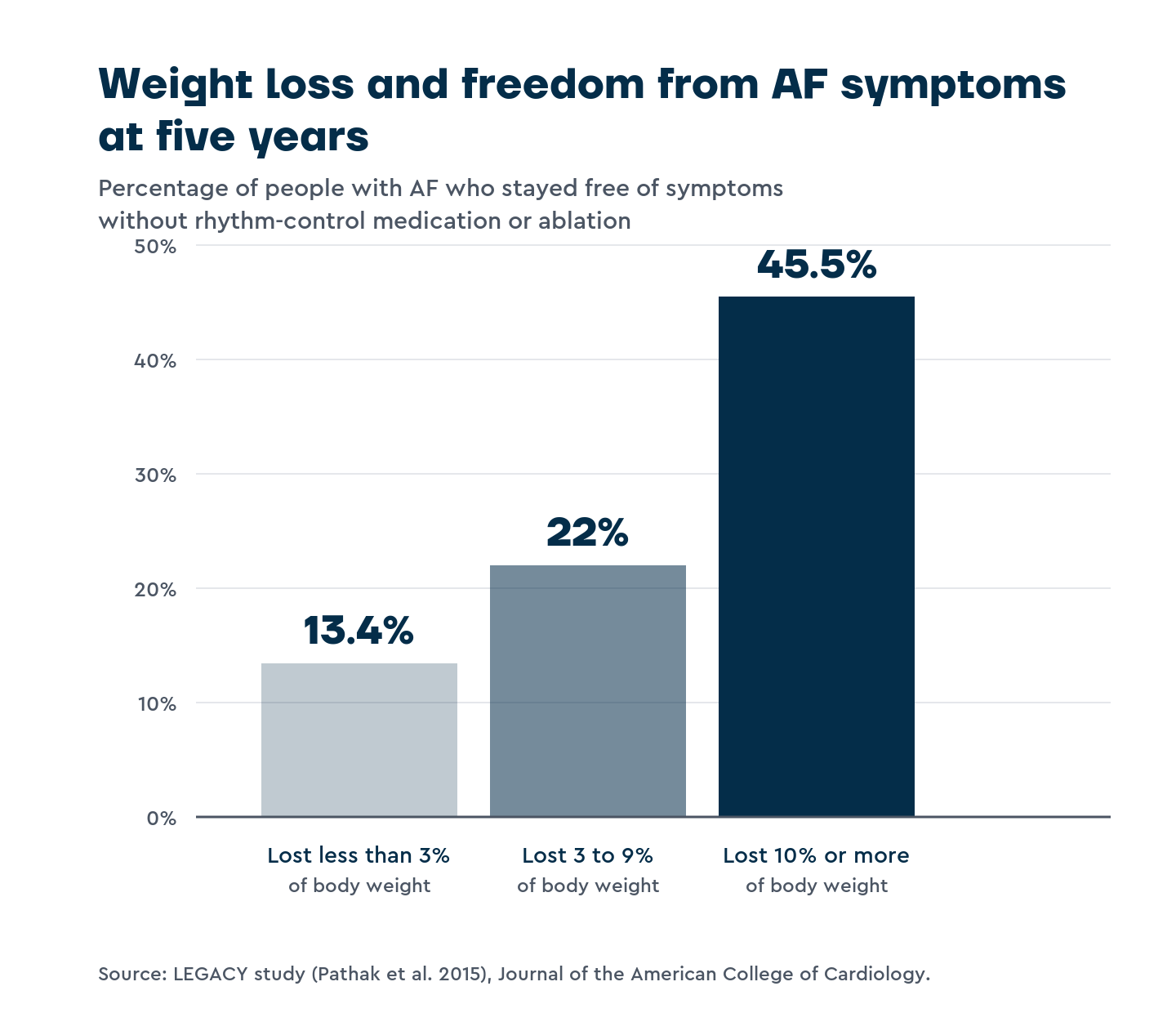
The LEGACY study tracked what happens when this is reversed.3
Among people with AF who lost 10% or more of their body weight, 45.5% were free of AF symptoms at five years without rhythm-control medication or ablation.3
In people who lost less than 3%, that figure was 13.4%.3
Those who lost 10% or more were six times more likely to stay arrhythmia-free.3
Wegovy, on its own, doesn’t provide the structured support that LEGACY tested, but it does make sustained weight loss easier for many people.
Sleep apnoea and AF often exist together
Obstructive sleep apnoea, where breathing repeatedly pauses during sleep, is one of the strongest reversible triggers for AF.4
It’s also heavily underdiagnosed, particularly in people who don’t sleep next to a partner who notices it.
Untreated sleep apnoea is one of the leading reasons AF returns after ablation.
Weight loss reduces apnoea severity in most people, and even modest weight loss can make a measurable difference.
If you snore heavily, wake unrefreshed, or feel sleepy during the day, sleeping on your side, avoiding alcohol within three hours of bed, and not eating a large meal late at night can all help. If symptoms continue, speak to your GP.
Treating sleep apnoea alongside weight loss tends to yield better AF outcomes than either approach alone.
Second Nature has worked with the NHS since 2017, combining Wegovy with structured support from registered dietitians designed to make weight loss last.
Take our 3-minute eligibility quiz, and a clinician will review your answers.
Wegovy and heart rate
Semaglutide modestly increases resting heart rate. The Wegovy product information reports a mean rise of around 3 beats per minute from a starting average of 72.6
Why these medications increase heart rate isn’t fully understood. It’s thought to involve small changes in the part of the nervous system that regulates heart rate, rather than any direct electrical effect on the heart.6
In SELECT, this small increase didn’t translate into more cardiac events. The overall result was a clear reduction in cardiovascular risk.1
Still, we recommend telling your cardiologist before you start Wegovy.
For well-rate-controlled AF on a beta-blocker, a few extra beats per minute rarely change how you feel.
For symptomatic, fast AF, your cardiologist may want to review your rate-control medication after a few weeks on Wegovy.
Semaglutide isn’t contraindicated (a medical reason not to prescribe it) in AF, and its product information lists no warning about heart rhythm disturbances.6
What to look out for in the first few weeks
Most people on Wegovy notice no heart-related issues, particularly if their AF is well rate-controlled.
The early weeks and the period after each dose increase are when any heart rate effect is most likely to present itself.
Here are a few symptoms worth flagging to your GP, AF nurse, or cardiologist:
- New or worsening palpitations, especially if episodes feel longer or more frequent than usual
- A faster-than-usual resting heart rate, if you check it
- Light-headedness or dizziness, especially when standing up
- Increased breathlessness on exertion compared with your normal baseline
- An AF episode that’s harder to settle than usual or doesn’t respond to your usual rescue plan
None of these is an emergency on its own, unless symptoms are severe. Tell your GP or AF nurse and keep taking Wegovy unless they advise otherwise.
Wegovy and your AF medications
Most people with AF in the UK take an anticoagulant to lower stroke risk, usually a direct oral anticoagulant (DOAC) such as apixaban, rivaroxaban, edoxaban, or dabigatran. Some are still on warfarin.4
There’s no direct chemical interaction between semaglutide and any of these medications. The points to be aware of are indirect, and they centre on weight loss and reduced food intake.
Apixaban dosing depends partly on body weight. The lower 2.5 mg twice-a-day dose applies when two of three criteria are present: age 80 or older, weight 60 kg or less, or reduced kidney function.
If your weight drops below 60 kg as you lose weight, your prescriber may want to review the dose.
Rivaroxaban should be taken with food at the doses used for AF. Wegovy reduces appetite, so it’s best to take rivaroxaban with a main meal rather than a small snack.
Warfarin is the most sensitive to dietary change. Reduced vegetable intake can lower your vitamin K levels and raise your INR (a measure of how quickly your blood clots).
Our guide on Wegovy and warfarin covers INR monitoring and vitamin K in detail.
Rate and rhythm-control drugs such as beta-blockers, calcium channel blockers, amiodarone, and flecainide have no direct interaction with semaglutide.
As you lose weight, the dose you need may change, especially for beta-blockers and calcium channel blockers, which also lower blood pressure.
Our guide on Wegovy and high blood pressure explains why blood pressure medication often needs to be reviewed during weight loss.
If you take other medications alongside Wegovy, our GLP-1 medication compatibility checker covers the most common combinations.
Maintaining muscle mass while you lose weight on Wegovy
When people lose weight, a portion of that weight comes from lean tissue, including muscle.
Across published GLP-1 trials, muscle and lean mass loss typically accounts for about a quarter of the total weight loss.
For someone with AF, there are two reasons, beyond general health, that are essential for maintaining muscle mass.
First, muscle is the main place your body uses up sugar from your meals, so maintaining muscle helps keep your blood sugar and blood pressure steadier, both of which reduce AF burden over time.
Secondly, resistance-trained muscle helps preserve bone density, which is relevant because the Wegovy product information lists hip fracture as a rare adverse reaction in the SELECT trial, particularly in women and adults aged 75 or older.6
There are three things that help maintain muscle mass during weight loss on Wegovy.
1 – Losing weight at a steady pace
Research shows that when you lose weight quickly, a greater share of the total weight loss tends to come from muscle and potentially bone. We recommend a sustainable rate of around 1lb per week.
Specifically for GLP-1 medications, this means staying on the lowest effective dose for as long as possible, rather than chasing higher doses more quickly.
Many of our Second Nature members remain on lower doses of Wegovy and Mounjaro and achieve significant weight loss without losing excess muscle mass.
2 – Eating enough protein
Research on adults losing weight points to 1.2-1.6 grams of protein per kg of body weight per day. For someone weighing 90 kg, this is around 110 to 145 grams of protein daily, or a serving the size of a palm at each meal.
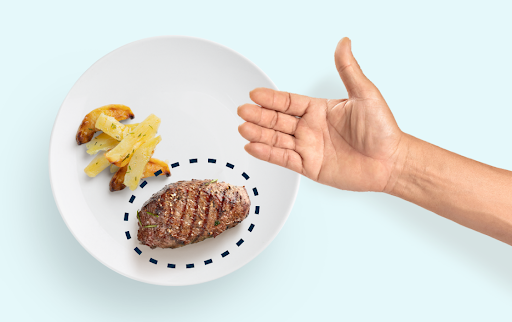
This amount of protein is higher than the standard adult recommendation because protein requirements increase during weight loss.
Wegovy reduces appetite, so most people fill up before they’ve eaten enough protein. The fix is to eat the protein on the plate first, before the carbs and vegetables.
Common sources are eggs, Greek yoghurt, chicken, fish, tofu, lentils, beans, and cottage cheese.
3 – Resistance training
Resistance training is any form of exercise that works the muscles against weight or resistance. This includes bodyweight exercises (squats, lunges, press-ups), resistance bands, dumbbells, and weight machines.
Even short sessions a couple of times a week can help maintain muscle mass during weight loss, and those same sessions help protect bone density during the same period.
We cover specific resistance-training options for AF in the exercise section below.
Eating well with atrial fibrillation
There’s no specific ‘AF diet’. The strongest dietary evidence in AF supports a Mediterranean-style pattern, both for general heart health and as part of the structured weight management used in trials like LEGACY.3,4
We recommend eating a diet based on whole foods that contains enough protein, fibre, fat, and complex carbohydrates and limits ultra-processed foods.
The balanced plate model, which is half vegetables, a quarter protein, a quarter complex carbohydrates, plus a serving of fat, is a useful framework when your appetite is lower than usual on Wegovy.
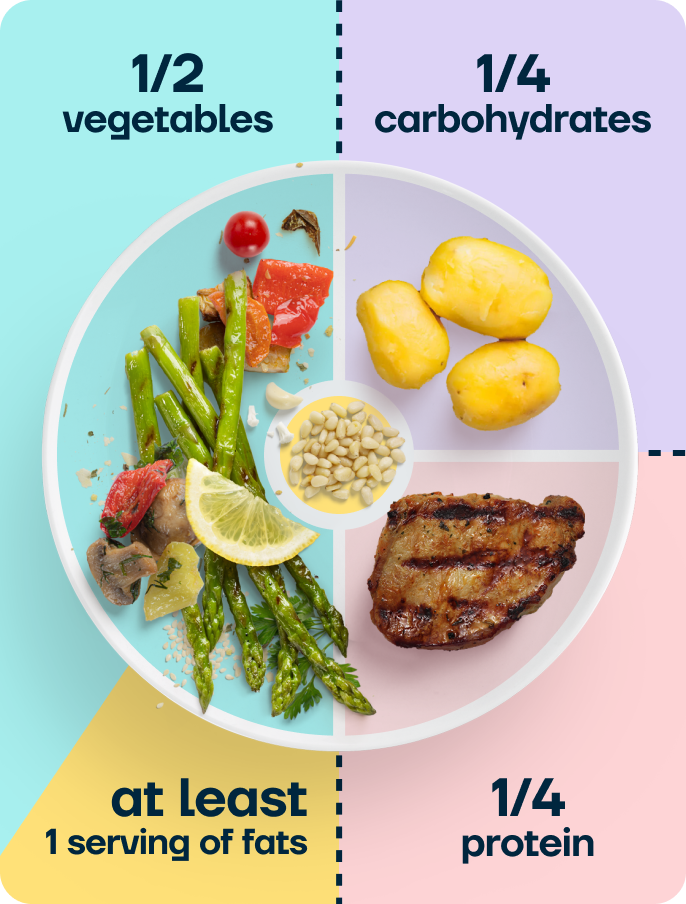
Additionally, there are three areas that require extra attention if you have AF: alcohol, potassium, and caffeine. Bone health is a fourth that’s worth covering specifically for the AF population.
Alcohol
Alcohol is one of the most consistent AF triggers. Even moderate drinking can provoke episodes in some people, and binge drinking is well-recognised enough as a trigger to have its own term, ‘holiday heart’.4
UK guidelines suggest staying under 14 units a week, spread across several days with alcohol-free days in between.
For people with symptomatic AF, your cardiologist may suggest cutting back further, or stopping altogether, to see whether episodes become less frequent.
Semaglutide can also reduce your tolerance to alcohol because of its effects on the gut, and many people find they want to drink less anyway.
Potassium-rich foods
Adequate potassium supports normal heart electrical activity. Most people get enough from a balanced diet, but reduced food intake on Wegovy can lower your overall intake.
Potatoes with their skin, beetroot, spinach, beans, bananas, and yoghurt are good sources to include.
If you’re on a potassium-sparing diuretic or an ACE inhibitor, don’t add potassium supplements without your prescriber’s input, as these medications can raise potassium levels too.
Caffeine and stimulants
Moderate caffeine isn’t a clear AF trigger for most people. Pre-workout supplements, energy drinks, and high-dose caffeine pills have much higher levels of caffeine and are worth avoiding if you have AF, especially if your AF is symptomatic.
Bone health: calcium and vitamin D
Rapid weight loss is one of the recognised risk factors for bone loss, and the Wegovy product information lists hip fracture as a rare adverse reaction in SELECT.6
The increased fracture risk was most noticeable in women and in adults aged 75 or older.
Most people on Wegovy won’t experience a fracture, but adequate calcium, vitamin D, and resistance training protect bone density during weight loss, particularly if you’re in one of those higher-risk groups.
Calcium-rich foods include dairy (milk, yoghurt, cheese), fortified plant milks, tinned fish with bones (sardines, salmon), calcium-set tofu, and leafy greens.
Vitamin D is harder to get from food alone, and all UK adults should supplement vitamin D in winter and year-round for those who don’t get much sun exposure.
Resistance training, covered in the muscle-mass section above and the exercise section below, also protects bone density during weight loss.
Staying active with atrial fibrillation
Regular physical activity is part of standard AF management. Moderate-intensity exercise is linked to a lower AF burden and better quality of life, along with broader benefits for your heart.4
Building a small, consistent habit works better than aiming for an unachievable weekly target.
Research on habit formation suggests it takes an average of 66 days for a new behaviour to become automatic.9
The most reliable approach is to start small and link the habit to something you already do, like a 10-minute walk after dinner. Once that feels natural, you can gradually do a little more as it feels manageable.
Aerobic activity
Walking, cycling, swimming, and gentle jogging are all good options. Moderate intensity is generally well tolerated in AF and is the level most consistently associated with lower AF burden.4
If you use a heart rate monitor, the readings can be erratic during AF episodes. Perceived effort is a more useful guide, so aim for the level where you can still talk in short sentences between breaths.
Resistance training
Resistance training, using your bodyweight, resistance bands, free weights, or machines, helps you maintain muscle mass during weight loss and preserve bone density.
Wegovy doesn’t selectively reduce body fat during weight loss, so without active resistance work, some of the weight you lose can come from muscle.
Two sessions a week covering the main muscle groups is a reasonable target to build towards. Start with shorter sessions and lighter loads, then progress gradually.
A note on high-intensity exercise
Very high-intensity training, such as HIIT or competitive endurance work, can occasionally trigger AF episodes in people who are already symptomatic. This doesn’t mean enjoying intense exercise isn’t possible, but if you have symptomatic AF, it’s worth discussing with your cardiologist before stepping up to that level.
The NHS recommends 150 minutes of moderate activity a week for general health. That’s a useful target to aim for, not where you need to start.
The emotional side of AF
Anxiety is common in AF, and it often goes unrecognised.
A 2024 meta-analysis of people living with AF found pooled prevalence estimates of around 14.5% for anxiety and 24.3% for depression.8
Among older adults with AF, the figures were higher, at 33.6% for anxiety and 40.3% for depression.8
These rates are well above those in the general population and tend to cluster among people most affected by symptoms.
The AF-anxiety cycle
AF involves an unpredictable, irregular heartbeat that you can sometimes feel.
Many people with symptomatic AF describe a heightened awareness of their heartbeat, which can become self-reinforcing.
Noticing palpitations leads to anxiety, which raises the activity of the nervous system, which can, in turn, make episodes more noticeable or more frequent.
Underneath all of this is the fear of stroke. AF is one of the few conditions where most people are told, explicitly, that they’re at higher stroke risk and that anticoagulation is what’s holding that risk down.
Where to get support
Cognitive behavioural therapy (CBT) has reasonable evidence for helping people manage AF-related anxiety.
Your GP can refer you, and in England, you can usually self-refer to NHS Talking Therapies. Searching ‘NHS Talking Therapies near me’ will bring up your local service.
Practical steps that often help include tracking your episodes, agreeing on a clear plan with your cardiologist for what to do during one, limiting caffeine and alcohol, and prioritising sleep.
If low mood, anxiety, or thoughts of self-harm last for more than a couple of weeks, speak to your GP.
Mention anything that’s changed recently with your AF, your medication, or your sleep, since these can all feed into how you feel.
How Wegovy compares
The table below compares Wegovy with other weight-loss medications most commonly used in the UK.
The figures are general trial data, not AF-specific, since none of these has been studied in AF as a primary diagnosis.
| Measure |
Wegovy (semaglutide) |
Mounjaro (tirzepatide) |
Saxenda / Nevolat (liraglutide) |
| Mechanism |
Mimics GLP-1 |
Mimics GLP-1 and GIP |
Mimics GLP-1 |
| Administration |
Once a week, injection |
Once a week, injection |
Once a day, injection |
| Average weight loss |
An average of 20.7% at 72 weeks (STEP UP, 7.2 mg)5 |
An average of 22.5% at 72 weeks (SURMOUNT-1, 15 mg) |
Around 8% at 56 weeks (SCALE) |
| Effect on heart rate |
Modest rise of around 3 bpm6 |
Modest rise of around 2 bpm |
Modest rise, around 2 to 3 bpm |
| Cardiovascular outcomes evidence |
Reduces major cardiac events by 20% in established heart disease (SELECT)1 |
No increase in cardiac events in SURMOUNT trials; no dedicated cardiovascular outcomes trial yet |
Neutral to slightly favourable in type 2 diabetes (LEADER) |
| Direct interaction with AF medications |
None reported |
None reported |
None reported |
| UK availability |
Available privately and on the NHS for selected patients |
Available privately and on the NHS for selected patients |
Branded Saxenda discontinued; generic liraglutide (Nevolat) available privately |
Frequently asked questions
Does Wegovy cause atrial fibrillation?
There’s no evidence that Wegovy causes AF. Semaglutide raises resting heart rate by around 3 beats per minute on average, but in the SELECT trial it reduced cardiovascular events overall, and a secondary analysis pointed to fewer AF events rather than more.1,2,6
Can Wegovy improve my AF?
It may, indirectly, by helping you lose weight.
Weight loss of 10% or more is associated with a much higher likelihood of remaining free of AF symptoms, and a conference analysis of SELECT found fewer AF events with semaglutide.2,3
Wegovy isn’t a treatment for AF, so your cardiology care continues as normal.
Will Wegovy make my AF episodes more frequent?
This isn’t expected. The opposite is more likely over time, since meaningful weight loss reduces AF burden, and the SELECT analysis pointed towards fewer AF events.2,3
If you do notice more episodes after starting Wegovy, discuss it with your cardiologist rather than stopping the medication on your own.
Can I take Wegovy if I’m on apixaban or rivaroxaban?
Yes, with appropriate monitoring, as there’s no direct interaction between semaglutide and DOACs.
The points to watch are your weight crossing the 60 kg threshold for apixaban dosing, and taking rivaroxaban with a proper meal, even when your appetite is lower.
What about beta-blockers, amiodarone, or flecainide?
None of these has a direct interaction with semaglutide.
As you lose weight, the dose of rate-control medication you need may change, especially for beta-blockers and calcium channel blockers.
Our Wegovy and high blood pressure guide covers how these doses are reviewed.
Should I tell my cardiologist if I’m starting Wegovy?
Yes. Your cardiologist needs to know about any new medications, and Wegovy can affect your AF management plan over time.
They may want to repeat blood pressure, heart rate, and ECG checks as you progress.
Is it safe to exercise on Wegovy if I have AF?
For most people, yes, and exercise is recommended for AF as a comorbidity factor in the 2024 ESC guidelines. Moderate intensity is generally well-tolerated.
Very high-intensity training can occasionally trigger episodes in symptomatic AF, so build up gradually and discuss it with your cardiologist if you’re aiming for that level.
How quickly might my AF improve on Wegovy?
The largest reductions in AF burden tend to occur once weight loss reaches around 10%, based on LEGACY data, and on Wegovy, this usually takes several months.3
Earlier wins often show up sooner, as blood pressure, sleep, breathlessness, and exercise tolerance can improve at 5% weight loss or less.
Should I be worried about the hip fracture signal in SELECT?
Hip fracture is listed as a rare adverse reaction in the Wegovy product information, with the signal most noticeable in women and in adults aged 75 or older from the SELECT trial.6
For most people on Wegovy, this won’t be a clinical concern, but it’s worth protecting bone density during weight loss.
Adequate calcium and vitamin D, resistance training, and avoiding very rapid weight loss are the practical steps.
Can I take Wegovy if I’m planning a pregnancy?
Wegovy isn’t recommended in pregnancy, and your prescriber will usually advise stopping it before you try to conceive. Our guide on Wegovy and pregnancy explores this in more detail.
Some AF medications also need to be reviewed before pregnancy, so talk to your cardiologist and GP early.
Is Wegovy available on the NHS for people with AF?
NHS access to Wegovy is limited by specific BMI and comorbidity criteria, and eligibility can vary by area.
AF alone isn’t a qualifying condition, but it’s often considered alongside other heart and metabolic factors. Your GP can clarify whether you’d qualify locally.
Take home message
You can take Wegovy if you have AF. There’s no direct interaction with semaglutide, no evidence of increased arrhythmia in the SELECT trial, and good evidence that the kind of weight loss Wegovy supports reduces AF burden over time.
Wegovy is the first weight-loss medication approved in the UK to reduce cardiovascular risk, and a secondary analysis of SELECT pointed to fewer AF events.
We recommend you work closely with your cardiologist, monitor blood pressure and heart rate as your weight changes, and adjust anticoagulant or rate-control doses as needed.
AF mostly affects older adults, who tend to lose muscle and bone more easily during weight loss, which is why it’s essential to lose weight at a steady pace of around 1lb per week, eat a palm-of-the-hand serving of protein at each meal, and do two short resistance sessions a week to protect lean tissues.
Second Nature’s Wegovy programme combines the medication with support from registered dietitians and a structured habit-change programme, built around the balanced plate model and sustainable changes rather than restrictive dieting.
In a published study of Second Nature’s GLP-1-supported programme, active subscribers lost an average of 19.1% of their body weight at 12 months, with 77.7% achieving at least 10% weight loss.10
The research suggests you’re more likely to avoid weight regain and maintain heart benefits when Wegovy is combined with structured habit-change support than when it’s prescribed on its own.
Second Nature's Mounjaro and Wegovy programmes
Second Nature provides Mounjaro or Wegovy as part of our Mounjaro and Wegovy weight-loss programmes.
Why choose Second Nature over other medication providers, assuming you're eligible?
Because peace of mind matters.
We've had the privilege of working with the NHS for over eight years, helping people across the UK take meaningful steps toward a healthier, happier life.
Our programmes are designed to meet people where they are, whether that means support with weight loss through compassionate one-to-one health coaching, or access to the latest weight-loss medications (like Mounjaro and Wegovy) delivered alongside expert care from a multidisciplinary team of doctors, psychologists, dietitians, and personal trainers.
At the heart of everything we do is a simple belief: real, lasting change comes from building better habits, not relying on quick fixes. We're here to support that change every step of the way.
With over a decade of experience, thousands of lives changed, and a long-standing record of delivering programmes used by the NHS, we believe we're the UK's most trusted weight-loss programme.
We hope to offer you something invaluable: peace of mind, and the support you need to take that first step.